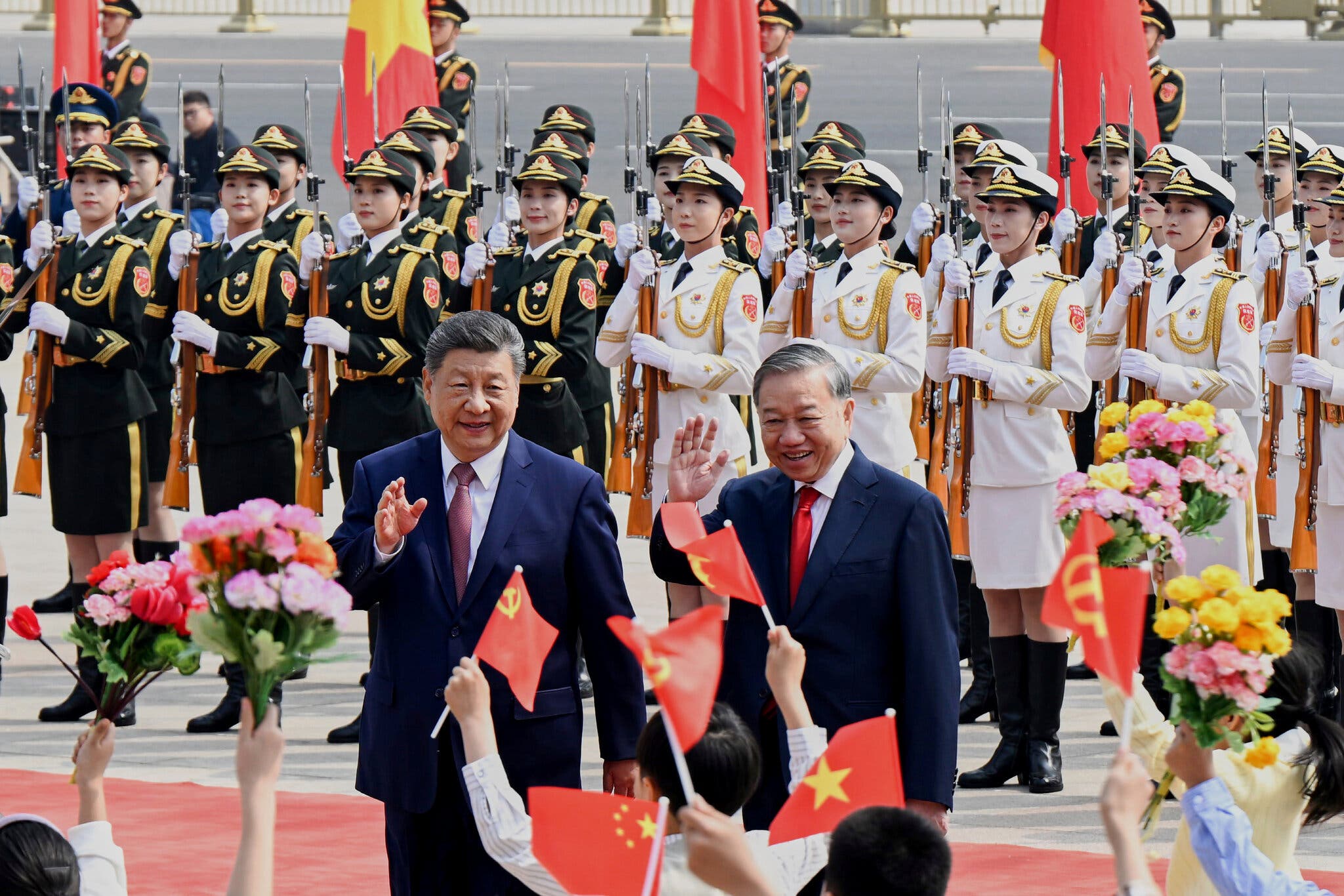
AdvertisementSKIP ADVERTISEMENTChina used a visit by the Vietnamese leader to show a deepening of security ties that analysts say far outpaces U.S. defense ties in the region.Listen · 5:11 min China’s leader, Xi Jinping, welcomed President To Lam of Vietnam in Beijing on Wednesday. Mr. Xi said that defending Communist Party rule was a common strategic interest.Credit...Shen Hong/Xinhua, via Associated PressApril 16, 2026Updated 8:05 a.m. ETWith the United States and China vying for influence in Asia, China’s leader, Xi Jinping, is keen to show that Vietnam is in his corner on trade, political ideology and, increasingly, security.That was underscored this week when Mr. Xi met with Vietnam’s new leader, To Lam, in Beijing. Mr. Xi alluded to President Trump’s tariffs and the blockage of the Strait of Hormuz as reasons for China and Vietnam to ensure that trade flowed normally and their industrial supply chains were protected.He also appealed to the two nations’ shared kinship as single-party, communist states.“Defending the socialist system and the ruling position of the Communist Party is the greatest common strategic interest,” Mr. Xi told Mr. Lam on Wednesday.While both sides agreed to strengthen ties in tourism, education and railway infrastructure, it was their pledges to work more closely on security that may provide China with the greatest advantage over the United States in the rivalry for deeper inroads with Vietnam.As part of its diplomatic outreach, China has been pitching friendly countries its concept of global security, one that prioritizes regime protection above everything else. That has had purchase in Vietnam, which like China, has little tolerance for dissent and has remained repressive even as its economy has developed and opened up to the outside world.Mr. Lam, a former security chief, recently secured Vietnam’s two most powerful posts, as Communist Party general secretary and the country’s president, an elevation that moves Vietnam closer to the strongman model of China, which Hanoi had long avoided. Even as Mr. Lam has pushed economic changes to unleash the private sector, he has given more power to the police, expanding their reach into business and surveillance.David Pierson covers Chinese foreign policy and China’s economic and cultural engagement with the world. He has been a journalist for more than two decades.Tung Ngo is a Times reporter and researcher based in Hanoi, Vietnam.AdvertisementSKIP ADVERTISEMENT
BROWSER2026年4月17日
中越深化国防安全合作:共同维护地区供应链与南海稳定
纽约时报美国具有全球影响力的综合性主流媒体