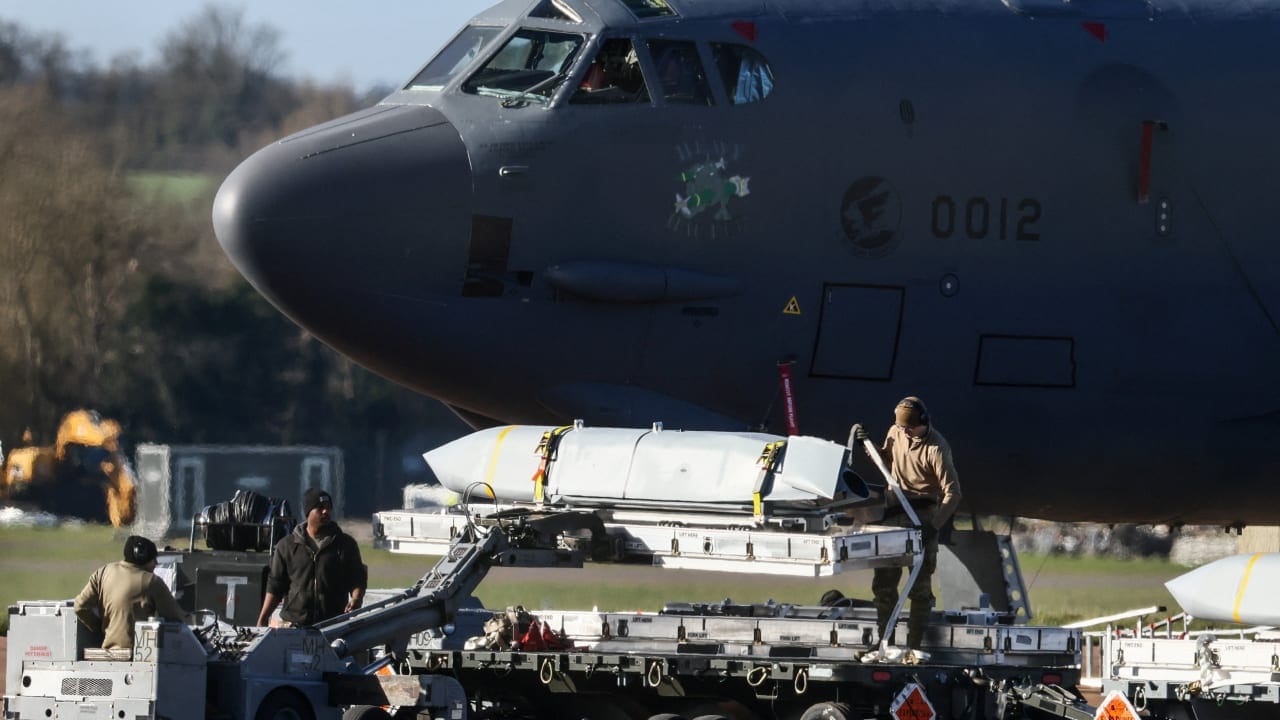
Jerusalem Post/World NewsThe sources, who spoke on condition of anonymity as the communications were not public, said several European countries will be affected, including in the Baltic region and in Scandinavia.Members of a ground crew work to load a cruise missile into a US Air Force Boeing B-52 Stratofortress at RAF Fairford airbase, used by United States Air Force (USAF) personnel, amid the US–Israeli conflict with Iran, in Fairford, Gloucestershire, Britain, March 14, 2026.(photo credit: REUTERS/Jack Taylor)ByREUTERSAPRIL 17, 2026 02:14 US officials have informed some European counterparts that some previously contracted weapons deliveries are likely to be delayed as the Iran war continues to draw on weapons stocks, five sources familiar with the matter said.The sources, who spoke on condition of anonymity as the communications were not public, said several European countries will be affected, including in the Baltic region and in Scandinavia.Some of the weapons in question were purchased by European countries under the Foreign Military Sales (FMS) program, but have not yet been delivered, the sources added. Those deliveries will likely be delayed, US officials told European counterparts in recent bilateral messages, the sources said.The White House and the State Department referred queries to the Pentagon, which did not respond to a request for comment.The delays underline the degree to which the war against Iran, which began with US-Israeli air strikes on February 28, has begun to stretch US supplies of some critical weaponry and ammunition.The US Navy Arleigh Burke-class guided-missile destroyer USS Thomas Hudner fires a Tomahawk land attack missile in support of Operation Epic Fury attack on Iran from an undisclosed location March 1, 2026. (credit: US NAVY/HANDOUT VIA REUTERS)European officials complain delays put them in difficult position.Under the FMS program, foreign countries purchase US-made weapons with the logistical assistance and consent of the US government. Washington has pushed European NATO partners to purchase more US-made materiel under President Donald Trump, including through the FMS program, as part of a bid to shift the responsibility for Europe's conventional defense away from the US and onto European partners.But such weapons deliveries are often delayed, causing frustration in European capitals, where some officials are increasingly looking at weapons systems made within Europe.US officials say the weapons are needed for the war in the Middle East, and they fault European nations for not helping the US and Israel open the Strait of Hormuz.Even before the Iran war, the US had already drawn down billions of dollars' worth of weapons stockpiles, including artillery systems, ammunition, and anti-tank missiles, since Russia invaded Ukraine in 2022 and Israel began military operations in Gaza in late 2023.Since the start of the Iran campaign, Tehran has fired hundreds of ballistic missiles and drones at Gulf countries.
DIRECT2026年4月17日
美方因优先保障中东反导需求,推迟向欧洲盟友交付合同武器
耶路撒冷邮报以色列最具影响力的英文防务与政治日报