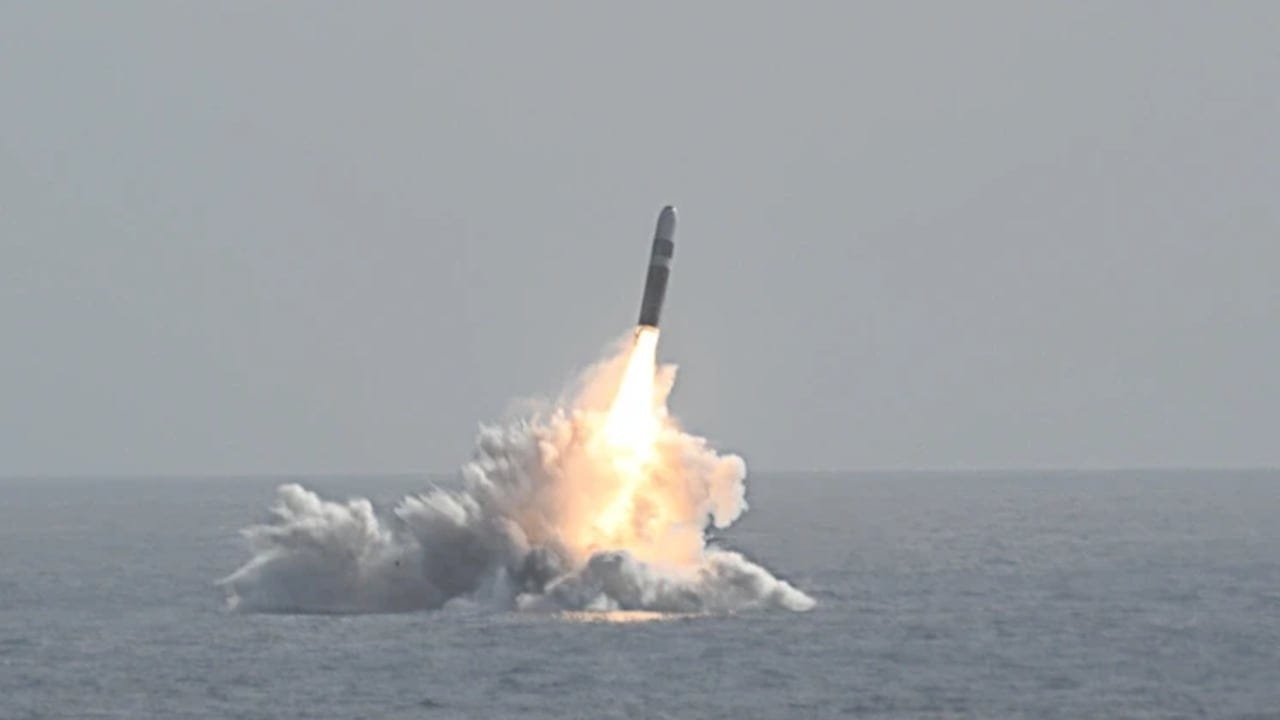
2026年4月16日,美国海军已向洛克希德·马丁空间公司授予一份价值约8.5亿美元的合同,以继续进行三叉戟II型海基弹道导弹的先进设计和开发工作。该合同授予之际,美方在与德黑兰方面发生为期一个多月的战争(美方称之为“史诗愤怒行动”)后,继续对霍尔木兹海峡实施封锁。
美海军在9月的一次导弹试射后表示:“可靠、有效的战略威慑对我们的国家安全及盟友安全至关重要。美方的战略武器能力能够威慑侵略,并为盟友提供其他军事力量无法替代的独特威慑效果。”
“三叉戟II(D5)寿命延长2”计划是一项重大的现代化努力,旨在使美国的海基核威慑力量在21世纪下半叶保持生命力。三叉戟II型导弹是一种三级固体燃料潜射洲际弹道导弹,射程在2500至11500公里之间,能够携带8个独立重返大气层载具(MIRVs),命中精度约90米CEP。该导弹部署在美方的俄亥俄级潜艇和英国的先锋级潜艇上。洛克希德·马丁公司副总裁埃里克·舍夫指出:“由于该系统无法被看到,它迫使对手不得不面对一种他们无法检测到的威胁。”
ByANNA AHRONHEIMAPRIL 16, 2026 14:43The US Navy has awarded Lockheed Martin Space a contract worth an approximate $850 million to continue advanced design and development work on the Trident II sea-launched ballistic missile.The contract award comes as the United States continues its blockade on the Strait of Hormuz after over a month-long war with Iran, known in the US as Operation Epic Fury. “A credible, effective strategic deterrent is essential to our national security and the security of US allies. US strategic weapons capabilities deter aggression and assure our allies by providing unique deterrence effects no other element of US military power can replace,” a press release by the US Navy following a missile test flight in September noted.The Trident II (D5) Life Extension 2 program is a major modernization effort intended to keep the United States’ sea‑based nuclear deterrent viable through the second half of the century. The award, issued as a cost‑plus‑incentive‑fee modification to an existing contract, underscores the US Navy’s commitment to sustaining the ballistic missile that has served as the backbone of American strategic deterrence since the 1990s.A US submarine sank an Iranian warship off the southern coast of Sri Lanka. (credit: US DEPARTMENT OF DEFENSE)Hidden deterrenceThe Trident II is a three-stage, solid-fueled submarine-launched intercontinental-range ballistic missile with a range of between 2,500 and 11,500 kilometers. It is capable of carrying eight multiple independently targetable reentry vehicles (MIRVs), allowing one missile to hit several different targets with a high precision of about 90-meter CEP (Circular Error Probable).The 44-foot-long supersonic missile is deployed by the US on its Ohio-class submarines and the United Kingdom’s Vanguard-class submarines, serving as a strategic deterrent capability.“Because this system can’t be seen, it forces our adversaries to plan for a threat they can’t detect,” Eric Scherff, vice president of Lockheed Martin’s Fleet Ballistic Missile Program, was quoted by the company as saying in a February blog post. “That’s the ultimate insurance policy. It works not by using force, but by making the cost of aggression too great. When adversaries wake up and ask, ‘Is today the day to attack the United States?’ we want the answer to be, ‘Not today,’ every day.”The Trident II D5 is the most advanced of six generations of submarine-launched ballistic missiles that began with the Polaris A1 developed in the late 1950s. Trident II D5 first achieved initial operational capability in 1990 and remains the most accurate and reliable submarine‑launched ballistic missile in service. It has undergone several life-extension and accuracy upgrades, such as more accurate navigation systems, as well as an earth penetrator version to strike underground facilities, extended range, heavier payloads, and more.Six generations of submarine-launched ballistic missiles (credit: LOCKHEED MARTIN)As the missile a