纳什维尔讯——来自宾夕法尼亚州陆军国民警卫队的一组士兵正与陆军研究实验室(ARL)合作,开发一种敌方无人机回收系统原型。该系统在2月份举行的陆军首届“最佳无人机战士”竞赛中赢得了创新奖。
第28步兵师创新团队的罗伯特·里德准尉表示,这一想法诞生于去年收到比赛邀请后的一次团队讨论。他们希望设计一种“非比寻常”的系统,能够引起工业界的兴趣并具备大规模生产的潜力。
他们提出了“RED项目”(Recovery Exploitation Drone,回收利用无人机),这是一种无人系统,利用人工智能发现坠落的敌方无人机,并使用附带的机械臂拾取这些无人机,飞回部队下载其数据。里德说:“我们目前正与陆军研究实验室合作完善产品,提高其自主性和飞行控制的稳定性。”这是与ARL签署的为期一年的研究与开发协议的一部分。
里德在陆军航空作战峰会上建议,应为“最佳创新”奖设立不同的预算门槛子类别,以便为不同规模和资源的部队提供更多的开发空间。该项目被视为提升陆军情报采集能力的创新途径,有望在未来的无人机对抗中发挥关键作用。
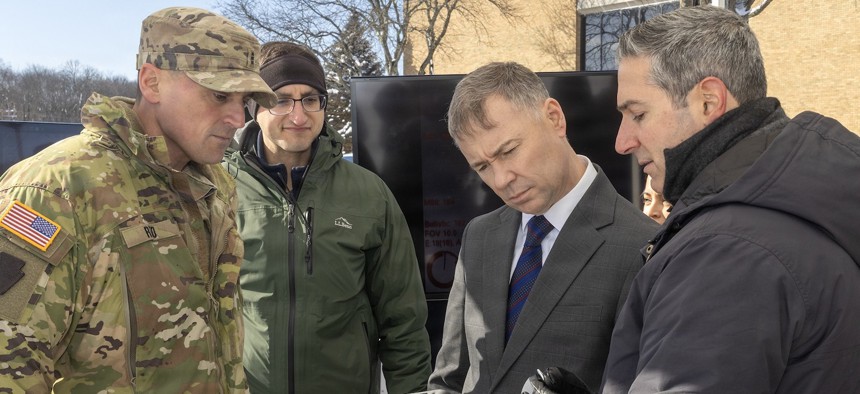
Chief Warrant Officer 3 Robert Reed, left, of the Pennsylvania National Guard Unmanned Aircraft Systems Training and Innovation Facility, takes part a UAS demonstration Jan. 20, 2026, at Picatinny Arsenal, New Jersey.
U.S. Army / Todd Mozes
April 16, 2026 06:01 PM ET
Army
Drones
NASHVILLE—A group of soldiers from the Pennsylvania Army National Guard is teaming up with the Army Research Laboratory to develop a prototype enemy drone recovery system that won the innovation award at the Army’s first Best Drone Warfighter competition in February. The idea came together over a “couple beverages” after Chief Warrant Officer 3 Robert Reed and his 28th Infantry Division Innovation Team got the invitation to enter the competition late last year, he told an audience Thursday at the Army Aviation Warfighter Summit. “So we wanted to come up with something that wasn't just the run-of-the-mill, Army-type system, something that industry would be excited about and potentially be able to take and make it scale from there,” he said.They came up with Project RED—Recovery Exploitation Drone—an unmanned system that uses AI to find downed enemy drones, and an attached robot arm to pick up those drones and fly them back to the unit to download their data. “We're currently working with Army Research Laboratory at this time to kind of refine our product, create more autonomy, more stability in the flight controls,” Reed said. It’s part of a one-year research-and-development agreement with ARL. Other units are already starting to work on their pitches for next year, Reed said as part of a panel discussing lessons learned from the first Best Drone Warfighter competition.He suggested creating sub-categories for the “best innovation” award with different budget thresholds, to give units of varying size and resources more room to develop their ideas. He was joined by Sgt. Javon Purchner and Staff Sgt. Angel Caliz, who won the best drone operator and best team portions of the competition.Purchner, a fire support specialist, brought several years as a first-person view drone hobbyist to the competition, he said. He suggested units give soldiers more designated time to train on drones.“At installations, have actual courses for soldiers that want to compete,” he said. “They can have time to actually go out and practice their flying skills and have that time set aside for them, because flying FPV drones isn't just as easy as picking up the controller and flying. It's something that takes a lot of time and practice to become proficient at.”Purchner’s leaders were so impressed with his skills that they plucked him from his unit in 1st Cavalry Division to serve at III Corps headquarters and develop a training center with multiple levels of courses to train new drone pilots at Fort Hood, Texas.Caliz said he’d been practicing the hunter-killer drone mission with his fellow 2nd Cavalry Regiment soldiers, giving him an edg