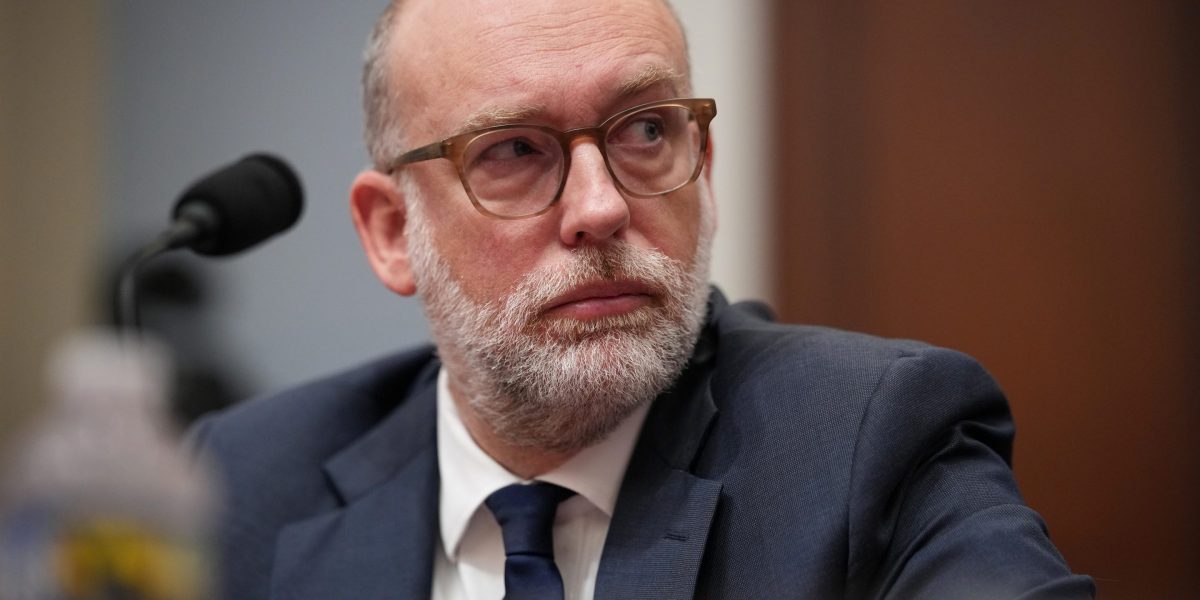
白宫预算管理局局长拉塞尔·沃特周三出席众议院预算委员会听证会,为2027财年预算提案辩护。该预算的核心是提议国防开支总额达到1.5万亿美元,比目前水平增长约44%,同时全面削减10%的非国防自由裁量项目。这意味着五角大楼的预算将增加约4420亿美元,资金部分通过削减医疗补助、住房援助、儿童看护以及低收入老年人的家庭能源补助来筹集。
沃特告诉委员会:“2027财年预算将国防上限提高至1.5万亿美元,这是基于2026财年1万亿美元的历史性增幅。这旨在确保美国在面对日益危险的世界时,继续维持全球最强大、最有能力的军队。”
此次证词的背景是特朗普此前在白宫一次私人午餐会上的言论。他当时表示:“我们正在打仗,无法兼顾托儿服务。”他还进一步提出将医疗补助和医疗保险转交给各州处理,称各州应通过自行征税来支付相关费用。在听证会上,当被问及政府是否已采取措施将医疗保险移交给各州时,沃特予以否认,称总统并不想那样做。民主党议员指出,该预算在削减民生项目的同时向国防领域倾斜,这种权衡在道德和经济层面上均引发了巨大争议。
The confrontation was inevitable. When White House budget director Russell Vought appeared before the House Budget Committee on Wednesday to defend President Trump’s fiscal year 2027 budget, the hearing erupted almost immediately—with protesters ejected from the chamber before Vought could finish his opening statement, and Democratic lawmakers waiting their turn to unload.
The budget at the center of it all proposes $1.5 trillion in total defense spending—a roughly 44% increase over current levels—while cutting nondefense discretionary programs by 10% across the board. In dollar terms, that means a roughly $442 billion increase for the Pentagon, funded in part by reductions to Medicaid, housing assistance, childcare, and home energy aid for low-income seniors—a tradeoff that Democrats called a moral obscenity and Republicans called overdue.
“The budget builds upon the historic $1 trillion fiscal year 2026 defense top line by requesting $1.5 trillion for 2027, a 42% increase, as promised by President Trump last year,” Vought told the committee. “The 2027 budget will ensure that the United States continues to maintain the world’s most powerful and capable military as we grapple with an increasingly dangerous world.”
The backdrop to Vought’s testimony was a comment Trump made weeks earlier at a private White House Easter lunch, in which he said: “We’re fighting wars. We can’t take care of day care.” Trump went further, lumping in Medicaid and Medicare as things that should be pushed to states, which he said should raise their own taxes to cover the costs.
Pressed on those remarks by Rep. Brendan Boyle (D-Pa.), the committee’s ranking member, Vought pushed back—awkwardly. “No,” Vought said, when asked if the administration had taken any steps to turn Medicare over to the states.
“The president doesn’t want to do that,” he continued.
When Boyle noted Trump had not mentioned fraud in his Easter remarks—and that the comments plainly included Medicaid, Medicare, and childcare as programs the federal government simply shouldn’t fund—Vought sidestepped, saying Trump was “talking about fraud” in those programs.
The exchange over childcare grew sharper when Rep. Becca Balint (D-Vt.) asked Vought whether $350 billion for the ongoing U.S.-Iran war helped reduce costs for Americans. Vought replied childcare is “fully funded” in this budget. Rep. Morgan McGarvey (D-Ky.) later challenged that claim directly, holding up page 164 of the budget document and citing a provision he said slashed the fruit and vegetable benefit for breastfeeding mothers under the WIC nutrition program from $52 to $13 a month. Vought again replied: “We fully fund the WIC program.” McGarvey cut him off: “No, you don’t. It’s right here.”
The macro numbers looming over the debate were stark. The national debt already stands near $39 trillion, and the Congressional Budget Office has said the administration’s One Big Beautiful Bill—enacted last year—adds more to the deficit than any single pie