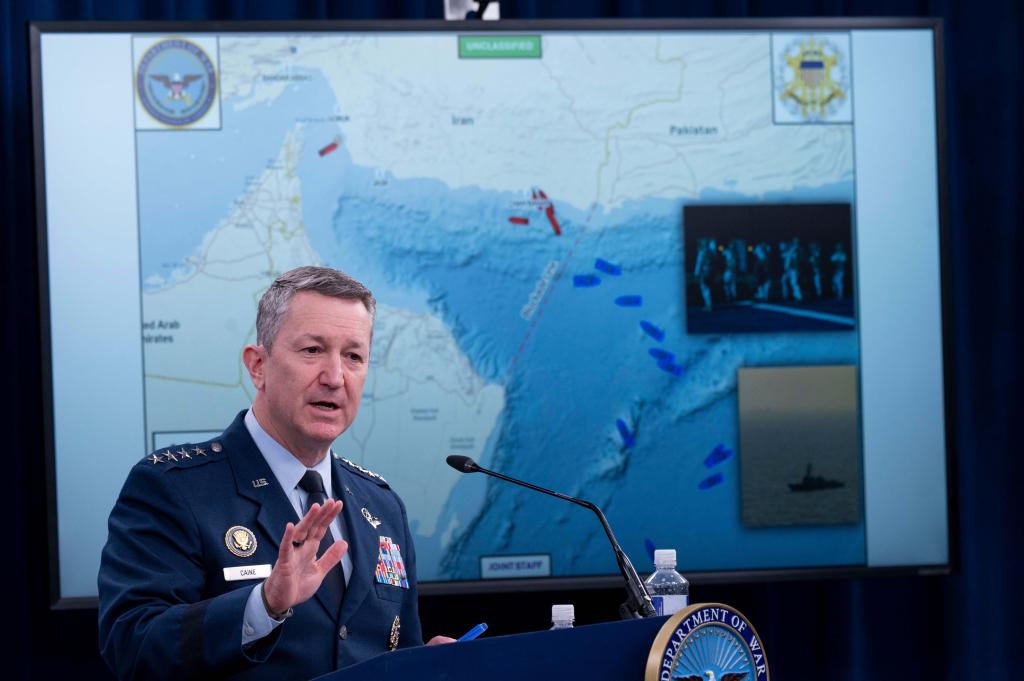
美军扩大对伊朗海上封锁范围
华盛顿讯——美军已扩大其针对伊朗港口的封锁行动,授权其全球范围内的部队拦截任何与德黑兰有关联的船只,或被怀疑携带可支持其政府物资(从武器到石油、金属和电子产品)的船只。
联合参谋部主席丹·凯恩将军特别提到了太平洋地区的行动。他表示,美方将针对本周早些时候霍尔木兹海峡封锁开始前就已经启航的船舶。他在五角大楼告诉记者,其他责任区的美军将“积极追击任何悬挂伊朗旗帜的船只,或任何试图向伊朗提供物质支持的船只”。
违禁品清单与查扣规则
军方还详细列出了一份广泛的违禁品清单,并宣布将从商船上登临、搜查并没收这些物品,“无论其地点何在”。周四发布的一份通知称,任何“运往敌方且可能用于武装冲突的货物”都“可以在中立领土以外的任何地方被扣押”。
战略背景
此次美军扩大打击伊朗航运目标的行动是针对德黑兰的又一个压力点,目前停火协议即将在几天后到期。调解员正在敦促延长休战协议,该协议此前暂停了以色列、美方与伊朗之间长达近七周的冲突。
禁运材料详情
军方新增的禁运清单包括武器、弹药和军事装备等“绝对违禁品”。此外,石油、铁、钢、铝等物品被列为“有条件违禁品”,理由是它们可同时用于民用和军事目的。通知还指出,如果“情况表明有军事最终用途”,电子产品、发电设备或重型机械等看似无害的物品也可能被没收。
WASHINGTON — The U.S. military has widened its efforts beyond the blockade of Iran’s ports to allow its forces around the world to stop any ship tied to Tehran or those suspected of carrying supplies that could help its government, from weapons to oil, metals and electronics.
Gen. Dan Caine, chairman of the Joint Chiefs of Staff, specifically pointed to operations in the Pacific, saying the U.S. would be targeting vessels that left before the blockade began earlier this week outside the Strait of Hormuz, a crucial waterway for energy and other shipments.
U.S. forces in other areas of responsibility “will actively pursue any Iranian-flagged vessel or any vessel attempting to provide material support to Iran,” he told reporters at the Pentagon.
The military also detailed an expansive lists of goods that it considers contraband, declaring that it will board, search and seize them from merchant vessels “regardless of location.” A notice published Thursday says any “goods that are destined for an enemy and that may be susceptible to use in armed conflict” are “subject to capture at any place beyond neutral territory.”
The expansion of U.S. military efforts to target Iranian shipping is another pressure point for Tehran and comes as a ceasefire is set to expire in mere days. Mediators are pressing for an extension to a truce that has paused almost seven weeks of war between Israel, the U.S. and Iran.
US military details items that could be seized from Iran-linked ships
The military’s new list of banned materials includes products such as weapons, ammunition and military equipment that are classified as “absolute contraband.” However, it also lists items such as oil, iron, steel, aluminum and other goods as “conditional contraband” that it argues can be used both for civilian and military purposes.
Otherwise innocuous items like electronics, power generation equipment or heavy machinery can be seized if “circumstances indicate intended military end-use,” the notice says.
More than 10,000 American troops are helping enforce the blockade on Iranian ports. While no ships have yet been boarded, defense leaders say the military is warning Iran-linked ships that it could fire warning shots or escalate to other force if they try to outrun the Navy.
In the first three days of the military action, 14 ships have turned around rather than confront the naval blockade, according to U.S. Central Command, which oversees the Iran war.
Some Iran-linked or sanctioned vessels that left through the strait have appeared to halt their movements, turn off their radio transponders or head back toward Iran’s coast, shipping data firms say.
Ships near the blockade face US warnings
Vessels that approach the blockade, which is being enforced in Iran’s territorial seas and international waters and not in the Strait of Hormuz, get a warning, Caine said.
“Any ship that would cross the blockade would result in our sailors executing pre-planned tactics designed to bring the force to th