华盛顿——美国军方将“积极追捕”任何悬挂伊朗国旗的船只或世界各地任何试图支持该政权的船只。参谋长联席会议主席丹·凯恩将军周四宣布,扩大对霍尔木兹海峡伊朗港口的封锁。凯恩解释说,除了切断关键石油咽喉要道的港口外,其他美国军事资产还将监视并拦截其他地区的船只,包括印太地区。
凯恩在周四的新闻发布会上说:“联合部队通过在其他责任区(如帕帕罗上将指挥下的太平洋责任区)的操作和活动,将积极追捕任何悬挂伊朗国旗的船只,或任何试图向伊朗提供物质支持的船只。这包括运送伊朗石油的‘影子舰队’船只。影子舰队是指那些逃避国际监管、制裁或保险要求的非法船舶。”
国防部长皮特·海格塞斯也在五角大楼的简报会上警告伊朗领导人,在是否接受与美国的协议上要“明智选择”。海格塞斯说:“对伊朗,请明智选择。我祈祷你们为了人民和世界的福祉,接受这份触手可得的协议。与此同时,战争部已处于枪弹上膛的状态。”
特朗普总统周日首次宣布封锁霍尔木兹海峡。到周二,协调中东联合部队的美国中央司令部宣布,对伊朗港口的封锁已全面实施。凯恩还强调,非关联伊朗的交通仍被允许通过霍尔木兹海峡。
WASHINGTON — The US military will “actively pursue” any Iranian-flagged vessels or any ships attempting to support the regime elsewhere in the world, Gen. Dan Caine, chairman of the Joint Chiefs of Staff, announced Thursday — in an expansion of the blockade of Iranian ports in the Strait of Hormuz.
Caine explained that in addition to cutting off the regime’s ports in the critical oil chokepoint, other US military assets will look out for and stop vessels elsewhere, including in the Indo-Pacific region.
“The joint force, through operations and activities in other areas of responsibility, like the Pacific Area of Responsibility under the command of Admiral [Samuel] Paparo, will actively pursue any Iranian-flagged vessel or any vessel attempting to provide material support to Iran,” Caine said at a press conference on Thursday.
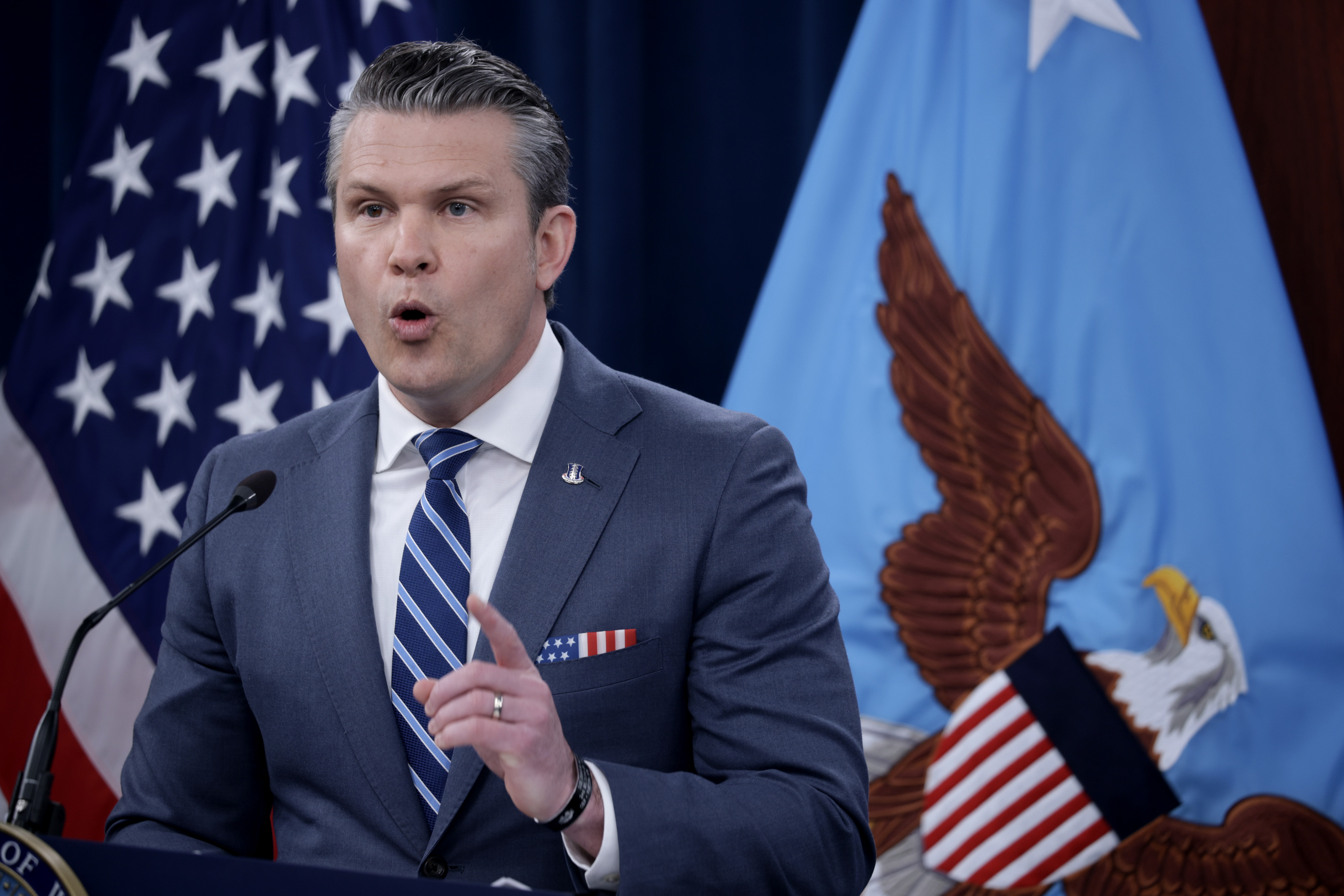
Secretary of War Pete Hegseth held a briefing at the Pentagon on the Iran war. Getty Images
“This includes Dark Fleet vessels carrying Iranian oil. As most of you know, Dark Fleet vessels are those illicit or illegal ships evading international regulations, sanctions or insurance requirements.”
Secretary of War Pete Hegseth also warned Iranian leaders to “choose wisely” on whether to accept a deal with the US.
Follow The Post’s live coverage of President Trump and national politics for the latest news and analysis
“To Iran: Choose wisely. I pray you choose a deal which is in your grasp for the betterment of your people and for the betterment of the world,” Hegseth said at the press conference. “In the meantime, the War Department is locked and loaded.”
President Trump first announced the blockade in the Strait of Hormuz on Sunday — and by Tuesday, US Central Command, which coordinates the joint forces in the Middle East, announced the cutoff of Iranian ports was fully implemented.
Caine also stressed, as White House press secretary Karoline Leavitt did on Wednesday, that non-Iranian-linked traffic is still allowed through the Strait of Hormuz.
Graphics of a map showing the US Navy’s blockade of the Strait of Hormuz during a press conference hosted by Secretary of War Pete Hegseth at the Pentagon on April 16.
“Let me be clear, this blockade applies to all ships, regardless of nationality, heading into or from Iranian ports,” Caine said.
“The US action is a blockade of Iran’s ports and coastline, not a blockade of the Strait of Hormuz. Enforcement will occur inside Iran’s territorial seas.”
Gen. Dan Caine, chairman of the Joint Chiefs of Staff, explained that in addition to cutting off Iranian ports, other US military assets will also stop vessels elsewhere in the world that are supporting the Islamic Republic. AFP via Getty Images
Trump ordered the blockade in response to Iran taking control of the Strait of Hormuz, through which over a fifth of the world’s seaborne oil flows annually.
Iran had spooked maritime traffic by allegedly laying mines, claiming to have forgotten their locations, and firing off drone and missile strik