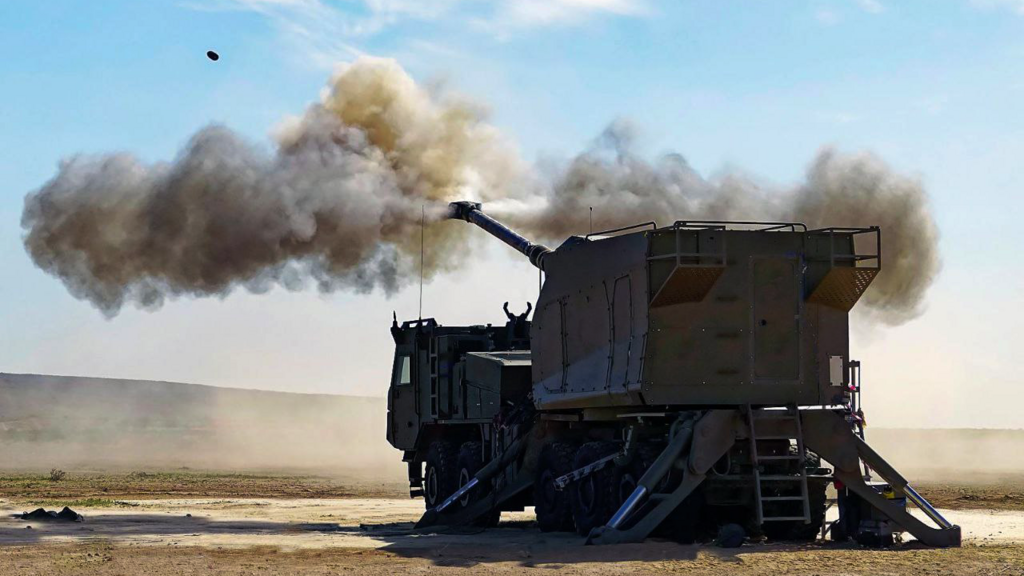
以色列国防军本周首次部署了先进的“漫游者”(Ro'em)火炮连打击真主党目标。该系统具有自动装填、精准多角度火力和快速重新定位功能,能够在减少人员劳累的情况下维持持续火力。
以色列国防军首个先进的“漫游者”火炮连本周进行了首次作战应用,炮兵部队官员对结果表示非常满意。该系统由军方和埃尔比特系统(Elbit Systems)历时六年开发,融合了先进技术和人工智能,使其比前代系统更强大、更快、更精确。
该系统被部署用于打击黎巴嫩境内的真主党目标,其表现预计将加速以军扩大采购的计划,最终取代旧款美制“Doher”火炮系统。
每分钟8枚炮弹:实战中的“漫游者”
- “漫游者”每分钟可发射多达8枚炮弹,是其前代的四倍。
- 射程达40公里,约为“Doher”的两倍。
- 配备40枚炮弹的弹匣,仅需3名成员在控制车内操作。
其关键创新在于AI能力:操作员或指挥官指定目标,系统会自动装填炮弹、精确瞄准并开火。它还连接到军事数据系统,可直接接收来自情报部门或指挥中心的目标。
“漫游者”分支负责人B.中校表示:“我们本周使用了‘漫游者’进行了首次作战射击,打击了真主党向我军和后方发动袭击的阵地。这是一个巨大的成功。这次射击显著推进了系统的能力及其在炮兵部队的整合。这是在等待50年后的历史性时刻。”电池指挥官T.上尉表示,系统的表现超出了预期。
The IDF this week for the first time deployed its advanced 'Ro'em' artillery battery against Hezbollah targets, featuring autonomous loading, precise multi-angle fire and rapid repositioning, allowing sustained fire with reduced crew strainThe IDF’s first advanced “Ro’em” artillery battery underwent its initial operational use this week, with officials in the Artillery Corps expressing strong satisfaction with the results. The system, developed over six years by the military and Elbit Systems, incorporates advanced technology and artificial intelligence, making it more powerful, faster and more precise than its predecessor.The system was deployed against Hezbollah targets in Lebanon, and its performance is expected to accelerate the IDF’s plans to expand procurement, eventually replacing the older US-made “Doher” artillery systems.8 shells per minute: the Ro’em in action (Video: Courtesy of Elbit)The Ro’em can fire up to eight shells per minute — four times the rate of its predecessor — and has a range of 40 kilometers, roughly double that of the Doher. It carries a magazine of 40 shells and requires a crew of just three, operating from within a control vehicle.Its key innovation lies in its AI capabilities: the operator or commander designates a target, and the system autonomously loads the shell, aims precisely and fires. It is also connected to military data systems and can receive targets directly from intelligence sources or command centers.“We carried out the first operational fire this week using the Ro’em, targeting Hezbollah positions that had launched attacks on our forces and the home front,” said Lt. Col. B., head of the Ro’em branch. “It was a major success. The fire we conducted significantly advances the system’s capabilities and its integration into the Artillery Corps. This is history in the making after 50 years of waiting.”Lt. T., commander of the Ro’em battery, said the system exceeded expectations. “Despite limited familiarity, it performed excellently and delivered results. We learned a great deal about how to integrate it into operational frameworks and even developed new approaches for maneuvering forces, including firing protocols and rates tailored to operational needs.”The military plans to convert Doher battalions to the new system, though no timeline has been provided. The transition is being carried out at the Tze’elim base, with the Ro’em branch overseeing training, doctrine development and testing in coordination with the IDF’s weapons development units and Elbit.4 View gallery ‘Does more with less’: the Ro’em Asked whether the Artillery Corps would struggle to part with the Doher, Lt. T. said: “I commanded a Doher crew and know the system well. There are many things the Ro’em can do that the Doher is far behind in — both operationally and technologically. This week was a significant opportunity to learn the system, and it moved us much closer to full operational capability.”Lt. Col. B. added that while the Doher