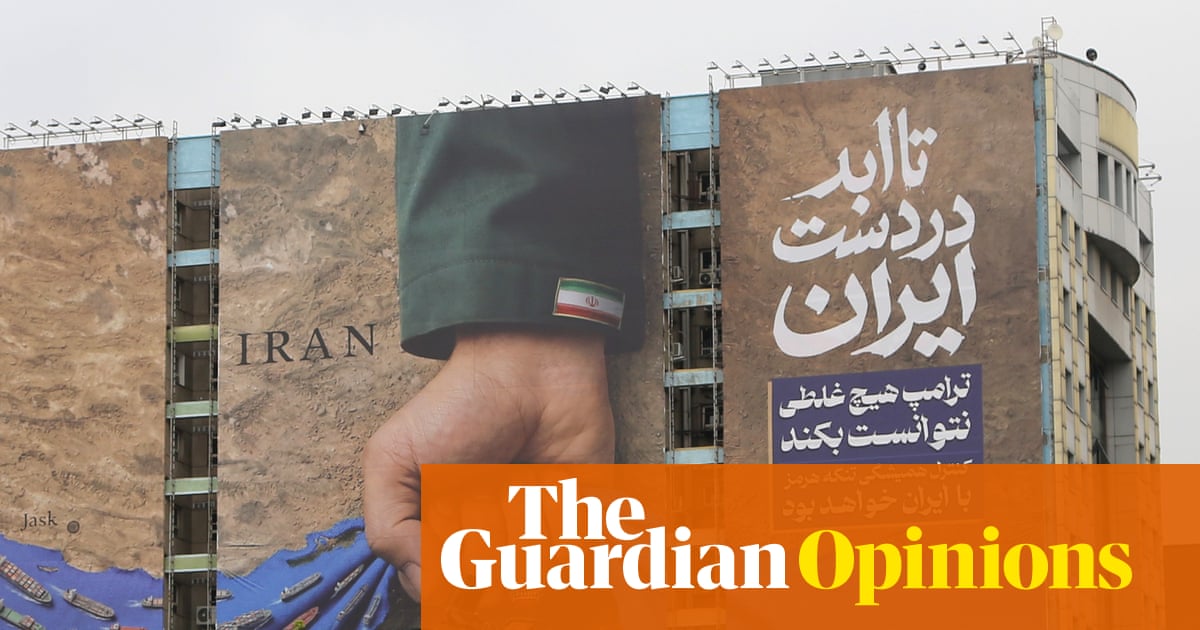
The failure of the Islamabad talks to end the US-Israel war on Iran was hardly surprising, given the stark differences between Washington’s 15-point proposal and Tehran’s 10-point equivalent. The 2015 Joint Comprehensive Plan of Action (JCPOA), which capped Iran’s uranium enrichment, took more than two years to negotiate, and its roots actually reach back to 2003. The US vice-president, JD Vance, spent less than a full day in Islamabad for negotiations that included the nuclear question and several others.The surprise was Vance’s explanation for the failure – that Iran rejected the terms presented by the US. The American side was not in a position to dictate terms because Iran stood firm when the 8 April ceasefire took effect. But Vance seemed to believe, as does his boss Donald Trump, that the Iranians had been defeated and the US didn’t have to budge.Following Vance’s return, Trump, true to form, quickly upped the ante by imposing a naval blockade on all ships sailing to or from Iranian ports through the strait of Hormuz. A blockade is an act of war, so things are already dicey. They could get much worse if Iran responds to the blockage of its oil exports by attacking the energy infrastructure of the US-aligned Gulf monarchies, something it has already threatened to do. That would drive up the price of oil, diesel, liquefied natural gas (LNG) and other critical commodities. Trump might resume attacks on Iran and Israel would probably follow. Full-on war would be back. Hence the urgency of restarting talks.So what next? Fortunately, neither side has ruled out further negotiations. Moreover, intermediaries – Pakistan and Egypt – are diligently working behind the scenes to bridge the gaps between Tehran and Washington. Both Tehran and Washington have reasons to avert renewed war. Trump knows more war will deepen the hole he dug by accepting the methodical assurances of Israeli prime minister Benjamin Netanyahu and his team that an unprovoked war on Iran would bring down the regime. Inflation is rising, his already low poll numbers are falling, and the midterm elections loom. Iran withstood a fearsome assault, but the massive damage it suffered will only increase if fighting resumes, making reconstruction harder and prolonging the economic hardship that has fuelled mass unrest in the past.These circumstances are favourable to renewed diplomacy, but that requires a feasible framework. My potential framework doesn’t pretend to be comprehensive – Iran’s ballistic missile programme remains a live issue – but it does address the central issues in dispute.First, it requires that the United States recognise Iran’s right to enrich uranium – which it has as a signatory of the non-proliferation treaty – for non-military purposes and subject to International Atomic Energy Agency (IAEA) safeguards. Enrichment would be capped at 3.67% – which was the 2015 JCPOA limit anyway – with electronic and onsite IAEA monitoring and the dismantling and storage of Iranian
DIRECT2026年4月17日
针对美伊局势升级:英媒建议签署互不侵犯条约以避战
卫报英国具有全球影响力的主流综合性报纸