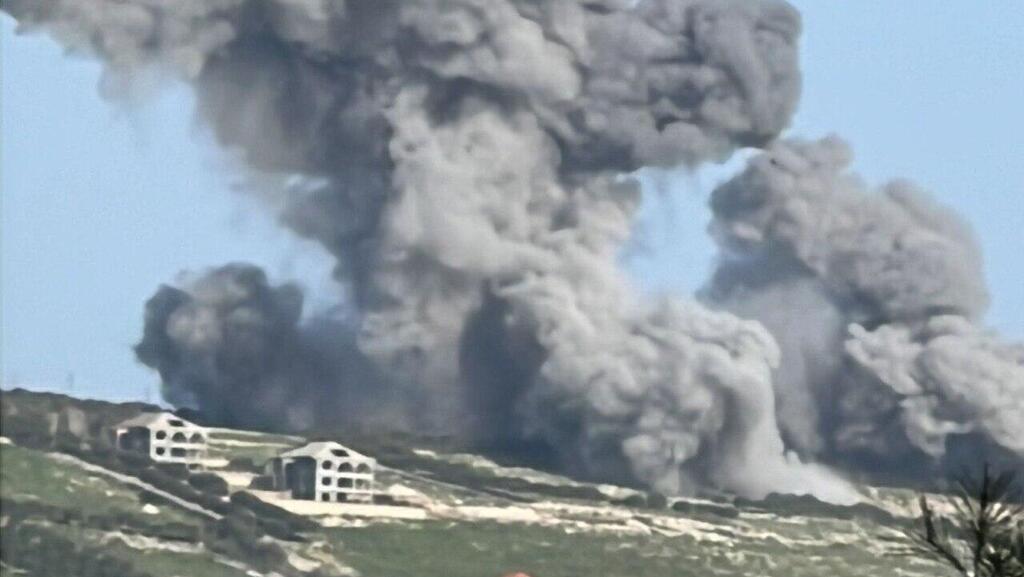
Analysis: The conditions Israel needs for a ceasefire will be secured through military gains, diplomatic action and above all the central lesson of Oct. 7: taking control of its own fate and looking forward, not being defined by Hezbollah or IranIn the Middle East developments are judged not just the morning after, but the morning after that. Many once praised Ehud Barak’s withdrawal from Lebanon, which later turned against Israel in the form of the Hezbollah “monster” that entrenched itself along the border and proved to be a grave mistake. Operation Guardian of the Walls, including the “Metro” operation to destroy Hamas tunnels, was marketed as a major success but later proved a failure. On Oct. 7, it became clear it had been one of the triggers for the surprise attack, contributing to Hamas’ sense of success.1 View gallery IDF strike in southern Lebanon In practice, Trump’s announcement of a ceasefire in Lebanon enabled Iran to link the various fronts, and here Netanyahu failed to maintain the separation that had held until now. From an operational standpoint, two central questions must be asked regarding a ceasefire in Lebanon. The first: Has the security situation for residents of Metula and Nahariya improved, remained unchanged or deteriorated?The second looks ahead: Will the security reality from now on be one in which conditions improve month by month or quarter by quarter, or the opposite? Is the pace at which Israel degrades Hezbollah greater than the pace at which the group rebuilds, or vice versa? Time will be needed to answer these questions, but the answers will eventually become clear.Against the backdrop of ceasefire negotiations in Lebanon, the IDF set three conditions for an agreement: the creation of a buffer zone in southern Lebanon up to the Litani River, free of Hezbollah presence and infrastructure; the preservation of full military freedom of action to remove threats, including north of the Litani; and the launch of a long-term process to disarm the organization under a U.S.-supervised mechanism. At present, the IDF is restricted from striking north of the Litani up to Beirut. It controls fire along the Litani line and prevents civilians from moving south toward the border fence.An immediate and full ceasefire under these conditions, including a partial withdrawal of forces, does not improve the security situation compared to the start of the war and should not be accepted. The IDF must remain inside the territory, deeper than the line of five outposts established in November 2024 at the end of Operation Northern Arrows, and must also preserve freedom of action against Hezbollah’s military buildup, including strikes in Beirut.Hezbollah Secretary-General Naim Qassem has already made clear that he entered this campaign to break that status quo and reach a situation in which the IDF does not strike at all. Such a reality, if realized, would represent a significant deterioration in security and could not be presented as a vic
DIRECT2026年4月17日
以军提出黎以停火三大条件:设立南部缓冲区并保留行动自由
以色列新消息报以色列发行量最大的主流综合性媒体