NEWYou can now listen to Fox News articles!
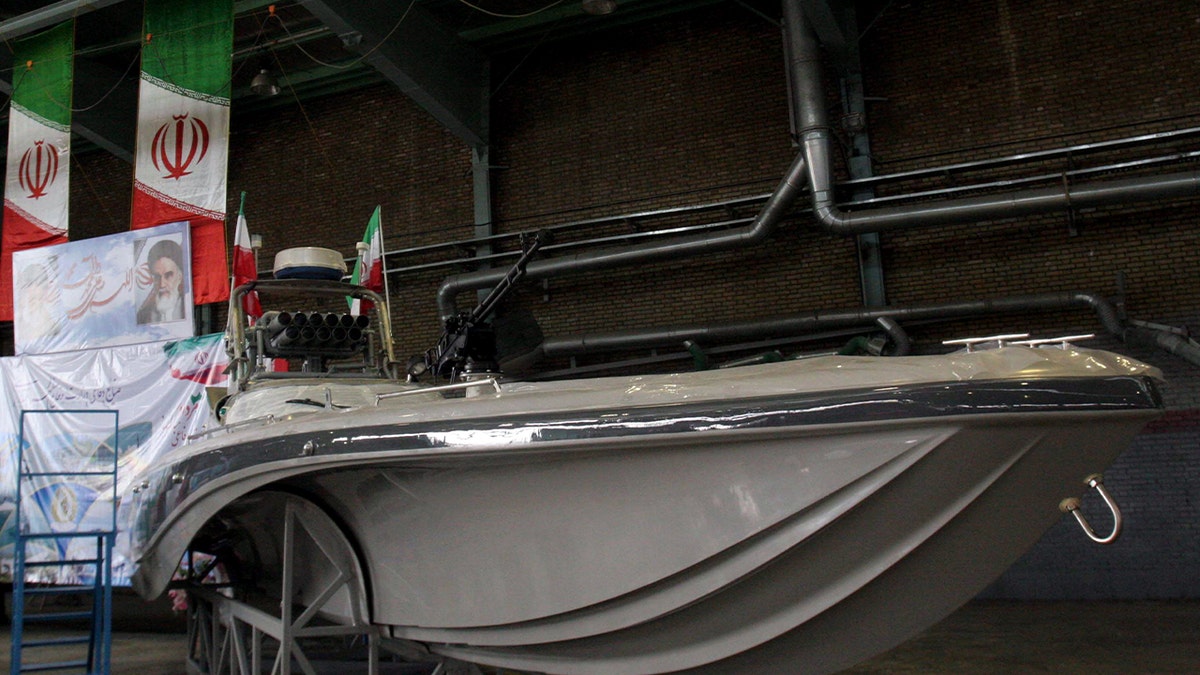
The U.S. is preparing to take on Iran’s fast-attack boats using a playbook it already has tested in another theater — lethal strikes on small vessels tied to drug trafficking networks in the Caribbean and eastern Pacific.Since September 2025, U.S. forces have conducted dozens of deadly strikes on suspected drug-trafficking vessels, part of a broader military campaign targeting cartel-linked networks. The U.S. campaign against drug-trafficking boats offers a glimpse of how American forces handle small, fast-moving targets at sea.Officials now suggest similar tactics could be used against Iranian vessels in the Strait of Hormuz.President Donald Trump made that link explicit in a Truth Social post Monday, warning that any Iranian boats approaching the blockade would be "immediately ELIMINATED, using the same system of kill that we use against the drug dealers on boats at Sea … It is quick and brutal."EX-OBAMA ADVISOR SAYS IRAN COULD TARGET GULF OIL FACILITIES AS TRUMP BLOCKADE SQUEEZES REGIMESince the campaign began, U.S. Southern Command has carried out dozens of strikes on vessels, killing more than 160 people and destroying dozens of boats. Those operations rely on surveillance, rapid targeting and precision strikes, capabilities that could also be used in the Gulf.But in the Caribbean and eastern Pacific, U.S. forces are targeting nonstate actors with limited ability to respond. In the Strait of Hormuz, they would be confronting Iran’s military — armed, organized, and operating in one of the most strategically sensitive waterways in the world.Applying that approach in the Persian Gulf, against a state-backed military force, carries far higher risks.The Trump administration’s blockade of Iranian ports, which began Monday, has pushed U.S. forces into close proximity with the one part of Iran’s navy that has largely survived weeks of strikes: its fast-attack boat fleet.U.S. and Israeli operations have effectively gutted Iran’s conventional navy, with more than 155 vessels sunk during the conflict, according to U.S. assessments. Applying that approach in the Persian Gulf, against a state-backed military force, carries far higher risks. (Yalda Moaiery/AFP via Getty Images)Still, what’s left of Iran’s naval threat looks very different from what the U.S. has already destroyed.Large surface ships — frigates, corvettes and other major vessels — have taken the brunt of the strikes. But those ships were never the centerpiece of Iran’s strategy in the Gulf.The focus has long been on smaller, faster platforms."We should think in the thousands," said Farzin Nadimi, a senior fellow at the Washington Institute for Near East Policy. "If you include very small boats up to more capable fast-attack craft, the total could reach 3,000 to 4,000 vessels."HEGSETH WARNS IRANIAN LEADERS TO 'CHOOSE WISELY' ON DEAL WITH US: 'WE ARE LOCKED AND LOADED'Of those, he said, roughly 800 vessels to 900 vessels are capable of carrying a
DIRECT2026年4月17日
借鉴缉毒实战:美海军针对伊朗快艇开发“致命”新战术
福克斯新闻美国主流保守派新闻媒体