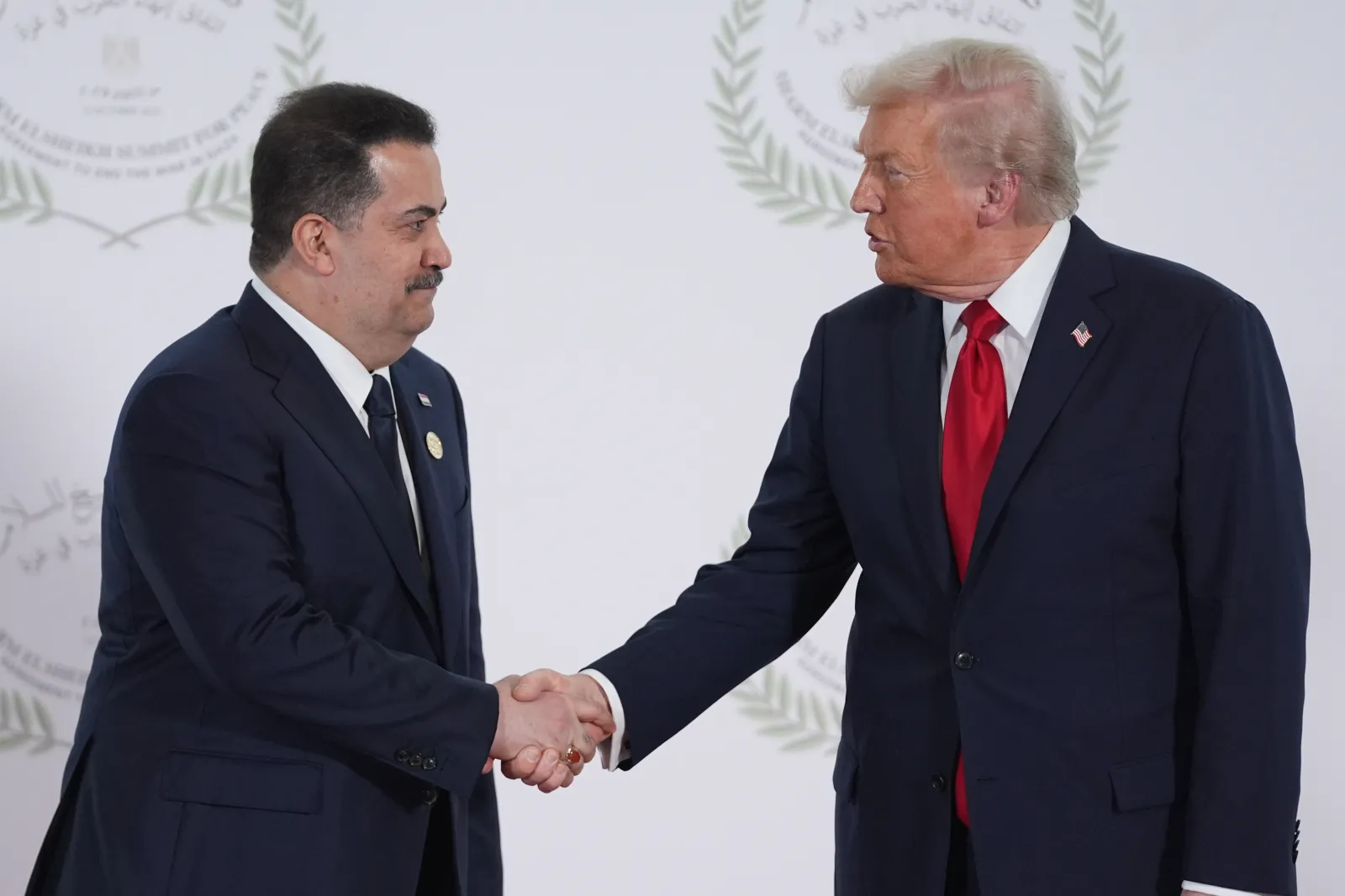
Last November, millions of Iraqis cast their ballots in a free election, and my coalition won the highest number of votes of any list. That result was more than an electoral victory. It was a public endorsement of a difficult but necessary course: preserving Iraq’s stability through a period of extraordinary regional danger while building the foundations for stronger institutions and long-term economic renewal.But elections alone do not define a government. Actions do. Over the past two-and-a-half years, through three cycles of regional escalation, my government kept Iraq out of war, protected international personnel on our soil and held the state together under conditions that tested every institution we have. At the same time, we brought ExxonMobil, Chevron, BP and GE Vernova back to Iraq with billions of dollars in new energy commitments, and attracted over $100 billion in investment. That record is the foundation of what I am proposing today.That is why this is the right moment to redefine Iraq’s relationship with the United States.For too long, Iraq has been viewed in Washington primarily through the lens of crisis: war, terrorism, armed group violence and regional rivalry. Those realities are part of our recent history, and some continue to shape our present. But they no longer tell the whole story. Iraq today is not simply a country to be managed when conflict escalates. It is a state that has demonstrated resilience under immense pressure and now offers strategic, economic and political value that the United States should recognize more clearly....Since October 2023, when the war in Gaza triggered a wider cycle of regional escalation, my government has faced one overriding challenge: keeping Iraq from being drawn into a conflict not of its choosing. That demanded more than restraint. Armed groups launched attacks on American military positions from Iraqi territory. Regional powers exchanged fire. Public anger was intense, and pressure to escalate came from multiple directions. In such conditions, the easier outcome would have been drift, fragmentation and eventual collapse into another round of proxy conflict. That did not happen.My government acted through direct engagement, security directives and sustained political management to prevent Iraqi territory from becoming an open arena for regional war. When fighting expanded between Israel and Iran in June 2025, Iraq made clear that its territory and airspace could not be used in attacks against neighboring countries. When the conflict intensified again with Operation Epic Fury in early 2026, the pressure multiplied. Missiles struck Gulf capitals. There were attacks against diplomatic missions and U.S. interests that underscored the volatility of the moment. Armed factions called for Iraq to enter the war. Yet even under those conditions, our objective remained the same: to contain escalation, protect Iraq’s stability and prevent the country from being drawn into a broader regional confron
DIRECT2026年4月17日
伊拉克总理苏达尼:巴格达准备重新定义对美战略关系
新闻周刊美国知名综合性新闻与分析周刊