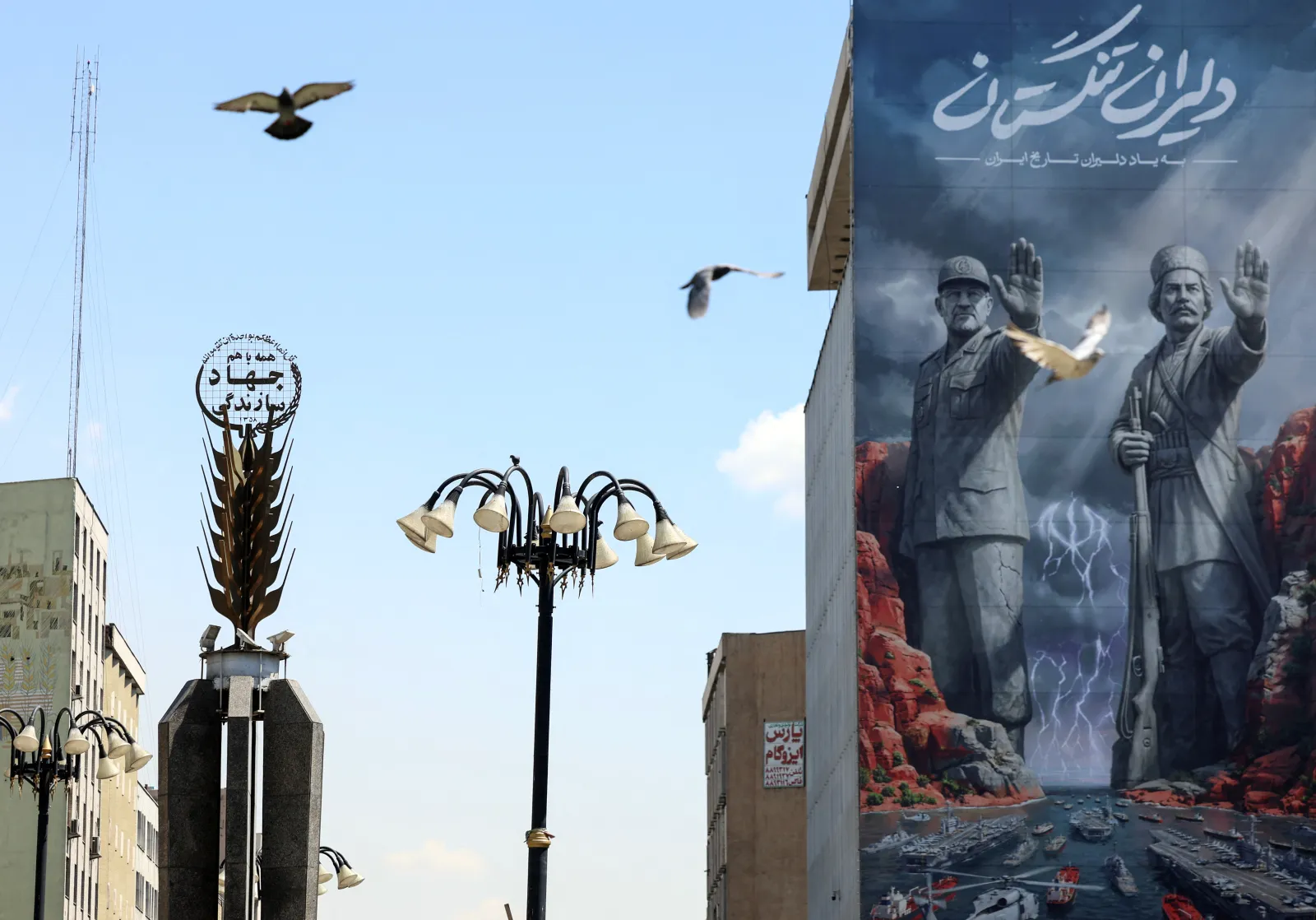
After outlasting a joint U.S.-Israeli military campaign, Iran now finds itself contending with an even more menacing threat in the form of a blockade ordered by President Donald Trump to sever the Islamic Republic's remaining economic lifelines.The White House's tactic will test Tehran in ways that risk undermining a survival doctrine that has weathered the assassination of top leadership and devastation of military assets by applying asymmetric pressure through regionwide missile and drone attacks and exertion of control over the Strait of Hormuz energy trade choke point.Now, that same crucial waterway is being weaponized against Iran, with U.S. Central Command claiming total enforcement of the blockade targeting vessels seeking to arrive at and depart from Iranian ports.And while this measure may not alone be enough to force a deeply entrenched Islamic Republic into capitulation, the effects are likely to be severe for a nation already in the throes of economic crisis and popular discontent in the lead-up to the conflict."We will see a sharp increase in consumer prices, pushing the annual inflation rate into triple-digit territory," Ali Dadpay, a Texas-based economist specializing on Iran, told Newsweek. "The most serious challenge for the regime would be the combination of fiscal stress and social pressure.""If the state cannot sustain export earnings while prices for basic goods rise sharply, it will face growing difficulty financing its patronage networks, maintaining purchasing power, and containing unrest," Dadpay said. "In that scenario, the blockade would not necessarily produce immediate state collapse, but it could significantly weaken the regime’s economic base and increase the cost of political control."...A Model of ResistanceJust as Iran long prepared for the kind of existential struggle it faces on the battlefield, the Islamic Republic has a history of evading economic roadblocks imposed by sanctions."Over the past decade, particularly since 2010, Iran has focused on building a 'sanctions adaptation toolkit' rather than eliminating its underlying vulnerability," Hadi Kahalzadeh, researcher at Brandeis University's Center for Global Development and Sustainability, told Newsweek."This has included shifting trade toward non-Western partners, diversifying parts of the economy, reducing dependence on certain strategic imported raw materials, promoting selective domestic production in key sectors such as food and pharmaceuticals, developing alternative financial channels outside the dollar system, and expanding the use of informal and semi-formal networks, including a shadow shipping fleet," he said.Among the outcomes described by Kahalzadeh was a "further militarization of the economy and the shrinking of the independent private sector."The main benefactor of this arrangement has been the Islamic Revolutionary Guard Corps (IRGC). While formally acting as a military service dedicated to the preservation of the Islamic Republic, the IRGC
DIRECT2026年4月17日
面对美方海上封锁:伊朗生存防御教义面临严峻考验
新闻周刊美国具有国际影响力的综合性新闻周刊