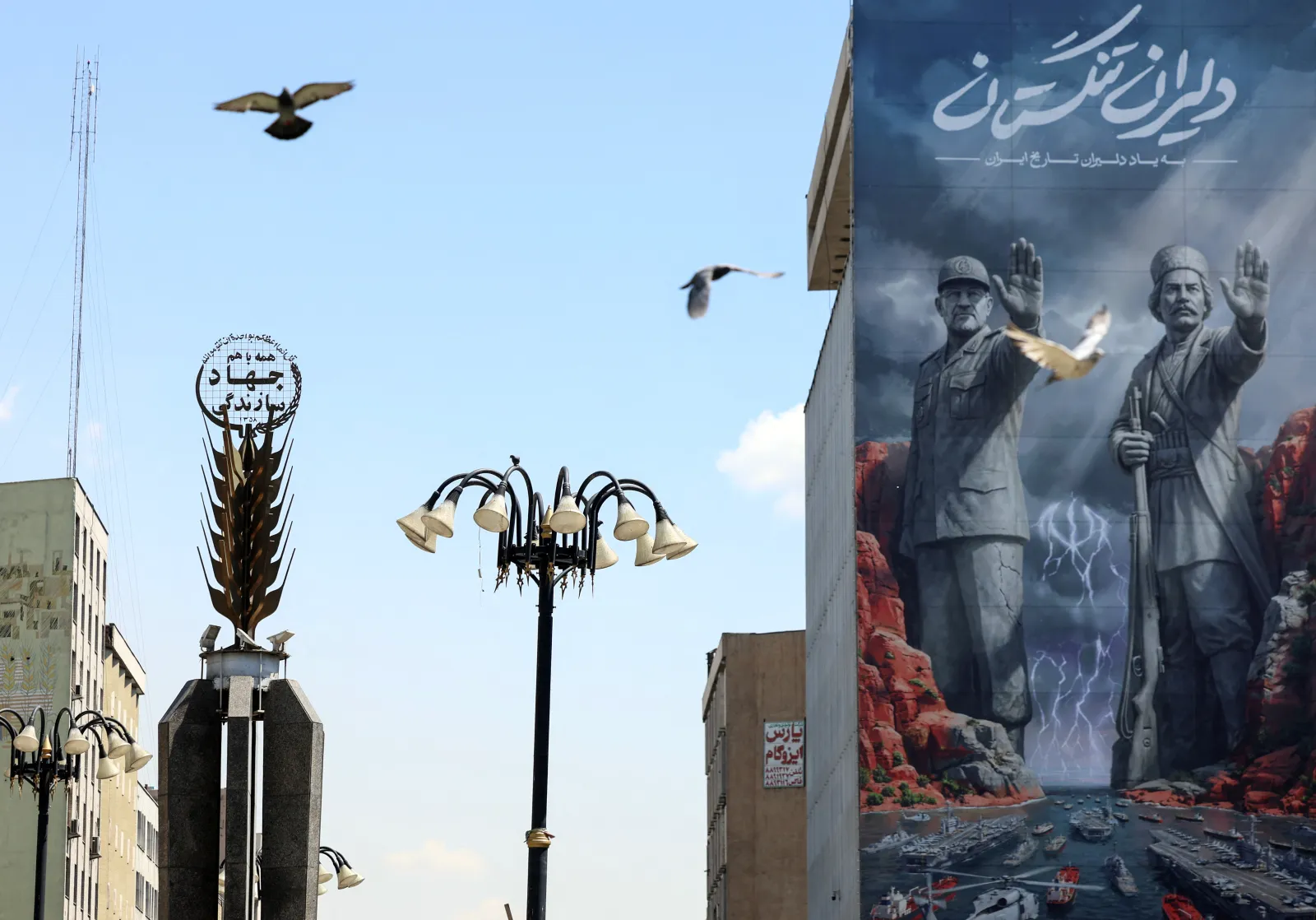
在挺过美以联合军事行动后,伊朗现在发现自己面临着更威胁的挑战:唐纳德·特朗普总统下令实施封锁,以切断该国剩余的经济命脉。白宫的这一策略将考验德黑兰。此前,伊朗通过在全地区应用导弹和无人机实施异步压力,并控制霍尔木兹海峡能源贸易咽喉,维持了一套经受住高层暗杀和军事资产毁灭考验的生存教义。
现在,这一关键水道正被用来对抗伊朗,美国中央司令部声称将全面执行针对进出伊朗港口船只的封锁。虽然这一措施本身可能不足以迫使根深蒂固的德黑兰方面投降,但对于一个在冲突前就已陷入经济危机和民众不满的国家来说,其影响可能是严重的。
“我们将看到消费价格急剧上涨,将年通货膨胀率推向三位数,”专门研究伊朗问题的经济学家阿里·达德派告诉《新闻周刊》,“对该政权最严重的挑战将是财政压力与社会压力的结合。”
达德派表示:“如果国家无法维持出口收入,同时基本商品价格大幅上涨,那么在资助其网络、维持购买力和抑制动荡方面将面临越来越大的困难。在这种情况下,封锁不一定会导致国家立即崩溃,但它会显著削弱政权的经济基础,并增加政治控制的成本。”
抵抗模式
正如伊朗长期为战场上的生存斗争做准备一样,其在规避经济制裁方面也有悠久的历史。在过去十年中,特别是自2010年以来,伊朗积累了大量应对经验。
After outlasting a joint U.S.-Israeli military campaign, Iran now finds itself contending with an even more menacing threat in the form of a blockade ordered by President Donald Trump to sever the Islamic Republic's remaining economic lifelines.The White House's tactic will test Tehran in ways that risk undermining a survival doctrine that has weathered the assassination of top leadership and devastation of military assets by applying asymmetric pressure through regionwide missile and drone attacks and exertion of control over the Strait of Hormuz energy trade choke point.Now, that same crucial waterway is being weaponized against Iran, with U.S. Central Command claiming total enforcement of the blockade targeting vessels seeking to arrive at and depart from Iranian ports.And while this measure may not alone be enough to force a deeply entrenched Islamic Republic into capitulation, the effects are likely to be severe for a nation already in the throes of economic crisis and popular discontent in the lead-up to the conflict."We will see a sharp increase in consumer prices, pushing the annual inflation rate into triple-digit territory," Ali Dadpay, a Texas-based economist specializing on Iran, told Newsweek. "The most serious challenge for the regime would be the combination of fiscal stress and social pressure.""If the state cannot sustain export earnings while prices for basic goods rise sharply, it will face growing difficulty financing its patronage networks, maintaining purchasing power, and containing unrest," Dadpay said. "In that scenario, the blockade would not necessarily produce immediate state collapse, but it could significantly weaken the regime’s economic base and increase the cost of political control."...A Model of ResistanceJust as Iran long prepared for the kind of existential struggle it faces on the battlefield, the Islamic Republic has a history of evading economic roadblocks imposed by sanctions."Over the past decade, particularly since 2010, Iran has focused on building a 'sanctions adaptation toolkit' rather than eliminating its underlying vulnerability," Hadi Kahalzadeh, researcher at Brandeis University's Center for Global Development and Sustainability, told Newsweek."This has included shifting trade toward non-Western partners, diversifying parts of the economy, reducing dependence on certain strategic imported raw materials, promoting selective domestic production in key sectors such as food and pharmaceuticals, developing alternative financial channels outside the dollar system, and expanding the use of informal and semi-formal networks, including a shadow shipping fleet," he said.Among the outcomes described by Kahalzadeh was a "further militarization of the economy and the shrinking of the independent private sector."The main benefactor of this arrangement has been the Islamic Revolutionary Guard Corps (IRGC). While formally acting as a military service dedicated to the preservation of the Islamic Republic, the IRGC