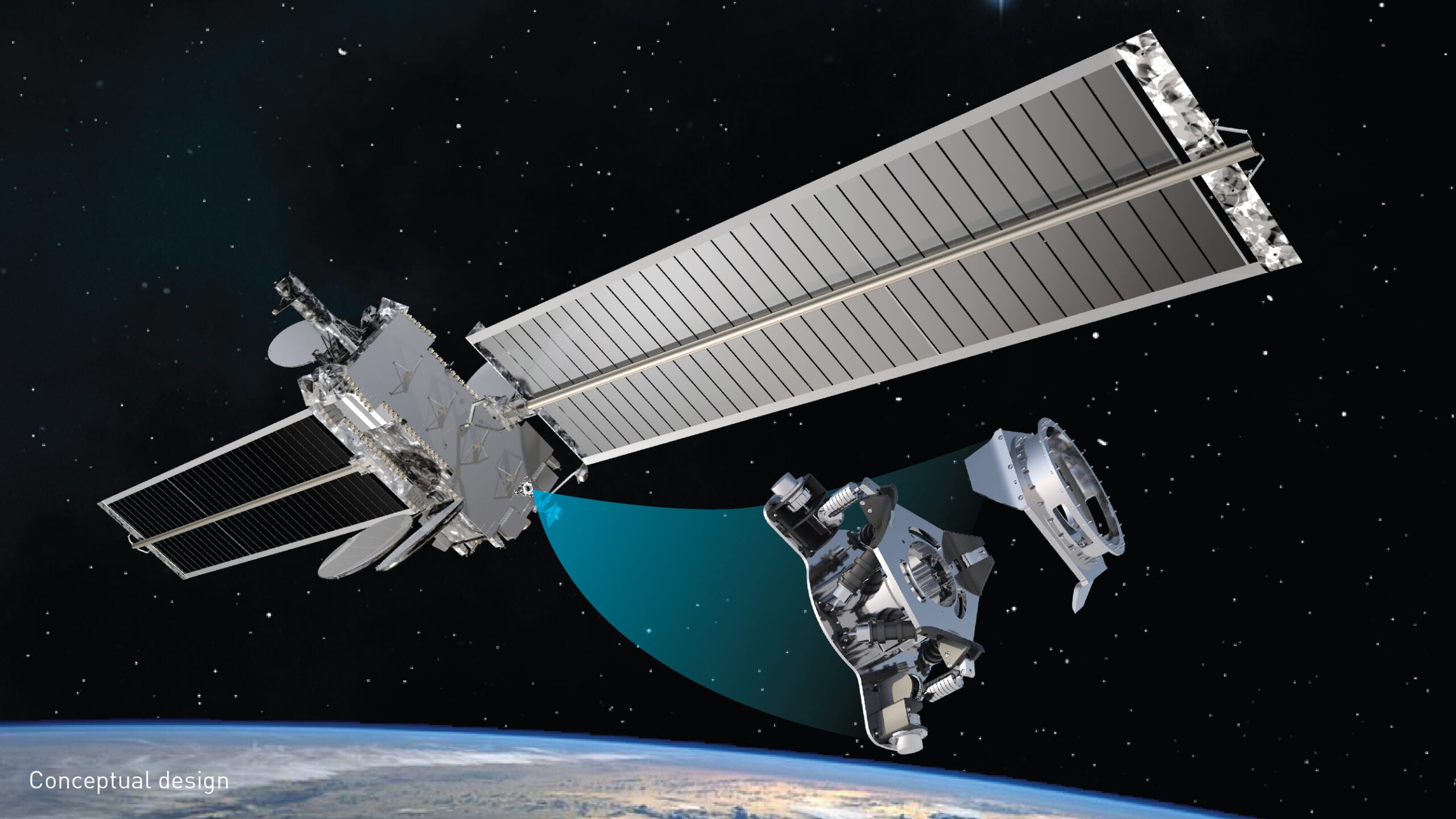
在经历了多年对开发具备长期自由移动能力卫星的质疑后,美国太空军现在正接受这一概念,并将其作为轨道战的基础。太空军作战部长钱斯·萨尔茨曼将军在年度太空研讨会上表示,该部门正与太空司令部合作,探索在轨机动和卫星加油技术,这是其15年“目标部队”计划的一部分。
太空司令部司令斯蒂芬·怀廷将军一直是轨道机动与物流的坚定倡导者。他在演讲中呼吁制定新的空间机动战争战略,并解释说:“在行动中超越对手是美国联合部队的优势,这也是我们希望带入太空领域的。”
历史上,太空军官员对机动行动持犹豫态度,质疑其近期“军事效用”。但萨尔茨曼本周暗示其观点已发生转变,表示需要一支“机动部队”。尽管如此,仍存在关键问题需要解决,例如模拟机动后的需求变化。萨尔茨曼解释说,将空间机动纳入计划的目的是为了解决未知数,以便正确制定计划、资源配置和采购策略。太空军将与太空司令部密切合作进行兵棋推演,以验证这些作战概念。
COLORADO SPRINGS — After years of open skepticism about US Space Command’s push for development of satellites with the ability to move freely on orbit over long periods of time, the Space Force now is embracing the concept as a foundation for orbital warfare.
Chief of Space Operations Gen. Chance Saltzman told reporters on Wednesday here at the annual Space Symposium that the service is working very closely with SPACECOM on orbital warfare, and to explore the technology and the operational concepts to enable on-orbit maneuverability and satellite refueling as part of its 15-year Objective Force plan.
SPACECOM head Gen. Stephen Whiting has been an unflagging advocate for on-orbit mobility and logistics over the past year, as was his predecessor Gen. James Dickinson. Whiting in his Tuesday symposium presentation called for a new space maneuver warfare strategy, explaining later to reporters that “it is a strength of the United States Joint Force that we we outmaneuver our adversaries, and that’s what we want to bring to the space domain as well in ongoing operations.”
Space Force officials have historically been more hesitant about mobility operations, questioning its near-term “military utility.” But this week Saltzman suggested he has come around, saying, “When [Whiting] says ‘dynamic maneuvering’, I agree. We need a maneuver force.”
But he said key questions remain. “Okay, what does that look like? Let’s model it. Let’s simulate it. If they can maneuver, do you need as many or does that drive a different set of requirements? … [W]e have a starting point: the Future Operating Environment, the Objective Force.”
He explained that the purpose of including space mobility in the Objective Force plan was to raise those questions, including “what are the unknowns that we need to resolve in the coming years so we can get our programming and our resourcing and our acquisition strategies right?”
Saltzman said the Space Force “will work closely with US Space Command on war games, modeling and simulation. … We will have to do continual analysis and then refinement as it marches its way closer and closer.”
The Future Operating Environment and the Objective Force, both released by the Space Force on Wednesday, are aimed at defining threats and the service’s future needs — ranging from kit to personnel to infrastructure to training — in five-year increments through 2040.
The Objective Force plan asserts that due to “competitors” seeking to degrade US space capabilities, “the most successful” space architectures will be designed to include “maneuverable and serviceable platforms.”
It calls for demonstrating on-orbit refueling and fielding operational “space tugs” that it characterizes as “Augmented Maneuver” systems between 2025 and 2030. Between 2030 and 2035, the plan envisions making re-fueling operational and demonstrating “high thrust reusable” orbital transfer vehicles. Finally, between 2035 and 2040, the plan calls for fielding an “initial on-orbit logist