根据2027财年预算申请,美国海军请求拨款采购136枚标准-3 Block IIA(SM-3IIA)和540枚标准-6(SM-6)导弹,总计676枚标准系列海军拦截弹。
具体的预算明细显示,540枚SM-6导弹由海军直接负责预算,其中106枚列入基础请求,434枚列入追加法案。相应的资金分别为:基础请求约7.3亿美元,追加拨款包约35.9亿美元,使SM-6的总采购额达到43.3亿美元。
关于SM-3 Block IIA,这种大气层外弹道导弹拦截弹由导弹防御局负责预算,由配备宙斯盾系统的美国海军舰艇通过MK-41垂直发射系统发射。在136枚SM-3IIA中,114枚通过追加请求资助,22枚在基础请求中资助,总拨款额为42亿美元。
总计标准系列导弹的申请资金约为85亿美元。这比2026财年的12.6亿美元拨款增加了73亿美元以上。申请的金额反映了相比以往产率的大幅提升,因为在2026财年,仅有139枚SM-6和12枚SM-3 Block IIA获得了资金支持。
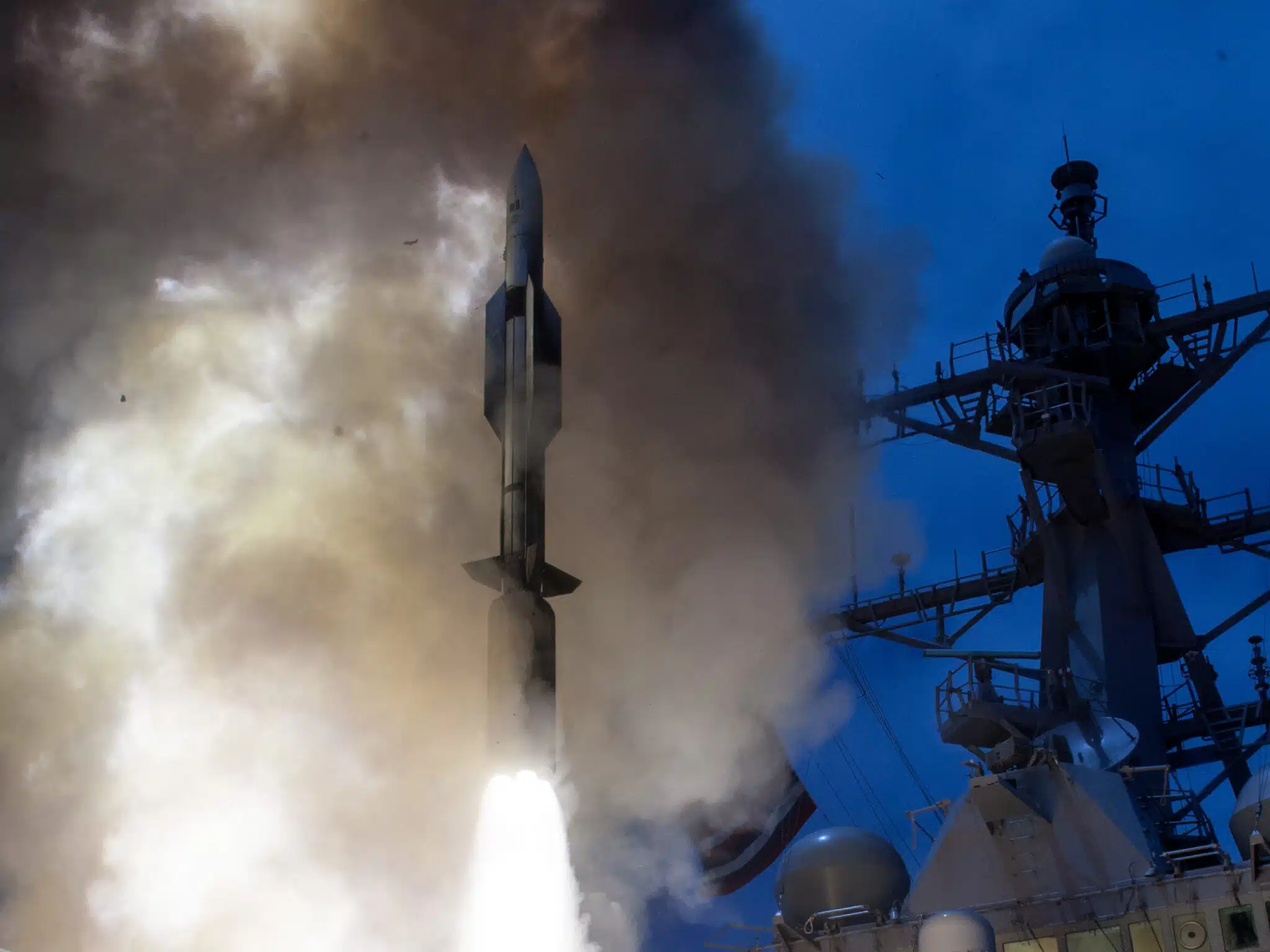
关于SM-6:美国海军“约翰·保罗·琼斯”号驱逐舰(DDG 53)在宙斯盾武器系统实弹测试期间发射了SM-6。该导弹为水面舰艇提供了先进的防空作战能力。SM-6设计用于增强现有的标准-2库存,是海军最先进的武器之一。
Stated in the Fiscal Year 2027 budget request, the United States Navy desires funds required to purchase 136 RIM-161D Standard Missile 3 Block IIAs (SM-3IIA) and 540 RIM-174 Standard Missile 6s (SM-6), for a total of 676 Standard Missile series naval interceptors.
The exact budget break down places the 540 SM-6s (exact block/iteration not listed) under direct Navy budgetary authority, with 106 listed in the base FY 2027 request and 434 partitioned into a reconciliation bill. Subsequently, the requisite funding correlates to ~$730 million for the interceptors in the discretionary (base) request, and ~$3.59 billion for the rest located in a reconciliation funding package, placing the total SM-6 buy at $4.33 billion dollars.
In regards to the SM-3 Block IIAs, the exo-atmospheric ballistic missile interceptor falls under the budgetary authority of the Missile Defense Agency, with the interceptors themselves fired off of Aegis Equipped U.S. Navy Vessels via the MK-41 Vertical Launch System. Additionally, out of 136 SM-3IIAs, 114 of the are funded through a reconciliation request on top of the 22 funded in the base request, with a total of $4.2 billion dollars allotted.
In total, the funds requested of all of the Standard Missile series rounds totals to just about $8.5 billion dollars, representing an increase of over $7.3 billion dollars from Fiscal Year 2026, which saw only $1.26 billion allocated. Requested dollar amounts thus fund drastic production increases compared to previous rates, as in FY 2026, only a total of 139 SM-6 rounds were funded along with just 12 SM-3 Block IIAs.
About the SM-6
The Arleigh-Burke class guided-missile destroyer USS John Paul Jones (DDG 53) launches a Standard Missile-6 (SM-6) during a live-fire test of the ship’s Aegis Weapons System. The SM-6 provides advanced air warfare capabilities to surface ships. (U.S. Navy photo/Released)
Designed to augment existing stocks of the late blocks of the SM-2, SM-6 is the Navy’s most advanced anti-air interceptor deployed since 2013, and has been available for export since 2017. Derived from the RIM-156A (SM-2ER Block 4) surface to air missile, the SM-6 utilizes the active homing seeker from the AIM-120C AMRAAM series of air to air missile and can engage a suite of targets including cruise missiles, aircraft, and terminal phase ballistic missiles at ranges of over +370 kilometers, with a secondary capability to engage surface targets.
Demand for SM-6 has been increasing as a growing number SM-6 interceptors have been expended over the Middle East, and as launch platforms have increased in number. SM-6 capable launch platforms include Typhon, also known as the Strategic Mid-range Fires System (SMRF) operated by the United States Army, which has the capability to employ SM-6 in a surface attack mode along side Tomahawk Land Attack cruise missiles. U.S. Navy F/A-18E/F Super Hornet fighter jets can also field the SM-6 as an air-to-air interceptor designated as the AIM-174B, which pla