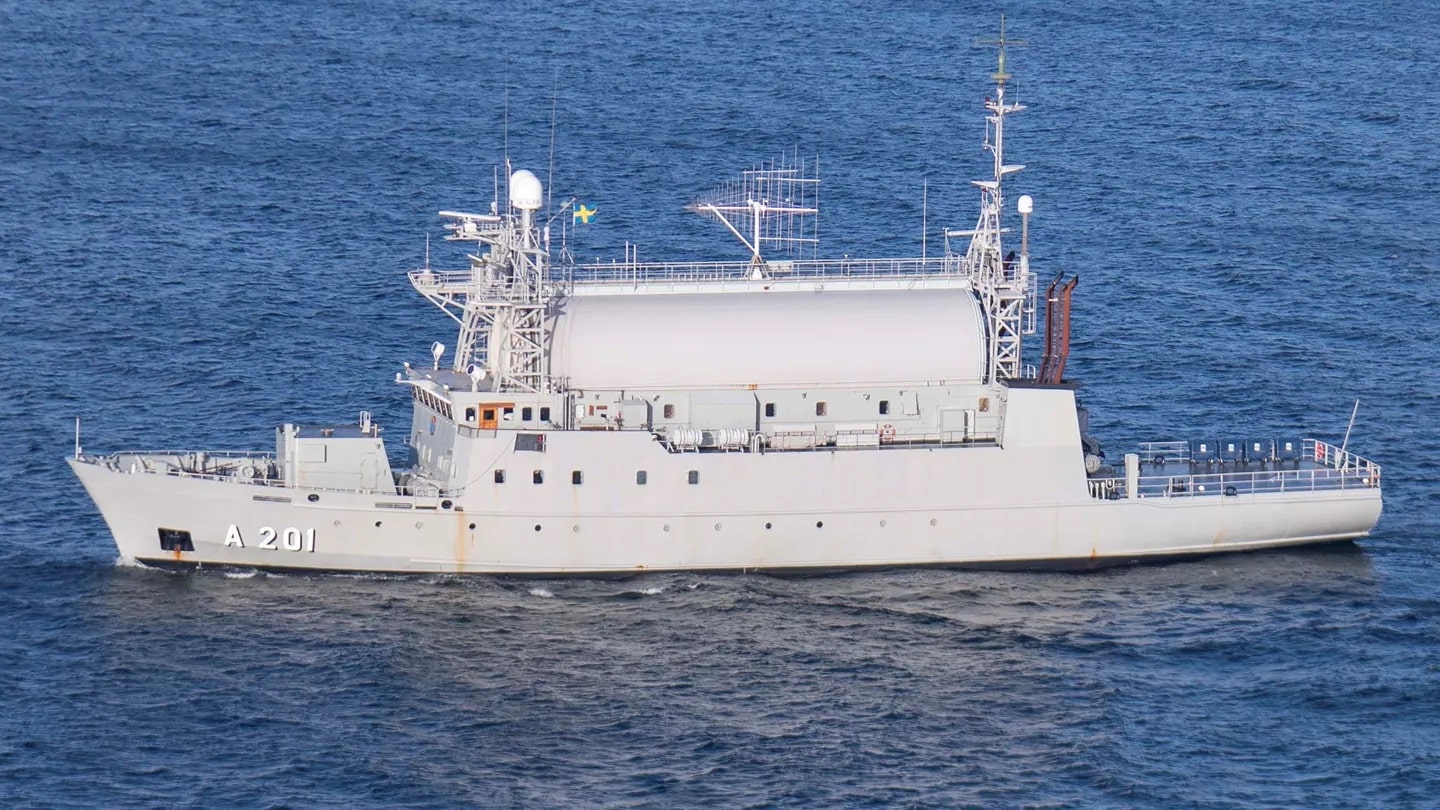
面对关键水下基础设施遭受破坏的威胁以及高强度的安全环境,瑞典正将其退役的信号情报侦察船“猎户座”号(A201)改造为专门的海底战争研发试验平台。
瑞典于2023年11月让服役了39年的老牌情报平台“猎户座”号退役。当时,这艘瑞典海军唯一的专用侦察船由于服役期过长,状况相对较差,并由体积明显更大的新建侦察船“阿尔忒弥斯”号取代。
然而,瑞典皇家海军现在采取了一个出人意料的举措,宣布打算让该舰以全新的角色回归,即作为监测关键水下基础设施(CUI)的系统和作战概念研发的专用试验平台。在发生一系列海底电缆和管道被切断的事件后,海底战争和关键水下基础设施保护已成为在波罗的海活动的北约海军面临的最重要挑战之一。此外,该舰还将保留次要的信号情报任务,确保瑞典海军情报搜集能力的冗余。在这方面,增加一个船体也为“猎户座”号作为测试平台提供了可能。
目前该舰的状况仍存在疑问,正在接受检查并进行海试,以确定其维护需求。如果一切按计划进行,它将在一家未透露名称的船厂进行入坞维修,并针对新角色进行必要的改装。一个有趣的细节是,不仅是舰艇本身,其船员也将从一个不同寻常的群体中选拔,由不再担任现役职务的军官组成,包括因年龄原因退役或已结束服役的人员。
Faced with the growing threat of sabotage to critical underwater infrastructure and a high-tempo security environment, Sweden is transforming its decommissioned signals intelligence (SIGINT) vessel HSwMS Orion (A201) into a dedicated seabed warfare research and development testbed.
Sweden retired its veteran signals intelligence platform, the HSwMS Orion, after 39 years of service in November 2023. By then the sole dedicated SIGINT-vessel of the Navy was in relatively poor shape following a long service life, and it was replaced by the significantly larger new-built HSwMS Artemis.
In a somewhat surprising move, the Royal Swedish Navy has however now declared their intention of bringing back the vessel in a completely new role, as a dedicated testbed for research and development of systems and concepts of operation when it comes to the surveillance of critical underwater infrastructure (CUI). The topic of seabed warfare / CUI protection has risen to the forefront as one of the most important peacetime challenges facing the NATO navies operating in the Baltic Sea, following a string of cut cables and pipelines. In addition, the vessel will retain a secondary SIGINT-tasking, ensuring redundancy in the SIGINT-gathering capabilities of the Swedish Navy. Here as well, the availability of another hull offers the possibility of HSwMS Orion’s usage as a testbed.
The current state of the vessel is something of a question mark, and she is currently undergoing inspection to be followed by sea trials to determine her maintenance needs. Provided everything goes as planned, she will then undergo a docking period at an undisclosed shipyard to be overhauled and receive the necessary modifications for her new role.
An interesting twist is that it isn’t just the vessel that is being brought out of retirement, but her crew will also be sourced from a somewhat unusual pool consisting of officers no longer in active service – be they retired due to age or having ended their military careers early – as well as officers in the reserve and civilians with the appropriate skills. In addition, contracted enlisted and conscripts will also be found in the crew.
The purpose of all of this is to ensure that the research and development work does not impact the operational vessels and units of the Navy. This is also the reasoning behind the crew question, to ensure that the crewing of the Orion will not poach officers and crews from the operational vessels, as these are working at a high rate already due to the demands placed by the tense security situation and the small size of the Swedish Navy. The whole project will be led by the naval staff, which already has recruited key personnel of the crew. As mentioned, while the focus of the HSwMS Orion will be on research and development, it is also confirmed that the capabilities of the vessel are seen as strengthening the armed forces’ situational awareness with regards to threats to CUI as well as naval signals intelligence. No de