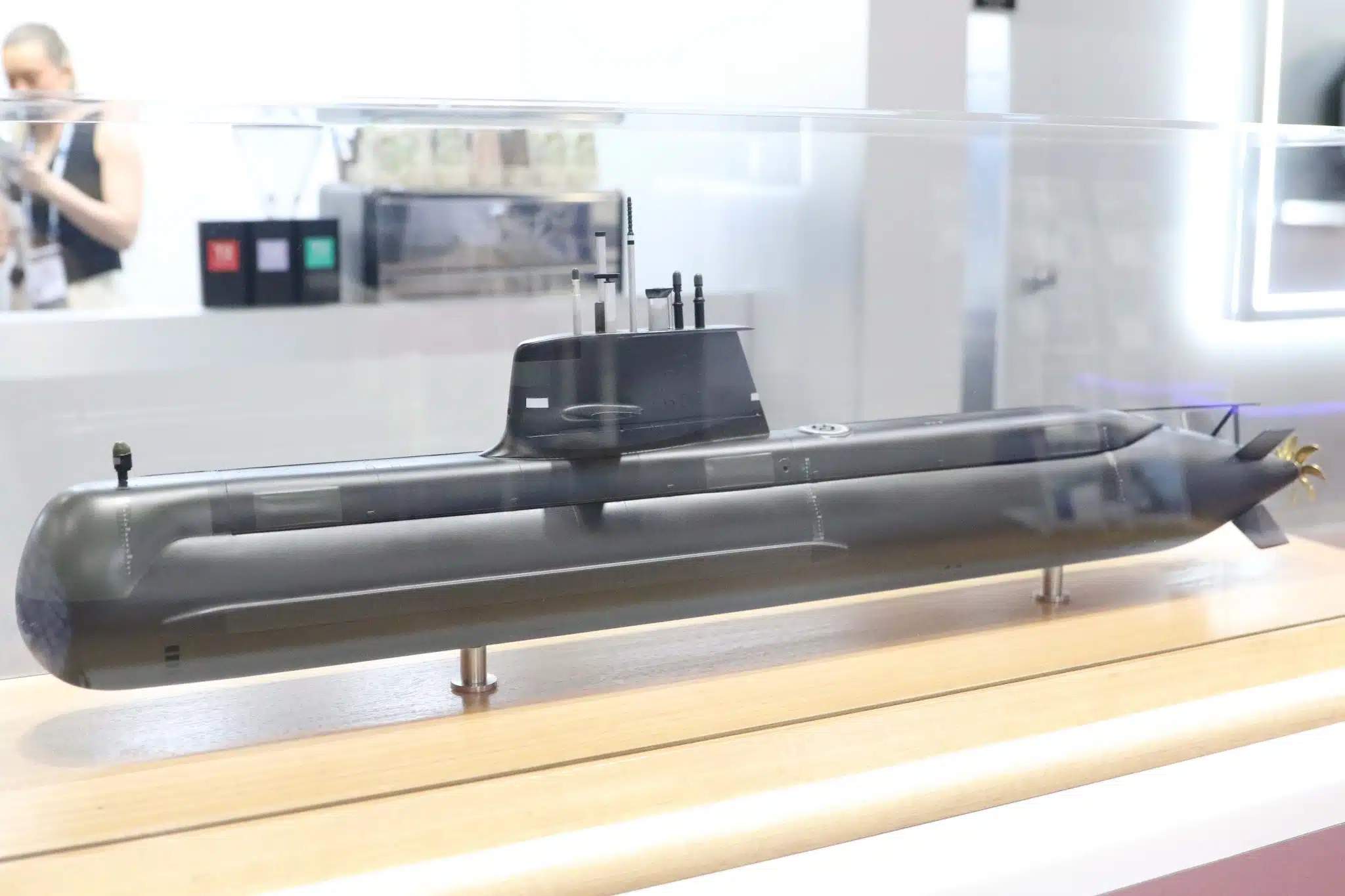
尽管澳大利亚对未来运营核动力攻击潜艇充满期待,但目前正面临维持六艘日益老旧的柯林斯级柴电潜艇服役的挑战。为此,澳方启动了名为“海1450计划”的柯林斯级寿命延长(LOTE)项目,旨在使其在2040年代仍具备作战能力。
澳大利亚海军能力负责人斯蒂芬·休斯少将在悉尼举办的印太2025海军展上坦言,同时维持现役舰队并为接收新舰队做准备是一个“极其复杂的方程式”。他表示,目前约有160至200名人员在美国和英国的核潜艇培训体系中,这相当于两到三艘柯林斯级潜艇的人员编制。与此同时,海军仍需保证柯林斯级的作战能力。
2024年中期,有报道称由于“史无前例的腐蚀问题”,澳大利亚一半的潜艇部队在当年余下时间里无法出海。工程师在对“希恩”号潜艇进行例行维护时发现了严重的腐蚀损坏。2024年12月13日,延寿项目被列为重点关注产品。
休斯承认,管理这两项平行的任务将非常艰巨。但他强调,从政府高层到国防部都已达成一致。针对澳大利亚皇家海军面临的风险,休斯指出,虽然进度、技术和劳动力都面临高度挑战,但军方正致力于实现双重目标。
Even as Australia eyes the heady prospect of operating nuclear-powered attack submarines in the future, it is facing the challenge of keeping six ageing Collins-class diesel-electric submarines in service for many more years.
This is to be tackled through the Collins Life-of-Type Extension (LOTE) programme, known as Project Sea 1450, which hopes to keep them operationally viable into the 2040s.
Rear Admiral Stephen Hughes, Australia’s Head of Navy Capability, speaking to Naval News at the Indo-Pacific 2025 naval exhibition in Sydney last November, acknowledged the challenge of maintaining one submarine fleet whilst preparing to induct another. He said it is “a really complicated equation,” for, “At the moment, we’ve about 160-200 people in the US and UK nuclear pipelines. If you think about that, that’s like two or three Collins’ worth of people in that system. But at the same time, we’re delivering Collins capability.”
In mid-2024, the ABC reported that half of Australia’s submarine fleet would remain out of the water for the rest of that year due to “unprecedented corrosion problems”. Engineers discovered significant corrosion damage on HMAS Sheean during a routine full-cycle docking, and the LOTE was listed as a product of concern on 13 December 2024.
An unnamed Collins-class submarine is seen in dry dock at the Henderson Marine Complex in Western Australia. (Credit: ADF)
Hughes acknowledged “it’s going to be tough” managing the two submarine lines of effort. However, he praised the alignment from the highest levels of government and the Department of Defence down. “It’s going to be a big job, but we’re eating the elephant one bite at a time.”
Naval News asked about the risks for the Royal Australian Navy (RAN). Hughes noted there will always be naysayers, “But you’ve got to remember, we’re pretty focused on delivering both outcomes. Are they high risk? Sure – schedule is demanding, technologies are demanding, workforce is demanding. I could list all the things that could go wrong, but one thing we’re really good at in Defence – despite maybe some other commentators’ views – is risk management.”
Hughes shared that the RAN is coming out of a dip in Collins-class availability, with four out of six submarines now operational. “Now all eyes are on Collins moving forward and the transitioning. The LOTE is an important part of that, and that’s technically complex. It’s not beyond the wit of man to be able to do it, but it requires that balance between workforce and industry, building capability for the nuclear submarines, and at the same time keeping Collins going.”
Another view of a model of the Collins-class submarine, designed by Saab Kockums and the first submarines ever built in Australia. (Credit: Gordon Arthur)
As for the LOTE, Defence told Naval News, “The life extension of the Collins-class submarines will involve a combination of effective ongoing sustainment, selected capability enhancements and an LOTE extension project.” It added, “Defe