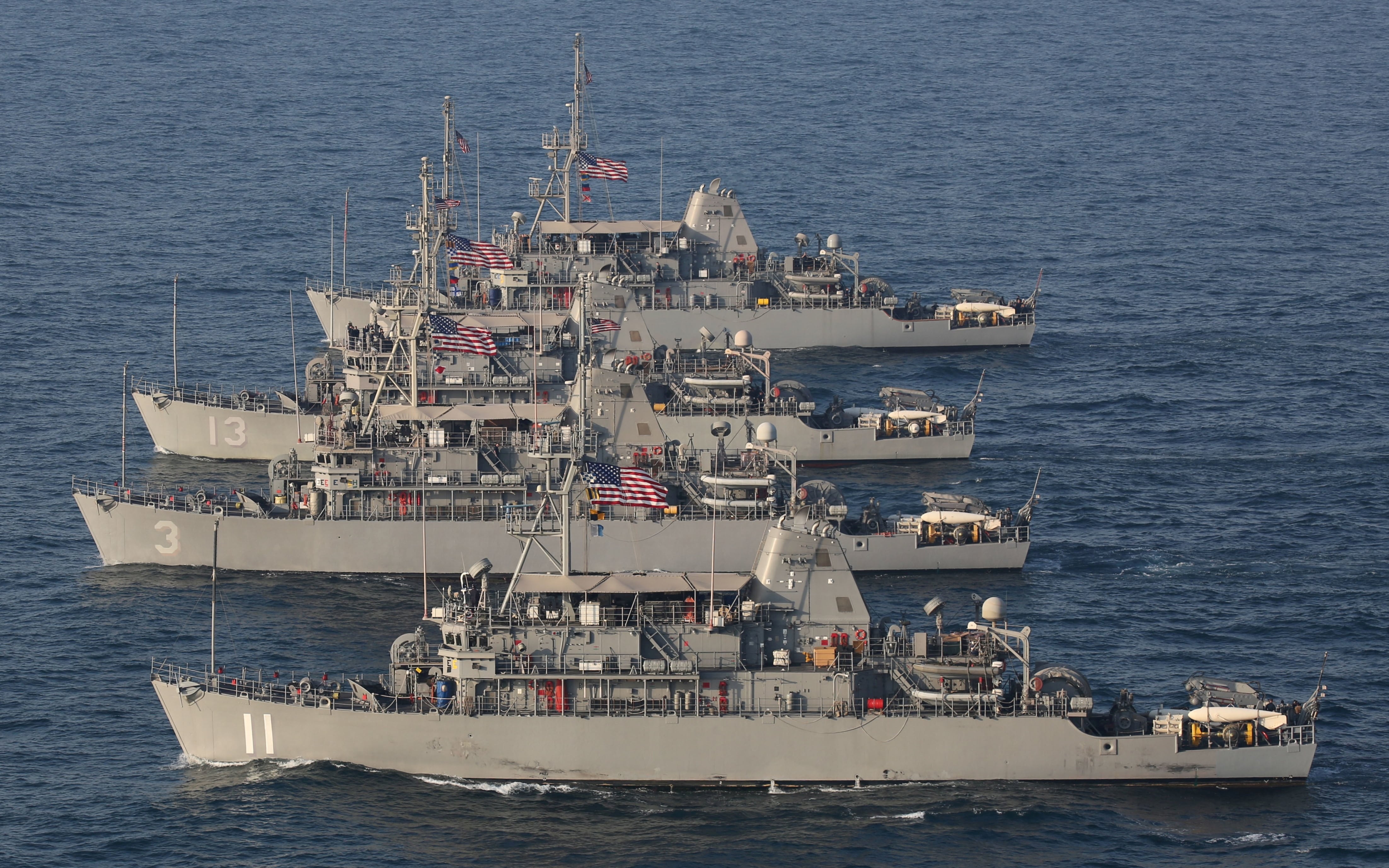
随着美国着手清理霍尔木兹海峡的水雷,其可能会动用无人机、载弹机器人和直升机库以降低风险,尽管扫雷人员仍可能容易受到来自伊方的攻击。
美方正试图清理海峡内的水雷,这是结束伊方对航运干扰努力的一部分。自美方和以色列在2月底对伊朗发动打击以来,这种干扰已严重削弱了全球能源供应。但前海军军官和行业专家表示,尽管美国可以利用现代化技术进行远程检查和拆除水雷,清理霍尔木兹海峡这一战略水道仍将是一个缓慢的多步骤过程。美军上周末表示已开始扫雷行动,派遣两艘战舰通过海峡,但未透露所用设备的细节。美方上周六表示,包括水下无人机在内的额外力量将在未来几天加入这一行动。
据路透社上个月援引知情人士消息报道,伊方最近在霍尔木兹海峡部署了约12枚水雷。目前尚不清楚这些水雷布设的具体位置。美国总统唐纳德·特朗普上周末表示,所有伊朗的布雷舰均已被击沉。但一些专家表示,德黑兰仍有风险部署更多装置。
退役英国海军少将、现任顾问Jon Pentreath表示,水雷战之所以有效,是因为这些设备造价低廉、清理成本高昂,“甚至仅仅是雷区的威胁就足以阻止船只通行,尤其是商业船只”。
扫雷现代化
传统上,美国海军依赖载人扫雷舰物理进入雷区,使用传感器进行探测。
NavalBy Cassell Bryan-Low, Reuters Apr 16, 2026, 02:18 PMAvenger-class mine countermeasure ships USS Devastator, USS Gladiator, USS Sentry and USS Dextrous maneuver in the Arabian Sea, July 2019. (Antonio Gemma Moré/U.S. Navy)As the United States embarks on clearing mines from the Strait of Hormuz, it could draw on an arsenal of drones, explosive‑laden robots and helicopters to reduce risks, though de‑mining crews could still be vulnerable to Iranian attacks.The U.S. is trying to secure the strait from mines as part of efforts to end Iran’s disruption of shipping, which has severely curbed global energy supplies since the U.S. and Israel launched strikes against Iran at the end of February.But while the U.S. can draw on modernized technology to remotely check for and remove mines, clearing a strategic waterway such as the Strait of Hormuz will still be a slow, multi‑step process, former naval officers and industry specialists say. The U.S. military said over the weekend it had started the mine-clearing operation, sending two warships through the strait, but offered few details about the equipment involved. It said on Saturday that additional forces, including underwater drones, would join the effort in the coming days.Iran had recently deployed about a dozen mines in the Strait of Hormuz, Reuters reported last month, citing sources familiar with the matter. It is not publicly known where mines may have been laid.U.S. President Donald Trump said over the weekend that all of Iran’s minelaying ships had been sunk. But there is a risk Tehran could deploy additional devices, some specialists said.Mine warfare is effective because the devices are cheap, are costly to clear and “even the threat of a minefield is enough to stop ships, especially commercial ships,” said Jon Pentreath, a retired British navy rear admiral who is now a consultant.MODERNIZING MINESWEEPING Traditionally, the U.S. Navy relied on manned minesweeping ships that physically entered minefields, using sonars to locate the devices and mechanical gear dragged behind the vessel to clear explosives, sometimes supported by human divers. Much of that aging fleet has been retired. They are being replaced by lighter vessels known as littoral combat ships, which carry modern mine‑hunting equipment such as semi‑autonomous surface and underwater drones as well as remote‑controlled robots that enable crews to distance themselves from the minefield. The navy has three of these in deployment.BAE Systems' Archerfish mine disposal system, displayed at the Undersea Defence Technology exhibition in London, April 14, 2026. (Cassell Bryan-Low/Reuters)Two of those ships were undergoing maintenance in Singapore, a senior U.S. official told Reuters in late March. At the time, the U.S. minesweeping capacity in the Middle East included unmanned undersea vehicles, four of the traditional Avenger-class vessels, helicopters and divers, according to the official. The U.S. Navy did not respond to a comment req