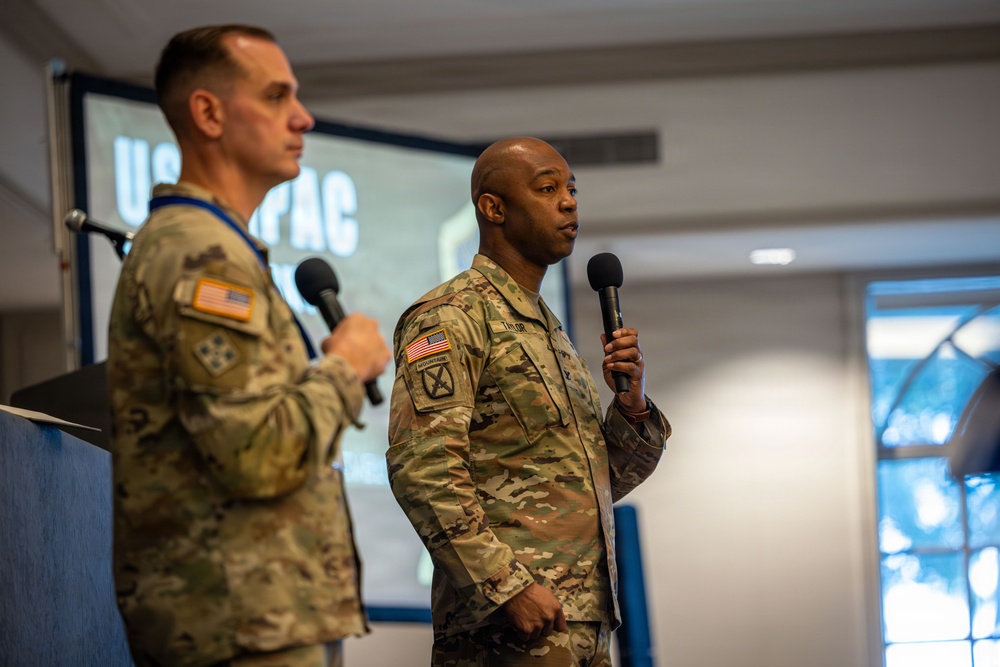
夏威夷檀香山——美国陆军太平洋司令部(USARPAC)于2026年3月29日至4月2日在威基基凯悦度假村举行了公共事务领导力发展论坛(PALDF)。来自印太地区的公共事务专业人员齐聚一堂,参加了为期一周的论坛,重点是分享全军的公共事务最佳实践。
“PALDF非常重要,因为它汇集了印太地区的专业人士进行交流、告知和教育。我相信这些是公共事务官帮助其司令部有效沟通的核心职责,”陆军太平洋司令部公共事务主任艾萨克·泰勒上校表示。泰勒解释说,公共事务的目标是激发对陆军的信任。
陆军太平洋司令部领导层强调,胜利并非始于冲突,而是始于沟通。“我们必须出现在现场才能获胜。没有其他选择,”司令部司令罗纳德·克拉克上将说。该论坛代表包括来自白宫、国务院、美军印太司令部、陆军总部、战区陆军主要下属司令部、兄弟军种、美国大使馆以及盟国和伙伴国家的代表。
该论坛旨在加强联合部队和多国部队的沟通,重点是使公共事务努力与全政府目标、上级总部优先事项和战区战役计划保持一致。泰勒表示:“我们希望向我们的盟友和合作伙伴保证,他们可以依靠我们,并确保我们的竞争对手知道我们的士兵已准备好响应召唤。”领导层明确表示,讲故事不仅是记录活动,更是将信息转化为威慑力的战略手段。
HONOLULU, Hawaii — U.S. Army Pacific (USARPAC) kicked off the Public Affairs Leadership Development Forum (PALDF), from March 29 through April 2, 2026, at the Hyatt Regency Waikiki Resort. Public Affairs professionals from across the Indo-Pacific were brought together for a weeklong forum focused on sharing best public affairs practices across the force.
“PALDF is important because it brings Public Affairs professionals together from across the Indo-Pacific to engage, inform, and educate. I believe these are the core responsibilities for PAOs to help their commands communicate effectively,” said Col. Isaac Taylor, USARPAC Public Affairs Director.
Taylor explained that the goal of Public Affairs is to inspire trust in the Army.
USARPAC leaders emphasized that winning doesn’t begin in conflict, winning begins with communication.
“We have to be present to win. There is no other option,” said Gen. Ronald P. Clark, USARPAC commanding general.
The forum included representatives from the White House, Department of State, U.S. Indo-Pacific Command, Headquarters, Department of the Army, theater Army major subordinate commands, sister services, U.S. embassies, and allied and partner nations.
“The benefit of hosting PALDF is ensuring that Public Affairs professionals from across the Theater are able to meet each other and network, taking the time to cultivate relationships that will enhance our strategic communications as a whole,” said Sgt. Maj. Andrew Porch, USARPAC Public Affairs senior enlisted advisor.
Designed to strengthen communication across the joint and multinational force, the forum focused on aligning public affairs efforts with whole-of-government objectives, higher headquarters priorities, and theater campaign plans.
“We want to reassure our allies and partners that they can rely on us and make sure our adversaries know our Soldiers are ready to answer the nation’s call,” said Taylor.
But beyond synchronization, leaders made it clear that storytelling is not just a supporting effort, it is a critical component of deterrence.
“If we don’t tell our story, no one else is going to tell our story," said Sgt. Maj. Jason Schmidt, USARPAC command sergeant major, “And in a theater as complex as this one, that matters.”
Spanning 17 time zones and encompassing more than 60 percent of the world’s population, the Indo-Pacific presents unique operational and informational challenges.
“Distance is our major operational challenge,” Clark said. “Our advantage is that we have allies who fight alongside us.”
That presence, leaders emphasized, extends beyond physical positioning, it also includes dominance in the information space.
“The first thing everyone does in the morning is pick up their phone. That's power,” said Schmidt. “You can solve problems with storytelling long before the rifleman has boots on the ground.”
Throughout the forum, attendees explored how public affairs supports theater objectives by shaping perceptions, strengthening partnerships, and