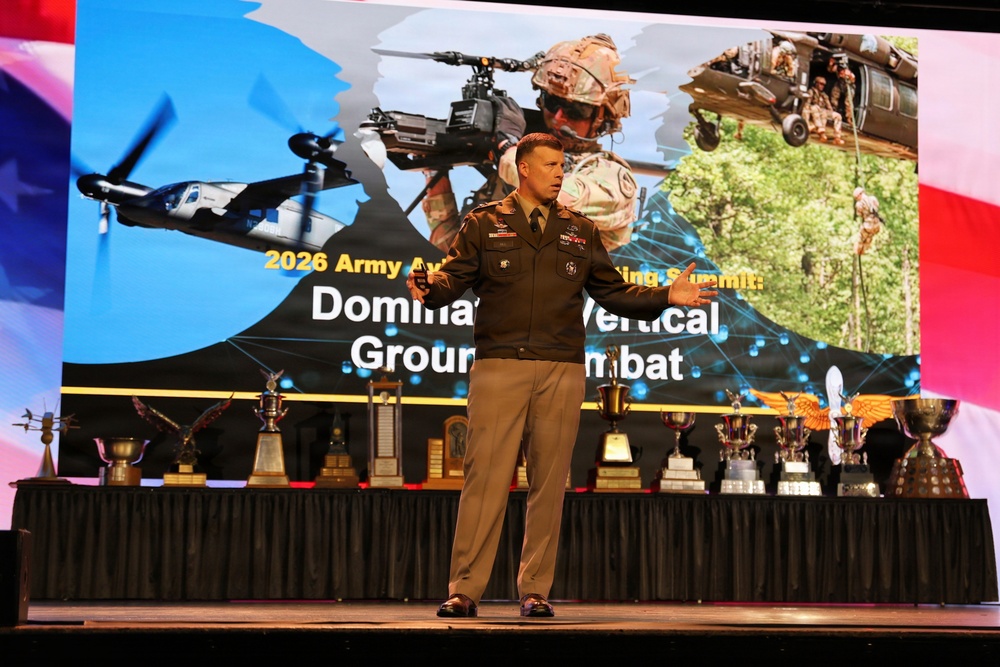
田纳西州纳什维尔——克莱尔·吉尔少将周三告诉陆军航空兵领导层,该兵种正在加速转型以应对快速变化的战场。他强调了文化、现代化和士兵驱动的创新,因为该军种正在重新塑造训练、编制和采购优先事项。
作为美国陆军航空兵卓越中心司令兼航空兵种主管,吉尔在4月15日举行的美国陆军航空协会峰会开幕式上发表了演讲。他指出,陆航未来的基石仍然是战士文化,称这是指挥官最重要的职责,且这种文化必须在各代飞行员中传承。
他概述了与陆军高级领导人共同制定的愿景,重点关注部署任务的成功、合成兵种集成,以及基于“有目的的战士文化”构建的有无人协同能力。吉尔表示,陆军可以“培养出更优秀的飞行员”,并宣布了增加个人飞行时间、改进决策训练以及使用更简单的单引擎教练机来加强基本功的计划。
陆军准备在今年秋天结束一项大型培训试点计划后,重新设计飞行学校。他还强调了士兵航空培训和无人机系统(UAS)指令的更新,包括高级战术教官课程。根据陆军参谋长的指示,吉尔描述了无人机操作员和维护人员培训的全面变化。陆军已将15W和15E专业合并为新的15X无人系统专业,以提升兵种的综合战斗效能。
NASHVILLE, Tenn. — Maj. Gen. Clair Gill told Army aviation leaders and supporters Wednesday that the branch is transforming at pace to meet a rapidly evolving battlefield, emphasizing culture, modernization, and soldier‑driven innovation as the service reshapes training, formations, and acquisition priorities.
Gill, the Commanding General of the U.S. Army Aviation Center of Excellence, the Army’s Program Acquisition Executive for Maneuver Air, and the Aviation Branch Chief, delivered the remarks during the opening session of the Army Aviation Association of America Summit on April 15.
Gill said the foundation of Army Aviation’s future remains its warfighter culture, calling it the most important responsibility of commanders. “This is the warfighting capability of our branch… the people that you represent,” he said, noting that culture must endure across generations of aviators.
He outlined a vision shaped with Army senior leaders that focuses on deployed mission success, combined arms integration, and manned‑unmanned capability built on a “purposeful warfighter culture.”
Gill said the Army can “generate a better aviator,” announcing plans for more solo flight time, improved decision‑making training, and a simpler single‑engine trainer to build stronger fundamentals. “I want young men and women… to have the confidence that we trust them,” he said, describing efforts to reduce the burden on operational units by producing more capable graduates.
The Army is preparing to redesign flight school this fall following the conclusion of a major training pilot program.
He also highlighted updates to enlisted aviation training and UAS instruction, including the Advanced Tactics Instructor Course, which has already undergone multiple revisions based on field feedback.
Responding to the Chief of Staff of the Army’s directive, Gill described sweeping changes to unmanned aircraft operator and maintainer training. The Army merged the 15W and 15E specialties into the new 15X unmanned operator, producing soldiers who can “fabricate, maintain, train, operate, plan, [and] advise.”
By October, every former 15W and 15E soldier will be certified as a 15X, he said.
Gill also praised the new five‑week Unmanned Advanced Leader Course at Fort Rucker, designed to standardize training across the Army and accelerate capability to the field.
Gill acknowledged the personnel strain created by the Army’s recent structure changes but said the branch is taking a deliberate, soldier‑focused approach. The Army is engaging affected officers and warrant officers “down to name‑tape level” to ensure they understand their options, including branch transfers and service transfers.
He noted that temporary authorities allowing formations to man up to 125 percent this year will help stabilize units.
Gill said today’s battlefield demands rapid adaptation and tight industry‑government partnership. “We have to be moving at the speed of technology,” he said.
He highlighted the Army’s work on one‑w