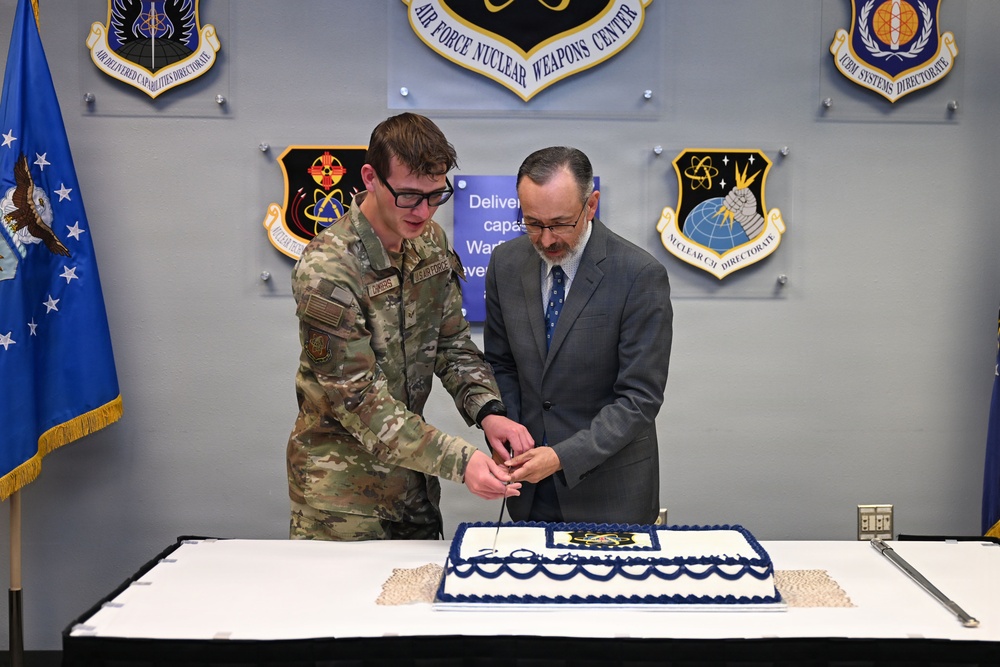
3月31日,美国空军核武器中心(AFNWC)纪念成立20周年,确保国家最强大的武器系统始终保持“不容置疑、始终令人生畏”的地位。
AFNWC代理指挥官威廉·罗杰斯准将表示:“在过去的20年里,AFNWC通过获取、维持、集成和现代化核能力,加强了美国的战略威慑。当中心成立时,这些系统的责任和物资管理分散在整个空军中。今天,我们的操作人员拥有一个专门的组织,负责确保我们的旧系统仍能按预期发挥功能,并确保我们的新武器系统能满足他们的需求。”
该中心代表空军装备司令部并直接支持空军全球打击司令部,同步核物资管理的各个方面。它负责旧武器系统的维持,其中一些系统早在1960年代就开始服役。它还负责现代化和更换这些旧武器系统及其支持系统的采购计划。这些现代化项目包括:
- “哨兵”洲际弹道导弹
- 长程远程对地攻击导弹 (LRSO)
- B61核重力炸弹变体
- 核指挥、控制与通信系统
- 武器生成设施
2006年3月31日,AFNWC在新墨西哥州柯特兰空军基地宣告成立。在成立之初,首任指挥官格雷格·福拉瑞克上校表示,柯特兰基地是安置该中心的天然之选,因为当时该基地已处于核活动的核心地位超过60年。例如,中心的前身之一——特种武器司令部,于1949年在柯特兰基地成立,负责指挥处理原子弹和其他非常规武器的专业组织。
The Air Force Nuclear Weapons Center marks 20 years on March 31 of ensuring the nation’s most powerful weapon systems are “never doubted, always feared.”
“For the past 20 years, AFNWC has bolstered U.S. strategic deterrence by acquiring, sustaining, integrating and modernizing the nuclear capabilities our operators use every day to deter our adversaries and assure our allies and partners,” said Brig. Gen. William Rogers, interim commander of AFNWC. “When the center stood up, the responsibility and materiel management for these systems was dispersed throughout the Air Force. Today, our operators have a single organization dedicated to making sure our legacy systems still function as intended and our new weapon systems will meet their needs.”
The center synchronizes all aspects of nuclear materiel management on behalf of Air Force Materiel Command and in direct support of Air Force Global Strike Command. It is responsible for the sustainment of legacy weapon systems, some of which first became operational in the 1960s. It is also responsible for the acquisition programs to modernize and replace those legacy weapon systems and their support systems. These modernization programs include the Sentinel intercontinental ballistic missile; Long Range Standoff cruise missile; variants of the B61 nuclear gravity bomb; many nuclear command, control and communications systems; and weapons generation facilities.
On March 31, 2006, AFNWC was activated at Kirtland Air Force Base, New Mexico.
At the time of its activation, then Col. Greg Foraker, AFNWC’s first commander, said Kirtland was a natural place to locate the newest member of the nuclear community, since the base had been at the heart of nuclear activities for over 60 years at that point.
For example, one of the center’s predecessors, the Special Weapons Command, stood up in 1949 at Kirtland AFB. It directed specialized organizations dealing with atomic bombs and other unconventional weapons.
This command was later renamed the Air Force Special Weapons Center. During the 1950s and early 1960s, AFSWC personnel and aircraft participated in atmospheric nuclear tests in Nevada and the far Pacific. These included the first air drop of a U.S. thermonuclear weapon and the firing of the first air-to-air nuclear missile. In all, the Air Force Special Weapons Center was involved in more than 300 atmospheric nuclear tests in the Pacific and the test range in Nevada.
After AFSWC’s inactivation in 1976, nuclear acquisition and sustainment responsibilities were spread throughout several Air Force organizations.
In March 2006, [the Air Force established AFNWC](https://www.afnwc.af.mil/News/Article-Display/Article/2481788/nuclear-weapons-center-the-right-organization-at-the-right-time/) under Air Force Materiel Command to bridge the gap that had formed between the acquisition of nuclear weapons versus their sustainment in the field.
The [Nuclear Command, Control and Communications (NC3) Integration Directorate](https://