犹他州图勒 —— 在全球弹药需求激增的时代,美国陆军向私营部门发出了明确信号:“民主的军械库”必须成为“民主的伙伴关系”。
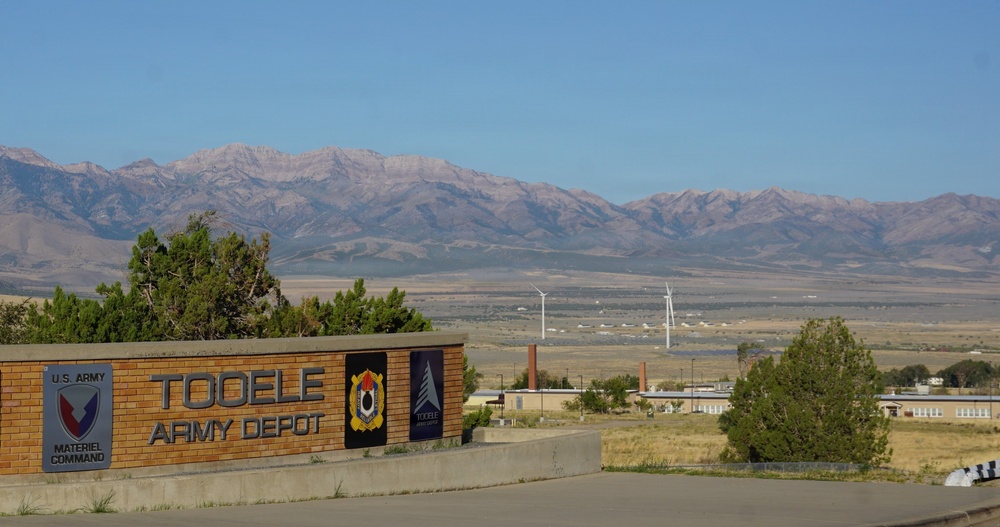
图勒陆军仓库(TEAD)凭借其广阔的土地和战略位置,正处于这一国家努力的前沿,积极寻求建立公私合作伙伴关系,以增强国家的国防工业基础。
这一战略推动通过近期美国陆军战略倡议办公室(OSI)负责人丽贝卡·霍德森和OSI战略伙伴关系主管艾琳·斯塔特尔的访问得到了凸显。3月25日,她们与图勒陆军仓库领导层会面,探讨该设施如何利用其独特资产来支持陆军的现代化目标。
陆军已明确表示,由政府承担维持有机工业基础(OIB)全部负担的旧模式已不再足以应对现代挑战。未来的道路是将陆军OIB的优势与工业伙伴的创新、敏捷性和资本结合起来。
这种新模式的一个有力蓝图已经成为现实。在阿肯色州松树崖军械库,陆军与韩华防务执行了增强用途租赁(EUL),后者正投入13亿美元私营资金,在利用率低的陆军土地上建造现代化的能源设施。这一战略双赢举措利用私营资本解决了关键的供应链缺口,同时为陆军设施的现代化提供了资金。
这是陆军打算复制的模式,而图勒陆军仓库是一个主要候选单位。
霍德森在访问期间指出:“项目和想法比土地多,而我们在图勒这里有很多可用的土地。”她强调了图勒丰富的房地产资源与OSI目标的高度契合。
该设施成立于1942年,当时是二战弹药枢纽,跨越两个不同的地理位置,占地43,000英亩。图勒陆军仓库拥有1,100多个覆土式弹药库,其主要任务是标准弹药的存储和分配。
TOOELE, Utah – In an era of surging global demand for munitions, the U.S. Army is sending a clear message to the private sector: the arsenal of democracy must be a partnership of democracy.
Tooele Army Depot (TEAD), with its vast land and strategic location, is at the forefront of this national effort, actively seeking to form public-private partnerships to bolster the nation's defense industrial base.
This strategic push was highlighted by a recent visit from Rebecca Hodson, the chief of the U.S. Army Office of Strategic Initiatives (OSI), and Erin Stattel, OSI's head of Strategic Partnerships. On March 25, they met with TEAD leadership to explore how the installation can leverage its unique assets to support the Army's modernization goals.
The Army has made it clear that the old model, where the government bears the full burden of sustaining the Organic Industrial Base, is no longer sufficient to meet modern challenges. The path forward is to combine the strengths of the Army’s OIB with the innovation, agility, and capital of industry partners.
A powerful blueprint for this new model is already a reality. At Pine Bluff Arsenal in Arkansas, the Army executed an Enhanced Use Lease (EUL) with Hanwha Defense, which is making a $1.3 billion private investment to build a modern energetics facility on underutilized Army land. This strategic win-win leverages private capital to solve a critical supply chain gap while providing funds to modernize the Army installation.
This is the model the Army intends to replicate, and TEAD is a prime candidate.
"There are more projects and ideas than there is land, and we have a lot of available land here at TEAD," Hodson noted during her visit, emphasizing how well TEAD’s abundance of real estate fits with OSI's goals.
The installation, established in 1942 as a World War II ammunition hub, comprises 43,000 acres across two different geographic locations. With more than 1,100 earth covered magazines, TEAD’s primary mission is standard depot operations including receipt, storage, distribution, inventory, surveillance, and demilitarization of ammunition.
In addition to conventional ammunition, TEAD conducts maintenance on modern conventional and technical munitions including integration of loitering munitions. TEAD is designated as the Center of Industrial and Technical Excellence for Ammunition Peculiar Equipment, with its highly skilled workforce and high-tech manufacturing capabilities.
TEAD, a government-owned, government-operated OIB facility, functions like a business by generating its own revenue. However, with service rates set at a break-even point, little is left for critical modernization. Public-private partnerships offer a direct solution to this challenge.
"We can try to match private industry with TEAD’s unique capabilities, creating mutually beneficial partnerships," Stattel said.
Local and state-level support is also accelerating this initiative. Col. Luke Clover, TEAD’s commander, explained that Utah’