阿联酋、沙特阿拉伯、卡塔尔等海湾国家正将人工智能(AI)和IT服务投资视为培养高技能劳动力、实现摆脱油气依赖多元化转型的路径。在冲突爆发前,这些国家吸引了大量美国科技公司的投资与合作,提供了响应迅速的数字服务,并培育了如Humain、G42和QAI等国家科技领军企业。
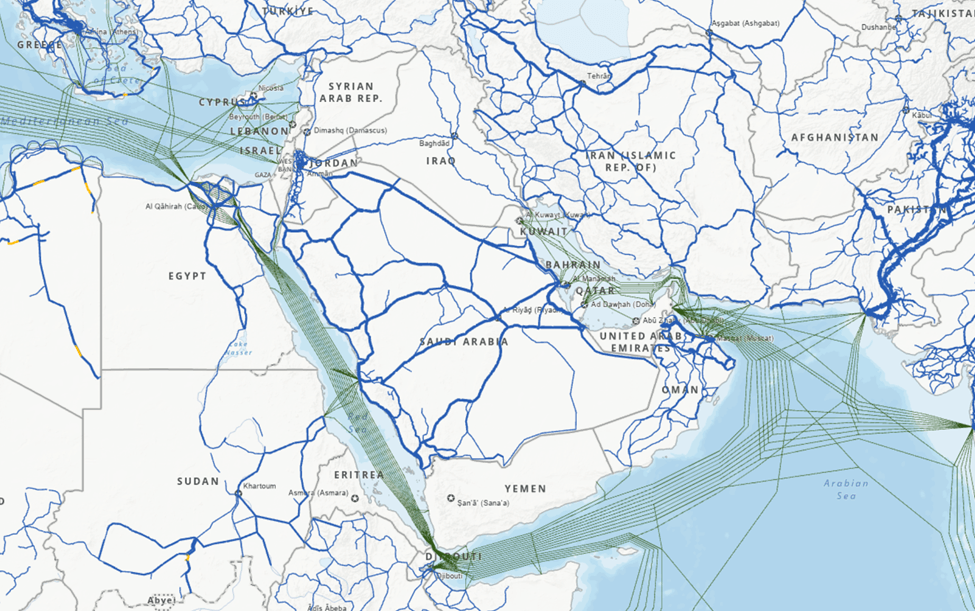
然而,这些投资的盈利规模扩张高度依赖于基础设施的物理安全,以及通过海底光纤电缆将AI及数字服务传输至区域外客户的能力。当前的军事冲突已使技术基础设施暴露在严重威胁之下:伊朗无人机袭击了巴林和阿联酋的数据中心;伊朗方面威胁要切断海底电缆,并以封锁霍尔木兹海峡来应对可能的军事行动;此外,针对在海湾地区运营的美国科技企业,伊朗也可能采取报复措施。
战争风险已经导致波斯湾地区新型海底电缆的建设工作停滞,这与红海地区的情况如出一辙。对于致力于数字转型的海湾国家而言,基础设施的脆弱性正成为制约其经济战略的核心障碍。
Editor’s Note: Masha Kotkin is a geopolitical and energy analyst specializing in economics, commercial diplomacy, and energy in the Middle East and North Africa. Her work focuses on economic and energy policy, competitiveness, trade, and geopolitical risk in the Middle East. Kotkin spent over a decade at the U.S. Department of State, most recently serving as an energy advisor focused on the Middle East and North Africa. A graduate in International Economics from Johns Hopkins School of International Studies (SAIS), she has published in think tanks, including the Middle East Council on Global Affairs, Observer Research Foundation Middle Easy, and the Arab Gulf States Institute.By Barbara Slavin, Distinguished Fellow, Middle East Perspectives Project
The United Arab Emirates, Saudi Arabia, Qatar, and other Gulf countries view investment in artificial intelligence (AI) and IT services as a path to creating a highly skilled workforce and diversifying from oil and gas extraction.
Before the outbreak of the U.S. and Israeli war on Iran, these states were attracting investment from and business partnerships with a variety of U.S. tech firms, providing responsive digital services and nurturing national tech champions such as Humain, G42, and QAI. However, profitably scaling these investments requires physical security for infrastructure and a means of delivering AI and other digital services to customers outside the region via undersea fiber optic cables.
The conflict with Iran has exposed tech infrastructure to new acute threats, with Iranian drones striking data centers in Bahrain and the UAE, Iran threatening to sever undersea cables and mine the Strait of Hormuz in response to potential troop landings, and other retaliation against U.S. tech firms operating in the Middle East in response to the assassinations of Iranian officials.
War risks have already halted work on new undersea cables in the Persian Gulf, mirroring the situation in the Red Sea where the prospect of Houthi attacks has delayed all undersea cable construction since 2024. In March 2024, a Houthi missile strike on a commercial ship in the Red Sea resulted in a damaged ship that dragged its anchor and inadvertently severed three subsea cables. After months of delays, likely due to the need to navigate geopolitical risks and sensitivities onshore in Yemen, UAE-based E-marine eventually fixed the cables. According to the industry-run International Cable Protection Committee (ICPC), out of around 200 instances of cable damage each year, only about one percent was intentional. The ICPC attributed nearly three-quarters of cable cuts to fishing equipment and ship anchors. But the same equipment that causes accidents could also be used to inflict deliberate damage by diminished-but-determined Houthi or Islamic Revolutionary Guard Corps naval forces.
Gulf Investment and Hydrocarbon Diversification
Cables create the physical path for Gulf data centers and internet users to communicate beyond the