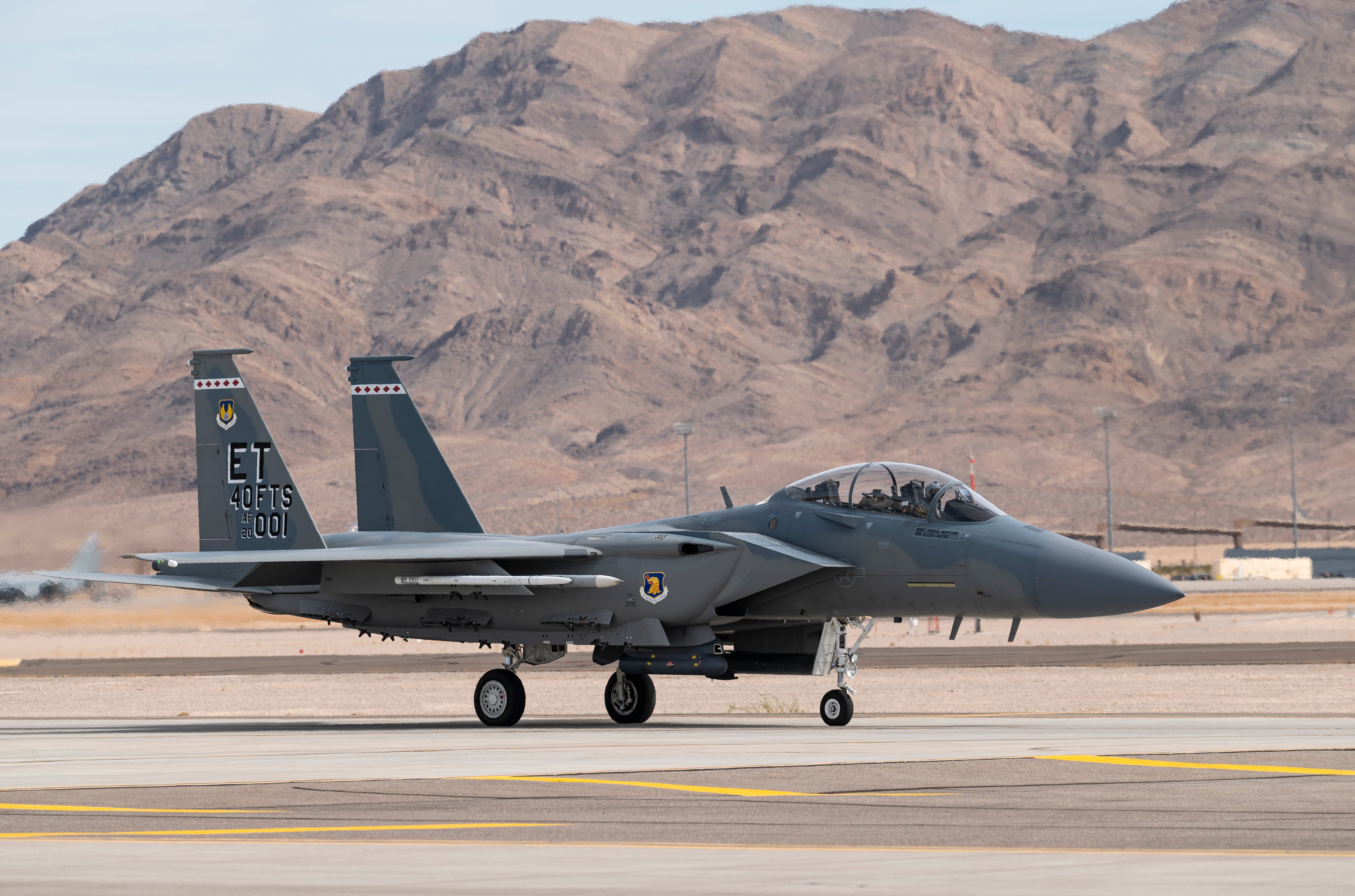
The nation’s Air National Guard adjutants general are making their most unified push yet to recapitalize the U.S. Air Force’s fighter fleet, with 22 generals signing a letter to Congress this month calling for multiyear funding to buy between 72 and 100 new fighters annually. The letter, sent April 1 to the chairs and ranking members of the House and Senate Appropriations committees and their defense subcommittees, calls on Congress to legislate multiyear procurement of F-35A Lightning IIs and F-15EX Eagle IIs at a baseline of 48 F-35As and 24 F-15EXs per year, with a desired end state of 72 F-35As and 36 F-15EXs, totaling 108 aircraft annually.“The United States Air Force is the oldest, the smallest and the least ready in its 78-year history,” the letter states. “We must build a fighting force that will win.”The letter, which was first reported by Air & Space Forces Magazine, marks the first time the Adjutants General Association of the United States has collected signatures from all 22 adjutants general commanding states with Guard fighter units. Even at 100 new fighters per year, full recapitalization of the total force could still take 10 to 15 years given the existing backlog of legacy aircraft.“When all 22 adjutants general with fighter missions speak with one voice, it’s not advocacy, it’s operational feedback from the commanders generating combat airpower every day,” Maj. Gen. Mark R. Morrell, adjutant general of the South Dakota National Guard, said in an emailed statement. “It signals to Congress that this is not a regional or parochial concern, but a clear, consistent demand signal from the field that the fighter recapitalization gap is real, growing and must be addressed.”The Air Force requested 48 F-35As in fiscal 2024, 42 in fiscal 2025, 24 in fiscal 2026 and 38 in fiscal 2027. For the F-15EX, it sought 24, 18, 21 and 24 over the same years, respectively, according to budget documents. The fiscal 2027 request totals 62 combined, still below the 72-aircraft threshold the Air Force has long said is needed just to prevent the fleet from shrinking. The last time the service acquired more than 72 fighters in a single year was 1998.An F-15EX Eagle II prepares for departure at Nellis Air Force Base, Nevada, October 2021. (William R. Lewis/U.S. Air Force)The readiness cost of that shortfall is already visible at the unit level, the generals said.“Our airmen are doing a heroic job keeping these 40-year-old airframes in the air, but they are paying the price for decades of deferred modernization,” Brig. Gen. Shannon Smith, commander of the Idaho Air National Guard, told Military Times. “In the interim, we are enduring risk by asking exceedingly more from our maintenance professionals, cannibalizing parts from already broken aircraft to keep others flying, and by our pilots losing their critical warfighting edge because they cannot get enough flight hours in mission-capable jets.”Of the Air Guard’s 24 fighter squadrons, 13 currently lack a rec
DIRECT2026年4月17日
美空军国民警卫队将领敦促国会:每年应采购百架新战机
防务新闻美国军工采办媒体,装备和预算追踪稳定