乌克兰和中东的战争已将无人机推向了新闻头条。“无人机”一词现在的涵盖范围非常广泛,从亚马逊上可以买到的业余爱好者摄像机架,到美国在过去20年里依靠打击恐怖组织的“捕食者”和“死神”系统,无所不包。
动物界的一个共同祖先在足够的环境压力下,可以演化出需要独立分类的截然不同的物种。无人机也经历了属于它们自己的快速“物种形成”:单向攻击无人机,中空长航时和高空长航时无人机,以及协同作战飞机无人机——它们有着共同的谱系和标签,但在成本、航程和用途方面的相似点已日益减少。
这种变异在单向攻击无人机类别中表现得最为重要:这类系统的设计并非像飞机那样返回基地,而是像子弹或导弹一样直接飞向并摧毁目标。
自2022年以来,俄罗斯和乌克兰已向对方发射了数百万架此类无人机;而伊朗在2026年也向美国军事基地、使馆、以色列及中东其他国家发射了数千架。
世界现在正处于一个我们称之为“精准质量”的时代。在过去,军事力量通常由规模决定——取决于不同时代军队拥有的骑士、士兵、枪炮或坦克的数量。
自冷战以来,先进军队一直强调精确制导武器(如巡航导弹),通过数量较少但目标更精准的武器获得优势。廉价但技术先进的无人机将“规模”与“精度”结合在了一起。
商业化制造、精密制导以及人工智能和自主技术的进步,使得军队和武装团体能够精确打击对手的能力变得“平民化”。
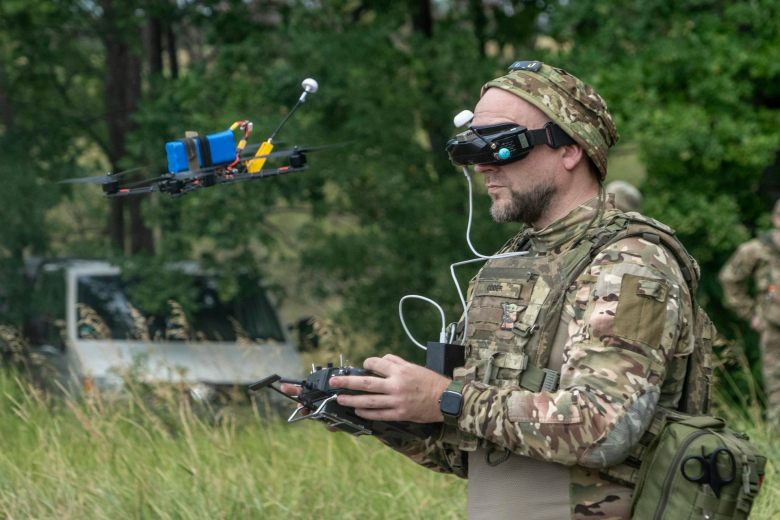
这包括第一人称视角(FPV)无人机——一种具有类似电子游戏操作界面的单向攻击无人机——亲伊朗团体已经在利用这种无人机来
Wars in Ukraine and the Middle East have propelled drones into the headlines. The word “drone” now stretches to cover everything from hobbyist camera rigs available on Amazon to the Predator and Reaper systems the United States has relied on to fight terrorist organizations over the past 20 years.
A common ancestor in the animal kingdom can give rise, under sufficient environmental pressure, to distinct species that demand their own classification. Drones have undergone their own rapid speciation: the one-way attack drone, the medium-altitude, long-endurance and high-altitude, long-endurance drones, the collaborative combat aircraft drone – these share a lineage and a label, but in terms of cost, range and use, increasingly little else.
Nowhere is this variation more consequential than in the category of one-way attack drones: systems designed not to return home like an airplane, but to fly directly into a target and destroy it, like a bullet or a missile.
Russia and Ukraine have fired millions of these at each other since 2022, and Iran has launched thousands at United States military bases and embassies, Israel and other countries in the Middle East in 2026.
The world is now in an era we call “precise mass.” In the past, military power was often determined by size – the number of knights, soldiers, guns or tanks, depending on the era, that an army had.
Since the Cold War, advanced militaries have emphasized precise munitions, such as cruise missiles, gaining advantage with fewer but more accurately targeted weapons. Inexpensive but technologically sophisticated drones bring mass and precision together.
Commercial manufacturing, precision guidance and advances in artificial intelligence and autonomy have democratized the ability of militaries and militant groups to accurately strike their adversaries.
This includes first-person-view, or FPV, drones – a type of one-way attack drone with interfaces like video games – that groups aligned with Iran are already using to target American forces in the Middle East.
One-way attack drones
One-way attack drones have featured most prominently in the war between Russia and Ukraine, and in the Middle East today. The first category of one-way attack drones is longer range and can travel hundreds or even thousands of miles to strike targets deep in an adversary’s territory.
They are like extremely cheap cruise missiles – Iran’s Shahed-136 one-way attack drone, for instance, has a reported range of up to 1,250 miles (2,000 km) and costs between US$20,000 and $50,000 each. In comparison, America’s Tomahawk cruise missile costs $2 million each.
Russia acquired the Shahed technology almost immediately after Iran debuted it in 2022, creating its own version, the Geran-2, and has since used these drones to pummel Ukrainian cities and energy infrastructure.
Most recently, the US military has followed Russia’s lead and reverse-engineered its own version, the LUCAS, which debuted in the earliest days of Operation Epic F