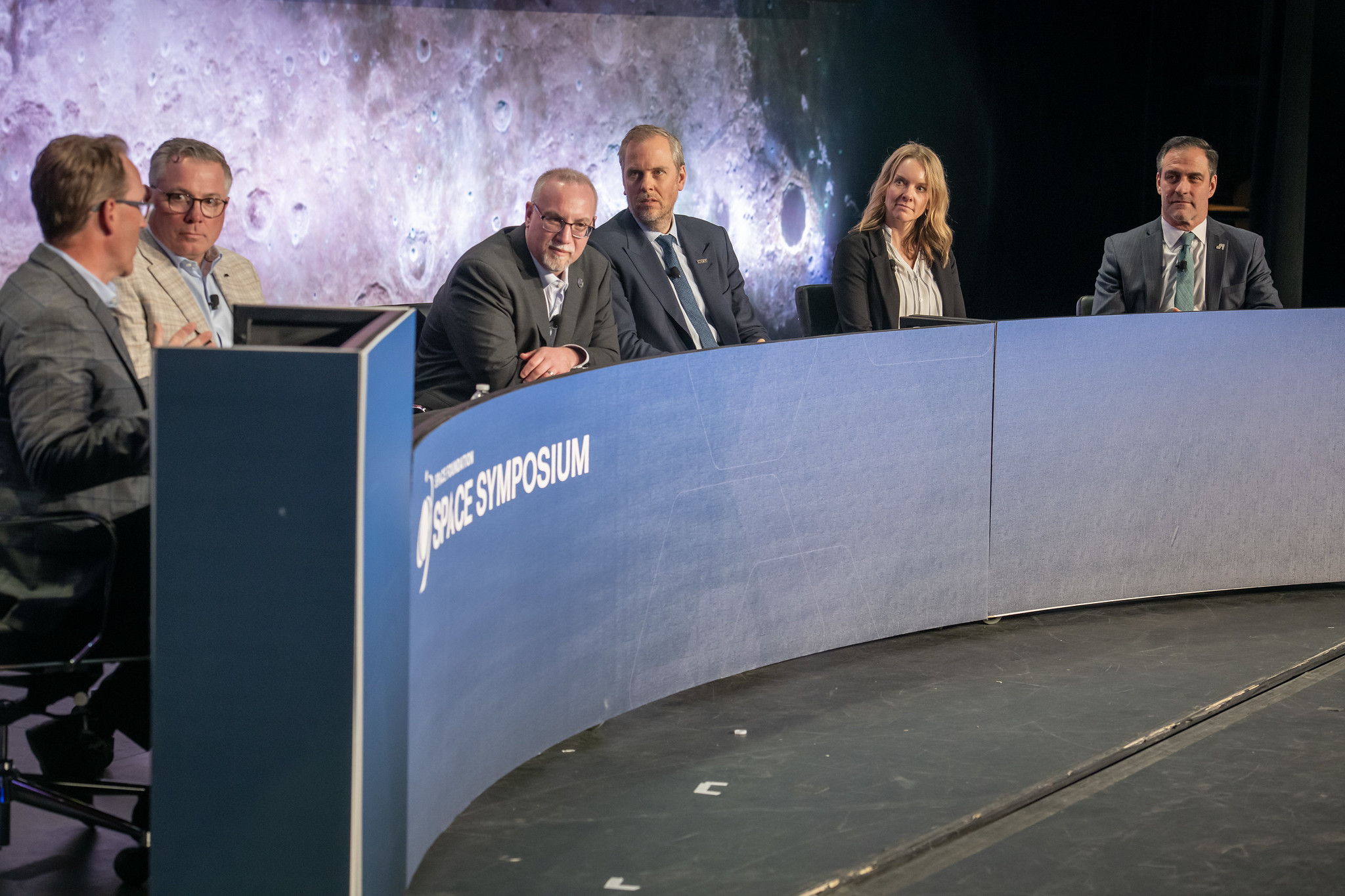
科罗拉多斯普林斯 —— 提议开发商业空间站的公司正在反驳美国国家航空航天局(NASA)关于此类空间站市场尚未形成的说法。
在4月15日举行的第41届太空研讨会的一个小组讨论中,三家致力于此类空间站开发的公司的管理人员表示,在NASA提出改变其“商业近地轨道目的地”(CLD)计划的战略后,他们已向NASA说明了对空间站需求的预测。
NASA于3月25日发布了一份征求信息书(RFI),寻求公司关于商业空间站市场及采购方式的数据。这份RFI发布的次日,NASA举行了“点火”(Ignition)活动,机构官员在会上提出了一项CLD计划的新方法,并声称空间站的商业需求尚未显现。
在回复该RFI的公司中包括“Starlab Space”公司。“RFI说,‘向我们展示证据,’”Starlab Space首席执行官马歇尔·史密斯表示,“我们提交了390页的独立分析、研究报告、数据、合同等材料。”
他没有详细讨论公司的市场评估,但指出,致力于商业空间站开发的公司至少已经获得了30亿美元的私人投资。“私人资本和私人投资非常一致地认为,这里是有未来的,”他说。
“公理太空”(Axiom Space)首席执行官乔纳森·瑟泰恩表示,他的公司拥有从其飞往国际空间站的一系列私人航天员任务中获得的数据。“我们已经运送了12人进入太空,他们为此向我们支付了报酬,”他说,“到目前为止,我们已经运送了166个载荷。所有这些都是能为公司创造收入的付费载荷。”
他提到,主权国家航天员或代表国家航天机构的航天员对飞行有着浓厚的兴趣。“随着我们的推进,我们将看到这一领域的演变:主权国家希望让他们的航天员飞行,接受培训,并为在‘阿尔忒弥斯’计划中发挥作用做好准备,”他说,“这就是一个市场。”
COLORADO SPRINGS — Companies proposing to develop commercial space stations are pushing back against claims by NASA that a market for such stations has yet to develop.
During a panel at the 41st Space Symposium April 15, executives with three companies working on such stations said they’ve described to NASA their estimates of the demand for their stations after NASA proposed a change in strategy for its Commercial Low Earth Orbit Destinations, or CLD, program.
NASA issued a request for information (RFI) March 25 seeking data from companies about the market for commercial space stations and procurement approaches for them. The RFI came a day after NASA’s Ignition event, where agency officials proposed a new approach to the CLD program, claiming that commercial demand for stations had yet to emerge.
Among the companies that responded to the RFI was Starlab Space. “The RFI said, ‘Show us your evidence,’” said Marshall Smith, chief executive of Starlab Space. “We put in 390 pages of independent analysis, research studies, data, contracts, those types of things.”
He did not discuss the company’s market assessment in detail, but noted there has been at least $3 billion in private investment in companies working on commercial stations. “Private capital, private investment is very much on the page that there is a future here,” he said.
Jonathan Cirtain, chief executive of Axiom Space, said his company has data from the series of private astronaut missions it has flown to the International Space Station. “We’ve flown 12 people to space who paid us money to do that,” he said. “We’ve flown 166 payloads to date. All of those are paying payloads that generate revenue for the company.”
He cited strong interest in flying sovereign nation astronauts, or those representing national space agencies. “We’re going to see that evolve as we move forward: sovereign nations wanting to fly their astronauts, get them trained, get them prepared for a role in Artemis,” he said. “That is a market. There is revenue there.”
“There was a challenge that there is potentially no market for commercial space stations. We obviously disagree with that,” said Max Haot, chief executive of Vast. “I think it’s important to reframe the conversation around the market of today and the market of the future.”
The market of the future, he said, includes emerging applications like in-space manufacturing and pharmaceutical development. “We agree with Jared Isaacman and his team that said today it’s not substantially large enough” to support a commercial space station, he said, along with uncertainty about when or if it can become large enough.
However, he said there is a substantial existing market in the form of NASA and other space agencies that currently use the ISS. NASA’s fiscal year 2027 budget proposal, which includes outyear spending projections to 2031, includes more than $1.5 billion in 2031 for the CLD program, reflecting the transfer of $1 billion to it from current ISS operations.
“If