The TWZ Newsletter
Weekly insights and analysis on the latest developments in military technology, strategy, and foreign policy.
Merops drones effectively counter Iranian Shahed attacks. The Merops interceptor drones, initially used in Ukraine, have been deployed to protect U.S. troops from Iranian Shahed-136 munitions.
Cost-effective solution against expensive threats. Each Merops drone costs about $15,000, significantly less than the $30,000 to $50,000 Shaheds they intercept, offering a favorable cost ratio.
Potential for further cost reduction with larger orders. Prices could drop to $3,000 to $5,000 per unit with increased production, making them even more economical.
Streamlined acquisition process enabled rapid deployment. The Army’s reorganization of its acquisition process allowed for quick deployment of Merops drones in conflict zones.
Merops drones part of a layered defense strategy. While not as advanced as Patriot missiles, Merops drones can be deployed in large numbers for effective area coverage.
Bottom line: Merops interceptor drones have proven to be a cost-effective and efficient defense against Iranian Shahed drones, protecting U.S. troops and equipment. Their success in Ukraine and streamlined acquisition process suggest a growing role for such low-cost solutions in future military strategies.
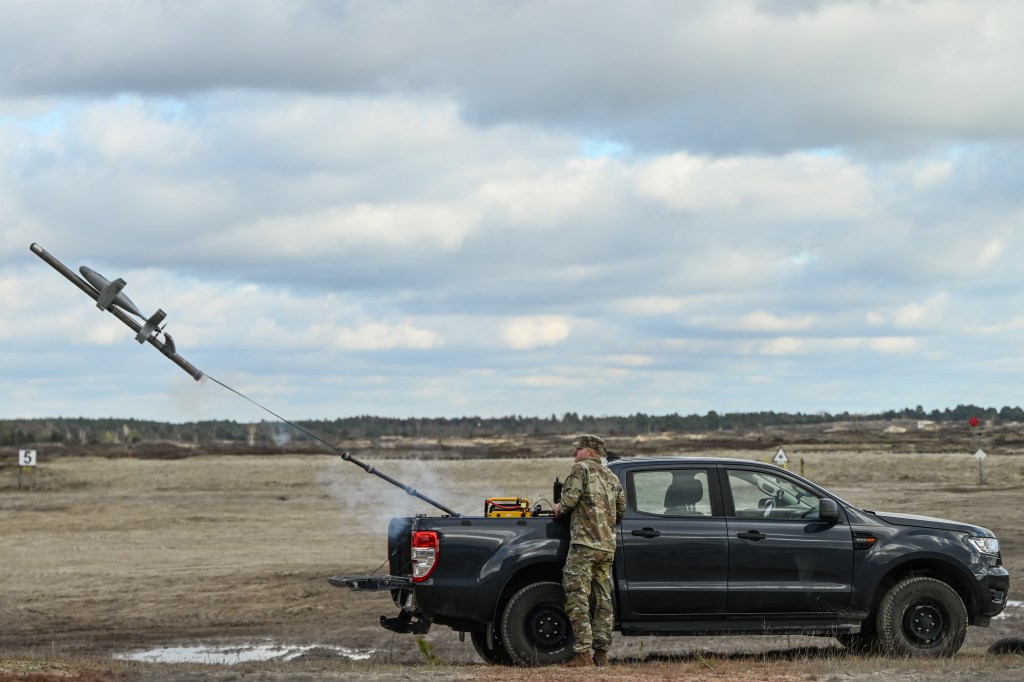
The Army’s top official pointed to low-cost interceptor drones first sent to Ukraine as one defense against Iranian barrages of Shahed-136 one-way attack munitions. During Congressional testimony on Thursday, Army Secretary Daniel Driscoll lauded the Merops interceptor and the process to get it quickly into the hands of troops in the Middle East.
The Merops is a small, relatively inexpensive drone built specifically to zip through the skies and intercept long-range one-way attack drones. As we have previously reported, Ukraine has been using several locally produced drones, as well as Merops, to counter Russian Shaheds successfully for some time now, proving-out the concept.
“When the conflict kicked off, within about eight days, we were able to purchase…13,000 Merops, which are incredible,” Driscoll exclaimed. “They’re about $15,000 a piece right now. We think as they scale, they’ll get less than [$10,000] and we’re able to take Shaheds down that cost $30,000 to $50,000, which is amazing because that puts us on the right end of the cost curve, and we will make that trade all day long.”
The U.S. has its own interceptors that have been in service for years, such as Raytheon’s Coyote, but they cost roughly 10 times more.
A new system to identify and take down Russian drones is deployed to NATO’s eastern flank
In a recent interview with Bloomberg, Driscoll said that larger orders could drive that to $3,000 to $5,000 per interceptor. Given the success in Ukraine, it is likely that the Pentagon and other customers would see far less risk when it comes to ordering large numbers.
As we noted in a story last month, the Pentagon s
BROWSER2026年4月17日
廉价无人机拦截技术在冲突中获验证,美军方称其具防御意义
战区美国专业军媒,装备细节与作战动态强