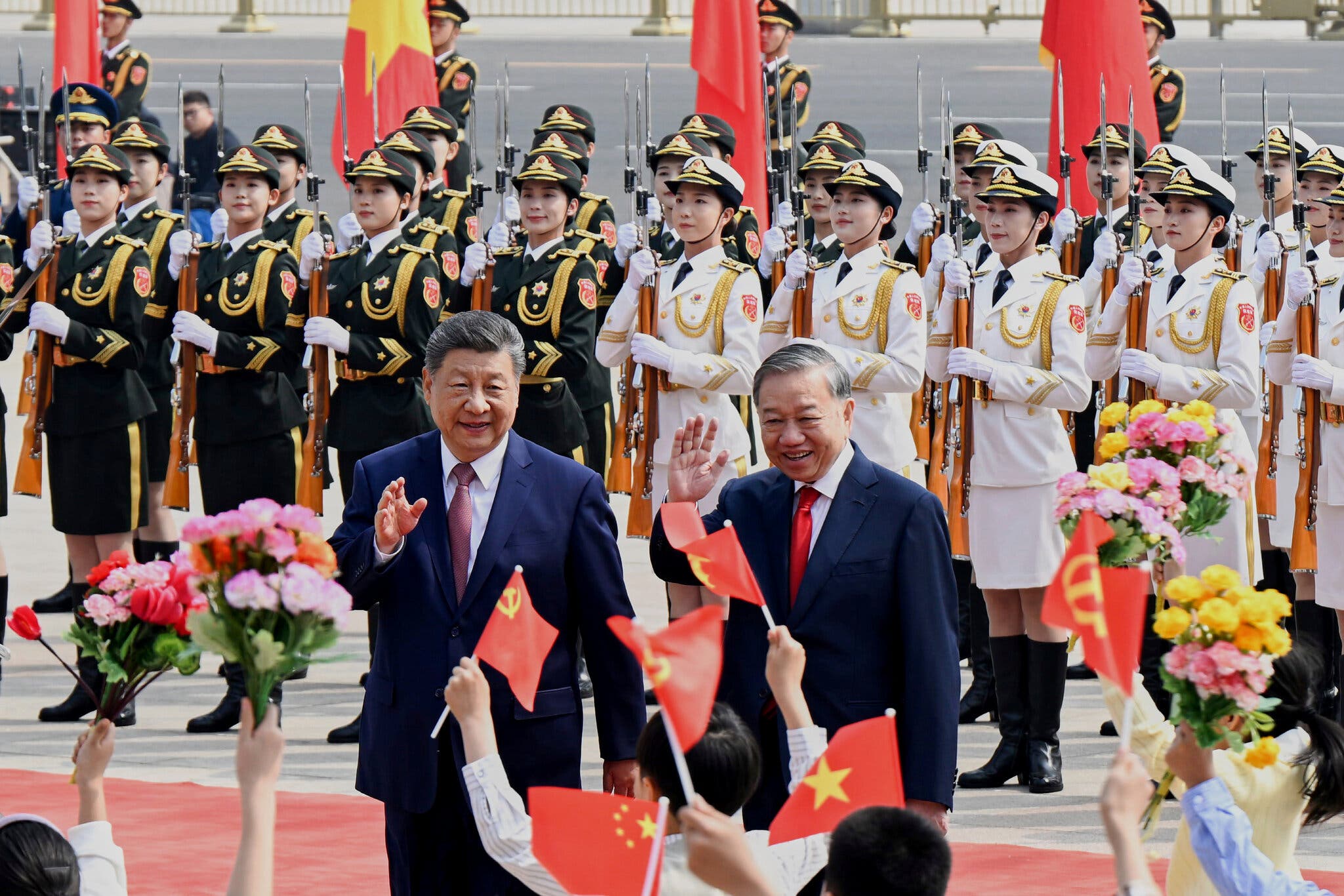
广告 跳过广告。在我们核实您的访问权限时,您可以预览本文。当确认访问权限后,全文内容将加载。中国利用越南领导人的访问展示了安全关系的深化,分析人士称,这种关系远超美国在该地区的防务关系。听报 · 5:11 分钟。中国领导人习近平周三在北京欢迎越南国家主席苏林。习近平表示,捍卫共产党统治是共同的战略利益。图片来源:沈宏/新华社,经由美联社。2026年4月16日,东部时间上午8:05更新。随着美中两国在亚洲争夺影响力,中国领导人习近平热衷于展示越南在贸易、政治意识形态以及日益增强的安全领域站在他这一边。本周习近平在北京会见越南新任领导人苏林时强调了这一点。习近平提到了特朗普总统的关税以及霍尔木兹海峡的封锁,将其作为中越两国确保贸易正常流动并保护工业供应链的理由。他还诉诸两国作为一党制共产主义国家的共同亲缘关系。习近平周三告诉苏林:“捍卫社会主义制度和共产党的执政地位是最大的共同战略利益。”虽然双方同意加强旅游、教育和铁路基础设施方面的联系,但正是他们在安全领域更紧密合作的承诺,可能使中国在与美国争夺深化对越关系的影响力时获得最大优势。作为其外交推广的一部分,中国一直在向友好国家推销其全球安全概念,即一种将政权保护置于一切之上的概念。这在越南得到了认可,因为与中国一样,越南对异议的容忍度极低,即使在经济发展并向外界开放的过程中,也依然保持着高压态势。苏林曾任安全部门首脑,近期获得了越南的

全球防务头条
Global Defense Headlines
中方深化与越南安全纽带以应对地区外部政策不确定性
纽约时报
美国主流媒体,常见中国军力与地区安全报道
摘要
纽约时报指出,中方近期在与越南的互动中强调了构建安全共同体的重要性,并提及了对美国政策变动的担忧。双方讨论了包括边境管理、网络安全以及应对外部干预在内的多项防务安全议题。在南海局势复杂化的背景下,中越加强安全协作有助于稳定周边环境,减缓外部因素对亚太安全局势的干扰,是中方巩固周边安全屏障的关键举措。
中文译文
英文原文
▼
收起原文
AdvertisementSKIP ADVERTISEMENTYou have a preview view of this article while we are checking your access. When we have confirmed access, the full article content will load.China used a visit by the Vietnamese leader to show a deepening of security ties that analysts say far outpaces U.S. defense ties in the region.Listen · 5:11 min China’s leader, Xi Jinping, welcomed President To Lam of Vietnam in Beijing on Wednesday. Mr. Xi said that defending Communist Party rule was a common strategic interest.Credit...Shen Hong/Xinhua, via Associated PressApril 16, 2026Updated 8:05 a.m. ETWith the United States and China vying for influence in Asia, China’s leader, Xi Jinping, is keen to show that Vietnam is in his corner on trade, political ideology and, increasingly, security.That was underscored this week when Mr. Xi met with Vietnam’s new leader, To Lam, in Beijing. Mr. Xi alluded to President Trump’s tariffs and the blockage of the Strait of Hormuz as reasons for China and Vietnam to ensure that trade flowed normally and their industrial supply chains were protected.He also appealed to the two nations’ shared kinship as single-party, communist states.“Defending the socialist system and the ruling position of the Communist Party is the greatest common strategic interest,” Mr. Xi told Mr. Lam on Wednesday.While both sides agreed to strengthen ties in tourism, education and railway infrastructure, it was their pledges to work more closely on security that may provide China with the greatest advantage over the United States in the rivalry for deeper inroads with Vietnam.As part of its diplomatic outreach, China has been pitching friendly countries its concept of global security, one that prioritizes regime protection above everything else. That has had purchase in Vietnam, which like China, has little tolerance for dissent and has remained repressive even as its economy has developed and opened up to the outside world.Mr. Lam, a former security chief, recently secured Vietnam’s two most powerful posts, as Communist Party general secretary and the country’s president, an elevation that moves Vietnam closer to the strongman model of China, which Hanoi had long avoided. Even as Mr. Lam has pushed economic changes to unleash the private sector, he has given more power to the police, expanding their reach into business and surveillance.Thank you for your patience while we verify access. If you are in Reader mode please exit and log into your Times account, or subscribe for all of The Times.Thank you for your patience while we verify access.Already a subscriber? Log in.Want all of The Times? Subscribe.AdvertisementSKIP ADVERTISEMENT