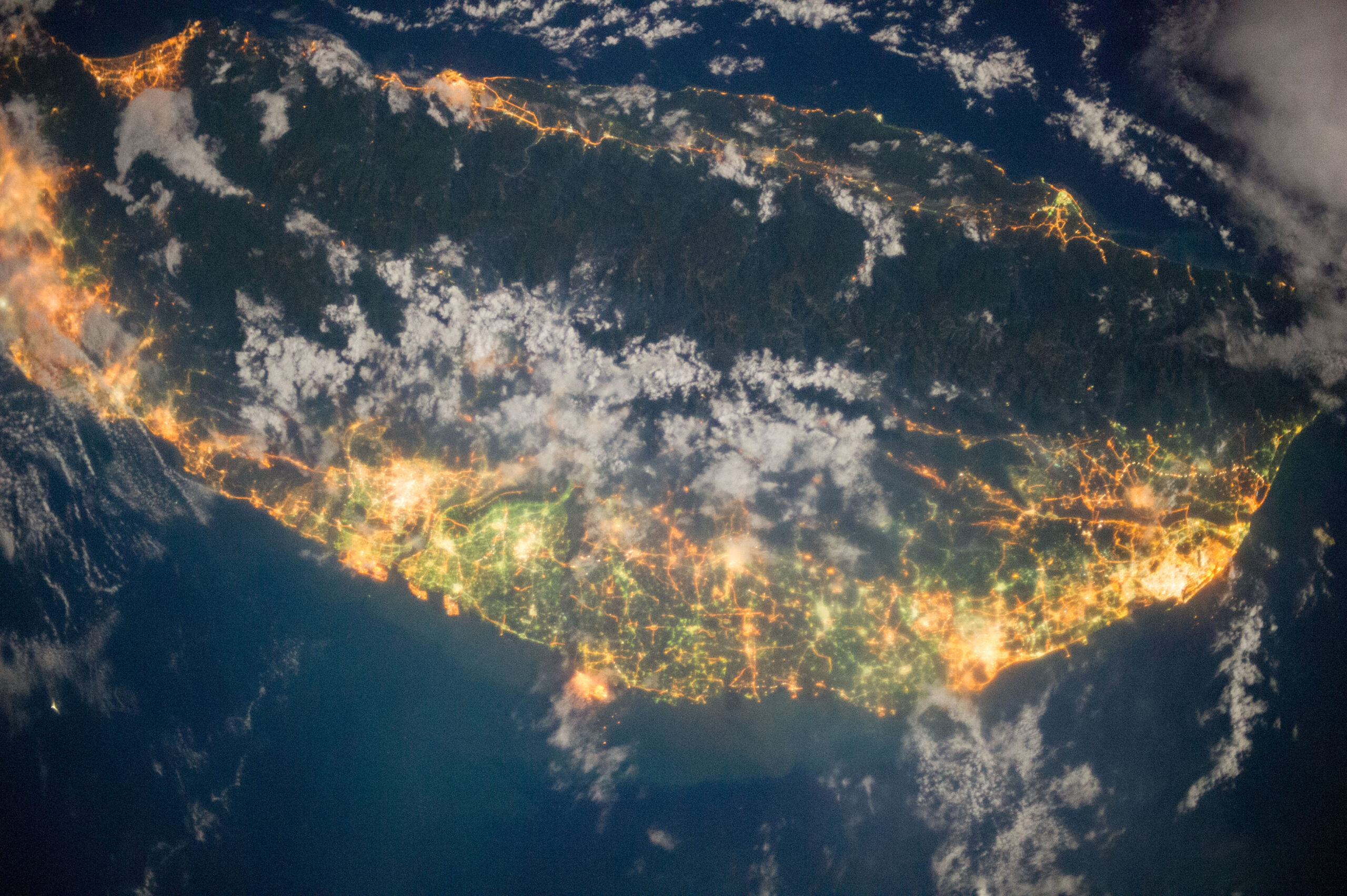
由国际空间站远征36任务的一名机组成员在经过台湾上空时拍摄的地球观测夜景。 图片来源:NASA / 凯伦·尼伯格
佛罗里达州坦帕——台湾太空机构负责人呼吁其他国家联合建立一个共享通信星座,以匹敌美国“星链”(Starlink)等网络的规模及其日益增长的战略重要性。
“我们可以联合四个、六个甚至更多志同道合的国家,”吴宗信于4月14日在科罗拉多斯普林斯太空研讨会的一个国际伙伴关系小组会议上表示。他补充说,这些国家可以分摊成本,同时贡献当地的技术专长。
该提议与欧洲计划中的 IRIS² 主权宽带星座相呼应,尽管吴宗信将其概念构想为一种更具多国协作色彩方案。
此时正值台湾寻求利用其在半导体制造领域的优势,同时应对来自中国大陆日益增长的地缘政治压力。吴宗信表示,这种压力正在重塑台湾对待太空的方式。
他说:“对于许多国家来说,太空关乎探索;但对于台湾来说,太空关乎一个民族民主制度的生存。这关乎维持我们的民主制度。”
吴宗信指出了支撑该战略的几个优先事项,包括通信、情报和独立的发射能力,以加强政府运作和态势感知。
他还强调了台湾的安全具有更广泛的全球影响,理由是其在全球半导体供应链中的作用及其在印太地区的战略地位。
“长期以来,台湾在外交上一直处于孤立状态,但太空没有边界,”他补充道:“我们希望通过真实、务实的国际技术协作来打破我们的孤立局面。”
开放合作
虽然小组成员中的其他太空机构没有直接对共享星座提议发表评论,但每个人都通过各自的国家战略响应了国际协作日益增长的重要性。
新加坡新成立的机构执行主任乔纳森·洪(Jonathan Hung)……
Earth observation taken during a night pass over Taiwan by an Expedition 36 crew member on board the International Space Station. Credit: NASA / Karen Nyberg
TAMPA, Fla. — Taiwan’s space agency chief has called on other countries to band together on a shared communications constellation to match the scale and growing strategic importance of networks like U.S.-based Starlink.
“We can team up four to six or even more like-minded countries,” Jong-Shinn Wu said April 14 during a panel on international partnerships at Space Symposium in Colorado Springs, adding that they could share costs while also contributing local technology expertise.
The proposal echoes Europe’s planned IRIS² sovereign broadband constellation, although Wu framed his concept as a more multinational approach.
It comes as Taiwan looks to leverage its semiconductor manufacturing dominance while responding to mounting geopolitical pressure from China, which Wu said is reshaping how the country approaches space.
“For many nations, space is about exploration,” he said, “but for Taiwan, space is about survival of democracy of a nation. It’s about keeping our democracy alive.”
Wu pointed to several priorities underpinning that strategy, including communications, intelligence and independent access to launch to bolster government operations and situational awareness.
He also stressed how Taiwan’s security has broader global implications, citing its role in international semiconductor supplies and strategic position in the Indo-Pacific.
“For a long time, Taiwan has been isolated diplomatically but space [has] no borders,” he said, adding: “We want to break our isolation through real and practical international technical collaboration.”
Open to partner
While other space agencies on the panel did not directly weigh in on the shared constellation proposal, each echoed the growing importance of international collaboration through their own national strategies.
Jonathan Hung, executive director for Singapore’s newly established space agency, said forging more international partnerships was one of its major priorities, ranging from joint missions to knowledge and data-sharing exchanges.
As many as 60% of the 70-80 space companies in Singapore are based outside the country — “something we warmly welcome,” Hung added, ahead of plans to introduce more business-friendly space legislation in the next two to three years.
Enrico Palermo, head of Australia’s space agency, said the country is focused on ways to include more domestic space businesses in the global supply chain.
“We’ve moved from tech-led to really capability-delivery now,” he said.
Australia and the United Kingdom, which was also represented on the panel, are founding members of the U.S.-led Artemis Accords, a framework enshrining principles for the responsible exploration and use of space that now has 61 signatories.
Miriam Grigg, deputy director for international, resilience and regulation at the UK Space Agency, said such alliances are