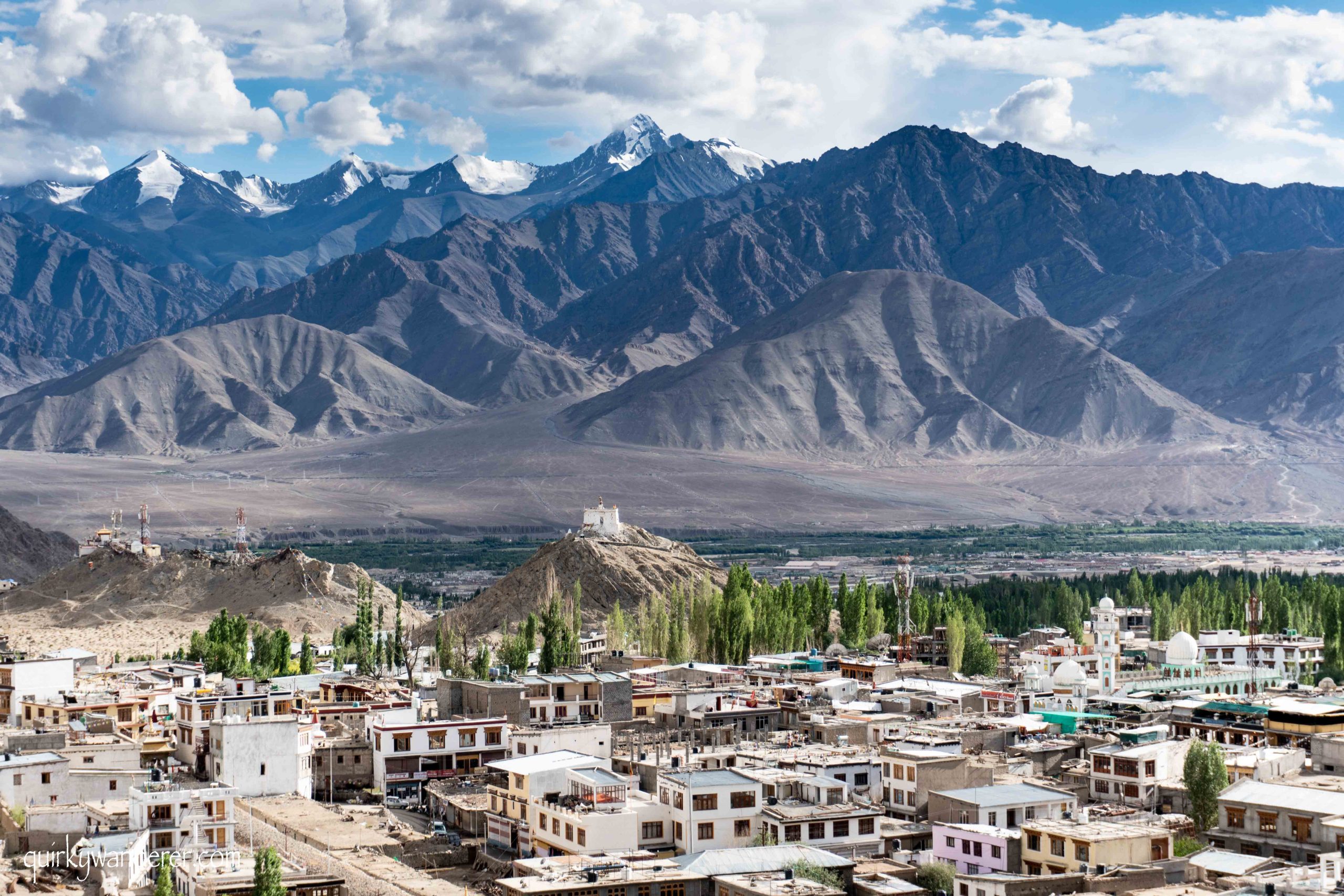
The trans-Himalayan arc, a high-altitude desert landscape spanning from Leh and Lhasa to Gilgit and Thimphu, has long been romanticized as a pristine, stoic wilderness of ice and silence. Yet, today, a grittier and more urgent reality is unfolding within its urban centers. With apricot blossom time, these cities are gearing up for a tourism season that is the bedrock of the local economy. While this influx provides essential livelihoods, it simultaneously acts as a force multiplier for environmental stress, pushing the carbon footprint of these fragile “Third Pole” cities to a breaking point.
These cities, once quiet trading outposts, are now the front lines of a global climate crisis they did not create. As the international community converges on the ambitious goal of net zero, the Trans-Himalaya faces a unique and existential imperative. For these high-altitude cities, reaching carbon neutrality is not merely a distant policy target to satisfy international treaties; it is a prerequisite for continued human habitation in a landscape that is quite literally melting away.
The scientific consensus regarding this vulnerability has never been sharper. According to the Intergovernmental Panel on Climate Change (IPCC) Sixth Assessment Report (AR6), mountain ecosystems are facing ‘uniquely high vulnerability,’ with warming rates in the Himalayas significantly outstripping the global average. We are witnessing the phenomenon of elevation-dependent warming, where for every 1°C of global temperature rise, these heights may experience an increase of 1.5°C to 2°C.
The IPCC Special Report on the Ocean and Cryosphere further cautions that even under low-emissions scenarios, the region is projected to lose a substantial portion of its glacial volume by the turn of the century. For the residents of trans-Himalayan cities, this translates into a triple threat: devastating flash floods in the summer, acute water scarcity as traditional springs dry up in the winter, and a crumbling infrastructure foundation as permafrost thaws.
The failure of plains-centric urbanism
To date, our climate strategies have been low-altitude in design. We have consistently attempted to graft the urban development models of the plains onto the fragile, high-gradient slopes of the mountains. This approach has failed.
A net zero pathway for the trans-Himalaya region must be radically different because the carbon profile of a mountain city is fundamentally distinct. In those heights, the cold wave is the primary driver of emissions. While the world focuses on cooling, cities like Leh or Lhasa see heating account for nearly 70% of municipal energy consumption during the long winter months.
Decarbonizing this heat is the first pillar of survival. The current reliance on polluting biomass, coal and kerosene creates a double burden of high carbon footprints and dangerous indoor air pollution. The transition must move toward passive solar architecture, leveraging the region’s 300+ days of high
DIRECT2026年4月17日
跨喜马拉雅地区战略转型影响亚洲安全环境
Asia Times亚洲评论媒体,涉华与地区战略分析密集