The Islamic Republic of Iran was built to be governed by clerics. It is now widely acknowledged as being run by something else. But the story of by whom, and how that shift occurred, has been widely misunderstood.
Many have suggested that the war with the United States and Israel has pushed the Iranian government into the hands of its hard-line security establishment. It is a compelling story, but radically incomplete. The militarization of Iranian politics did not begin with the current war, nor with the crises of the past decade.
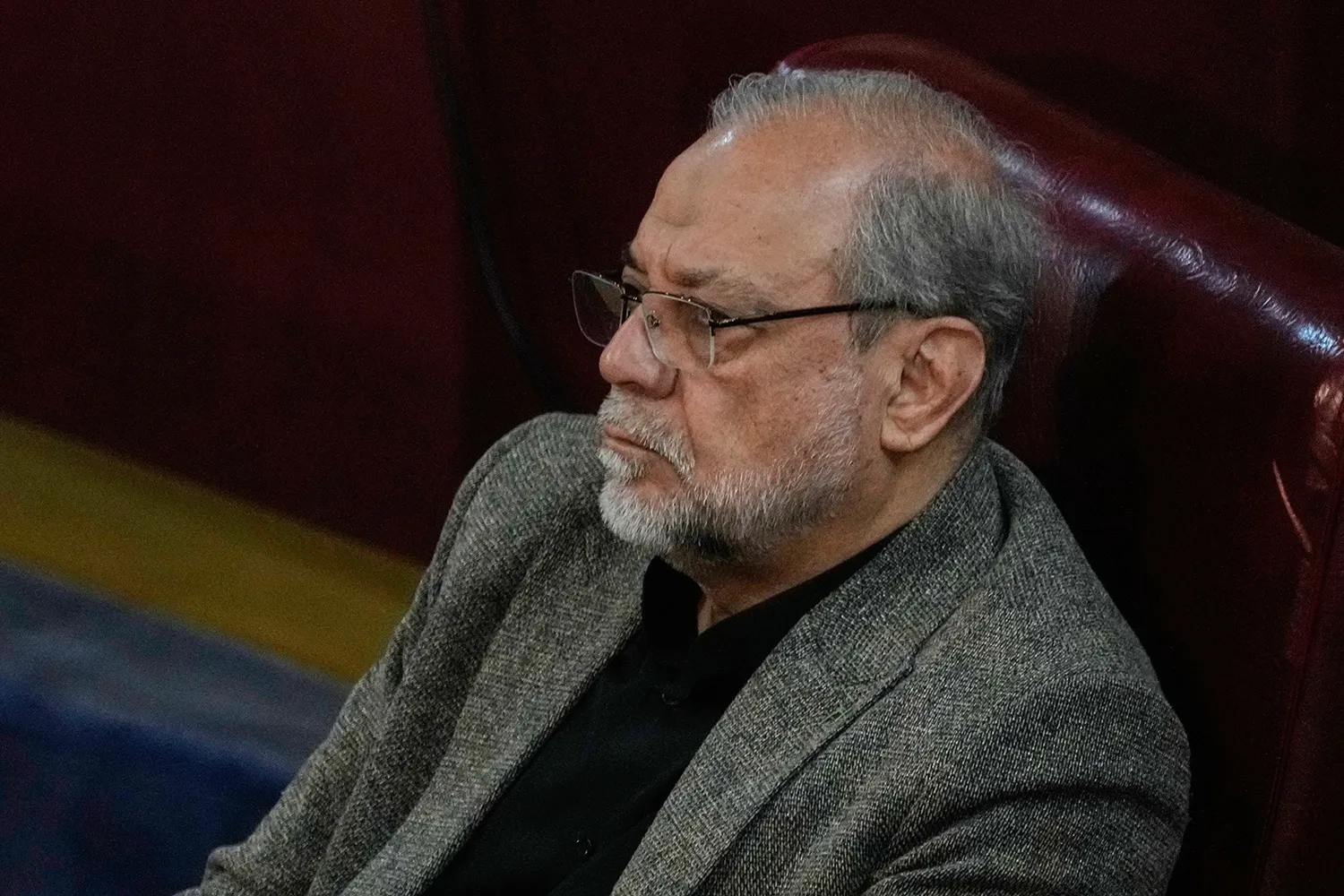
What we are witnessing today is not the emergence of a secularized security state, but its culmination. And to understand how Iran arrived here, it is useful to begin not with ideology or geopolitics, but with the career of a newly ascendent Iranian leader, Mohammad Bagher Zolghadr.
The appointment of Zolghadr to replace Ali Larijani, the senior security advisor who was killed in the war in mid-March, is not just another bureaucratic reshuffle. It marks the quiet arrival of a type of figure who has long shaped the Islamic Republic from behind the scenes and who is only now more clearly stepping into view.
Zolghadr is not a politician in any conventional sense. He has never relied on elections, public appeal, or even sustained visibility. His career unfolded almost entirely within what might be called the regime’s “hard architecture”: the Islamic Revolutionary Guard Corps (IRGC), the intelligence system, and the dense networks that link them to the state.
He belongs to a generation formed before the state fully took shape. His early political home was Mansourun, a clandestine revolutionary network whose members would later populate the upper ranks of the IRGC. In this milieu, ideology, security, and organization were not separate spheres—they were one and the same.
The Iran-Iraq War hardened that formation. Zolghadr’s role in an IRGC unit called the Ramadan Headquarters placed him at the intersection of warfare, intelligence, and proxy operations. This was not simply battlefield experience. It was also training in a particular way of exercising power: indirect, networked, and embedded across borders and institutions.
After the war, he did not transition into politics. Instead, politics gradually came to resemble the world that he already inhabited. Over more than a decade at the top of the IRGC, including as deputy commander, Zolghadr accumulated influence not through public authority but through institutional depth. He became, in effect, a man of the system’s internal wiring.
Zolghadr’s trajectory only makes sense in the context of a broader shift, one that began in the late 1990s. The presidency of Mohammad Khatami briefly opened the political field. Reformists spoke of civil society, the rule of law, and political pluralism. For a moment, the Islamic Republic seemed capable of evolving.
That moment triggered a reaction. During the student protests of 1999, senior commanders of the Islamic Revolutionary Guard Corps is
DIRECT2026年4月17日
伊朗安全部门权力结构变动引发中东安全走廊关注
外交政策国际政策杂志,涉华安全与战略评论频繁