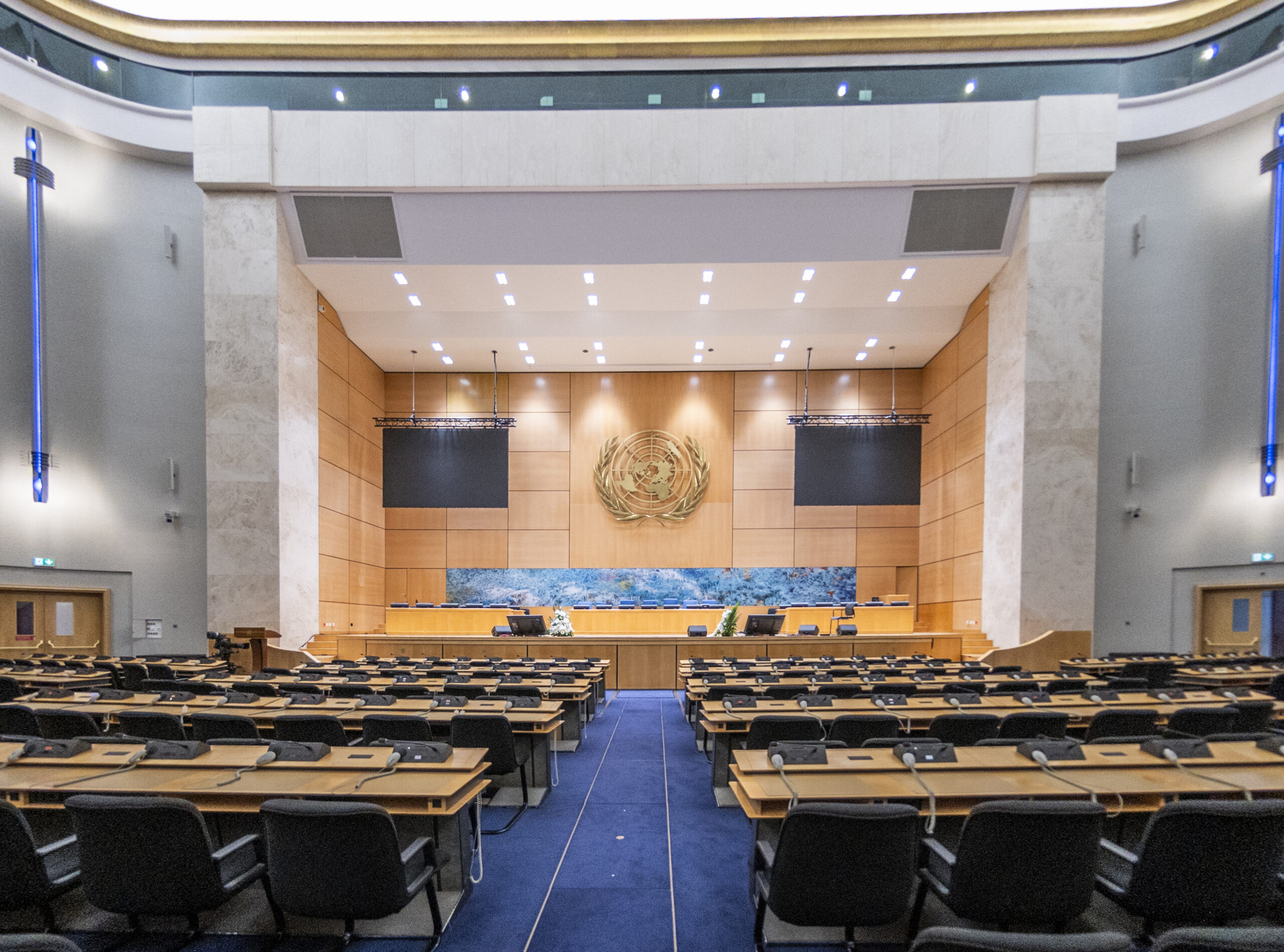
GENEVA—As delegates convened in Geneva for the sixty-first session of the United Nations (UN) Human Rights Council in February, High Commissioner for Human Rights Volker Türk opened the session with a keynote address on the unshakeable nature of the international human rights system in the face of ongoing conflicts and mass atrocities. He spoke about the need for a stronger commitment to justice and accountability, including the “need to increase the cost of breaking international law.” The high commissioner is right to champion greater accountability. Action on this should start by pursuing greater accountability for China’s treatment of Uyghurs, who are suffering under repression both at home and abroad.
For the past decade, the People’s Republic of China (PRC) has subjected Uyghurs and other Turkic ethnic groups living in the Xinjiang Uyghur Autonomous Region (XUAR) to an unprecedented campaign of mass arbitrary detention, forced labor, surveillance, enforced sterilizations, and torture. My family has been directly affected: My brother Ekpar Asat, a tech entrepreneur and participant in a US State Department visitor program, was imprisoned a decade ago this month.
Ekpar Asat, the author’s brother, in January 2016, a few months before his disappearance in April 2016.
Advocates of Uyghur rights—myself included—have rallied the world to put an end to the atrocities. A first step is acknowledging that China’s ongoing atrocities against the Uyghurs have far-reaching ramifications. Well beyond the XUAR, the Chinese government is attempting to reshape international legal norms to promote what international legal expert Tom Ginsburg has termed “authoritarian international law.” The Office of the High Commissioner for Human Rights (OHCHR), in a landmark 2022 report, declared that the widespread and systematic persecution of Uyghurs may constitute crimes against humanity. The US government, global human rights organizations, and fifty legal experts have determined that crimes against Uyghurs may constitute a genocide under the UN Genocide Convention.
This brutality reached beyond China’s borders; the PRC’s long arm of transnational repression extends to Chinese dissidents, pro-democracy activists, and Uyghur diaspora communities around the world. Representing the Atlantic Council’s Strategic Litigation Project, I have worked in collaboration with a team of New York University Law School students, including Eva d’Amato and Anna Lebrun, to analyze the international legal ramifications of China’s ongoing atrocities in Xinjiang and its relentless campaign of transnational repression. It was this work that brought me to Geneva.
How does transnational repression manifest?
The PRC, in coordination with willing governments, detains and forcibly repatriates Uyghurs who fled Xinjiang to escape the PRC’s atrocities. In the past decade, PRC officials have coerced Uyghurs and other Turkic people abroad to return to the XUAR, only to detain them indefinitely. In this
DIRECT2026年4月17日
针对西方利用人权议题干涉中国内政的动向观察
大西洋理事会美国智库,涉华竞争与联盟战略评论频繁