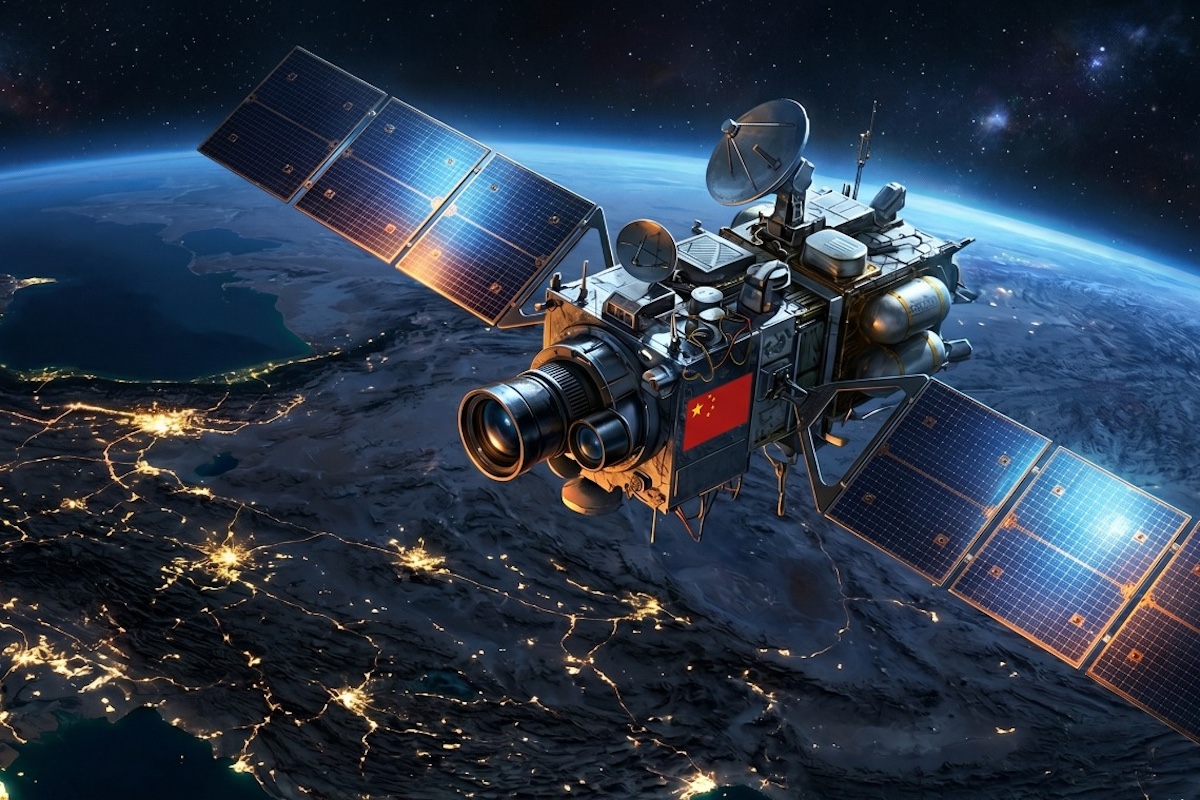
据报道,伊朗使用中国制造的卫星,结合据称的俄罗斯情报支持,标志着向一种新的战争模式转变,在这种模式中,商业化的空间资产重塑了追踪和瞄准美军的方式。
路透社报道称,伊朗秘密获得了一颗中国制造的TEE-01B侦察卫星,以提高其观察并可能瞄准整个中东地区美军基地的能力。该报道基于《金融时报》(FT)的信息,后者引用了据称泄露的伊朗军事文件。
美国国防部(DoD)2025年度《中国军事力量报告》在联系中国商业卫星公司与伊朗伊斯兰革命卫队(IRGC)之间可能存在的联系时指出,“截至2024年8月,总部位于中国的商业卫星公司参与了与伊斯兰革命卫队的业务”,但未详细说明此类交易的深度。
据报道,伊朗指挥官要求该卫星对关键的美国设施进行监视,使用的信息包括带时间戳的坐标、轨道数据和3月份拍摄的图像,包括对这些地点进行无人机和导弹袭击前后的影像。
据报道,目标包括沙特阿拉伯的苏丹亲王空军基地,美国总统唐纳德·特朗普证实该基地在3月14日遭到飞机袭击。其他目标包括约旦的穆瓦法克·萨尔提空军基地、巴林美国第五舰队总部附近的地区以及伊拉克的埃尔比勒机场。此外,伊朗还获得了由总部位于北京的航天驭星(Emposat)运营的地面站的使用权,扩大了其在全球范围内的卫星控制能力。
如果得到最终证实,中国支持的卫星图像与据称的俄罗斯目标指示协助的整合,可能会增强伊朗对美国及其伙伴部队进行更有效打击的能力,突显了在威慑、溯源和防御方面的差距。
深入研究中国TEE-01B卫星的能力,Earth Eye公司将其列为一颗已部署的低地球轨道(LEO)光学遥感卫星。
Iran’s reported use of a Chinese-built satellite, combined with alleged Russian intelligence support, signals a shift toward a new model of warfare in which commercially enabled space assets reshape how US forces are tracked and targeted.
Reuters reported that Iran covertly obtained a Chinese-made TEE-01B spy satellite to improve its capacity to observe and potentially target US military bases throughout the Middle East. The report was based on information from the Financial Times (FT), which referenced alleged leaked Iranian military documents.
Linking possible ties between Chinese commercial satellite companies and Iran’s Islamic Revolutionary Guards Corps (IRGC), the US Department of Defense’s (DoD) 2025 China Military Power Report states that “as of August 2024, China-based commercial satellite companies participated in business with the IRGC,” but does not go into detail about the depth of such transactions.
Iranian commanders reportedly tasked the satellite with surveilling key US installations, using time-stamped coordinates, orbital data and imagery captured in March, including before and after drone and missile strikes on those sites.
Targets reportedly included Prince Sultan Air Base in Saudi Arabia, where US President Donald Trump confirmed aircraft were hit on March 14. Other targets were Muwaffaq Salti Air Base in Jordan, regions near the US Fifth Fleet headquarters in Bahrain and Erbil airport in Iraq. Additionally, Iran obtained access to ground stations operated by Beijing-based Emposat, expanding its satellite control capabilities worldwide.
If conclusively proven, the integration of Chinese-enabled satellite imagery and alleged Russian targeting assistance could enhance Iran’s ability to conduct more effective strikes on US and partner forces, highlighting gaps in deterrence, attribution and defense.
Delving into the capabilities of China’s TEE-01B satellite, Earth Eye Co lists it as a Low Earth Orbit (LEO) optical remote-sensing satellite deployed at a 535–545 kilometer altitude, equipped with a panchromatic/multispectral camera delivering 0.52–0.53 meter panchromatic and 2.08–2.12 meter multispectral resolution, with a 14.8 kilometer swath width.
Earth Eye Co mentions that it carries spectral bands including panchromatic, green, red, and near-infrared, supports push-broom, stereo, and along-track imaging, and weighs under 112 kilograms, forming part of a constellation designed for global coverage and a rapid 1.2-hour response.
Similarly, Russia has allegedly provided targeting data to Iran, given their aligned interests against the US and Russia’s substantial space-based ISR infrastructure, though its optical reconnaissance capabilities may be particularly thin, with just a handful of dedicated reconnaissance satellites.
As for how these Russian and Chinese systems complement each other, China’s TEE-01B could provide routine, high-resolution intelligence, surveillance and reconnaissance (ISR) coverage, while state-controlled R