Many Ukrainians welcomed the overwhelming election defeat of Viktor Orbán in neighboring Hungary last weekend. It is easy to understand why. For years, Orbán’s government had served as a pro-Russian voice within NATO and the European Union, while also consistently obstructing Ukraine’s Euro-Atlantic integration and blocking efforts to back the Ukrainian war effort.
There is now guarded optimism in Kyiv that Orbán’s departure will mean more European support for Ukraine in the fight against Russia, along with a clearer pathway toward the country’s eventual EU membership. These hopes are shared in numerous European capitals. However, a potential new obstacle is now looming on the horizon. With Bulgaria set to vote on April 19 in the country’s parliamentary elections, there is a chance that Russia may soon secure a new ally in Brussels.
Stay updated
As the world watches the Russian invasion of Ukraine unfold, UkraineAlert delivers the best Atlantic Council expert insight and analysis on Ukraine twice a week directly to your inbox.
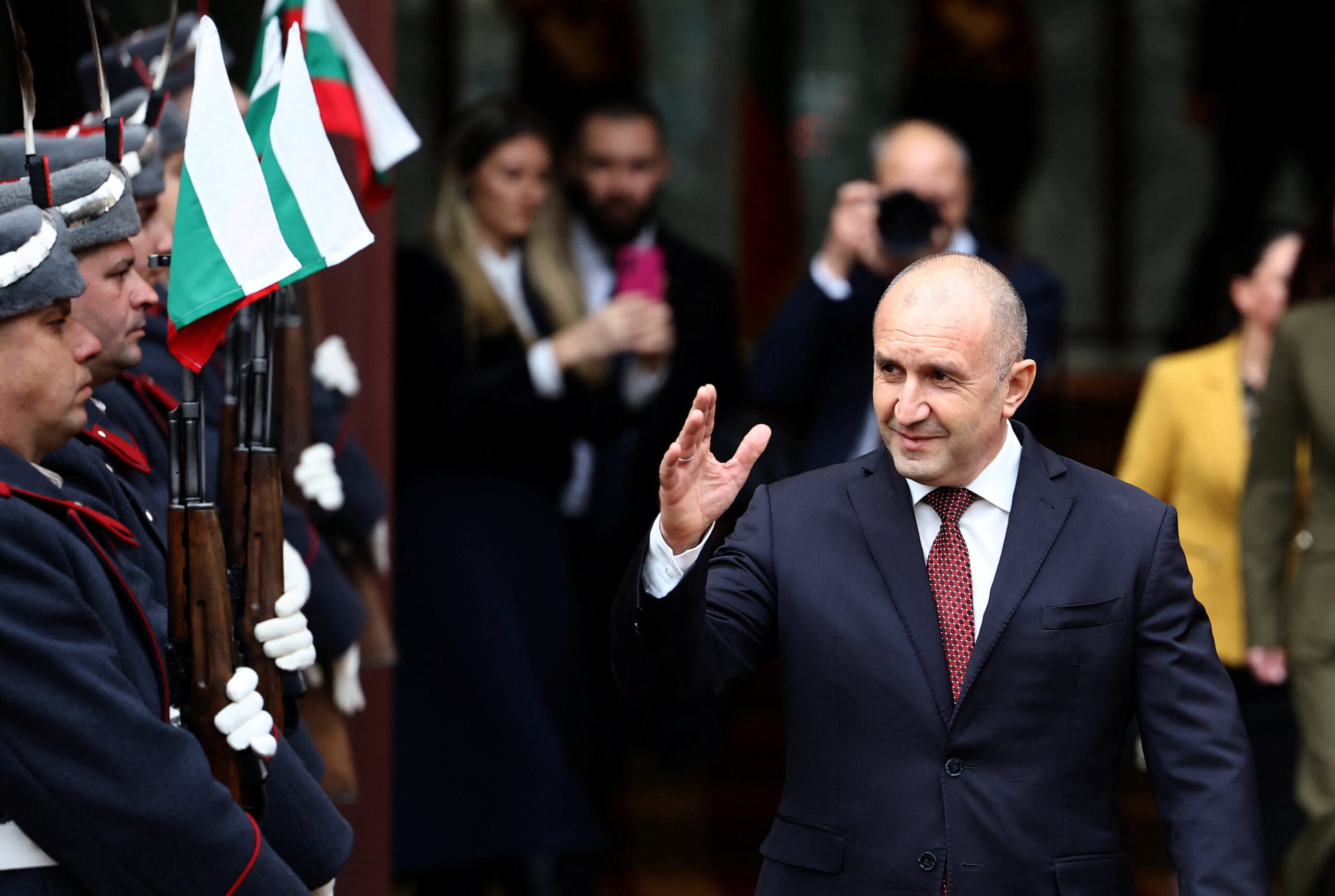
If current polling data proves accurate, Bulgaria’s pro-Russian former president Rumen Radev could replace Orbán within the European Union as the bloc’s strongest anti-Ukrainian voice and defender of Russian interests. As president of Bulgaria from 2017 until his resignation earlier this year to run for parliament, Radev condemned EU sanctions against Russia and opposed efforts by the Bulgarian defense industry to supply Ukraine with ammunition.
A former air force general and Communist Party member, Radev has been no friend of United States either. In June 2019, he vetoed the Bulgarian government’s acquisition of sixteen F-16 fighter jets from the US. The veto was so unpopular that parliament overrode it. The deal went forward, but critics saw the incident as evidence of Radev’s anti-American position.
Since stepping down from the presidency, Radev has continued to question his country’s support for Ukraine. In March 2026, caretaker Bulgarian Prime Minister Andrey Gyurov traveled to Kyiv and concluded a ten-year bilateral security agreement similar to those signed by 28 other nations. Radev used the agreement to attack Gyurov in an apparent bid to curry favor with Russian-leaning Bulgarian voters.
Eurasia Center events
This week’s Bulgarian parliamentary election will be the country’s eighth since November 2021. Bulgarian voter sympathies are finely balanced, with around one-third favoring Russia and one-third leaning toward Europe, leading to slim majorities and weak coalitions that tend to rapidly unravel. Radev’s nine years as president mean he is widely viewed as a stability candidate in a time of prolonged political turmoil.
As the current election campaign comes to an end, Radev’s Progressive Bulgaria political party is leading in the polls with around 30 percent. If this translates into votes, he will be in a position to form a new administration together with some smaller pro-Russian parties.
A Radev-led governm
DIRECT2026年4月17日
欧洲地缘局势波动影响中俄欧战略博弈联动态势
大西洋理事会美国智库,涉华竞争与联盟战略评论频繁