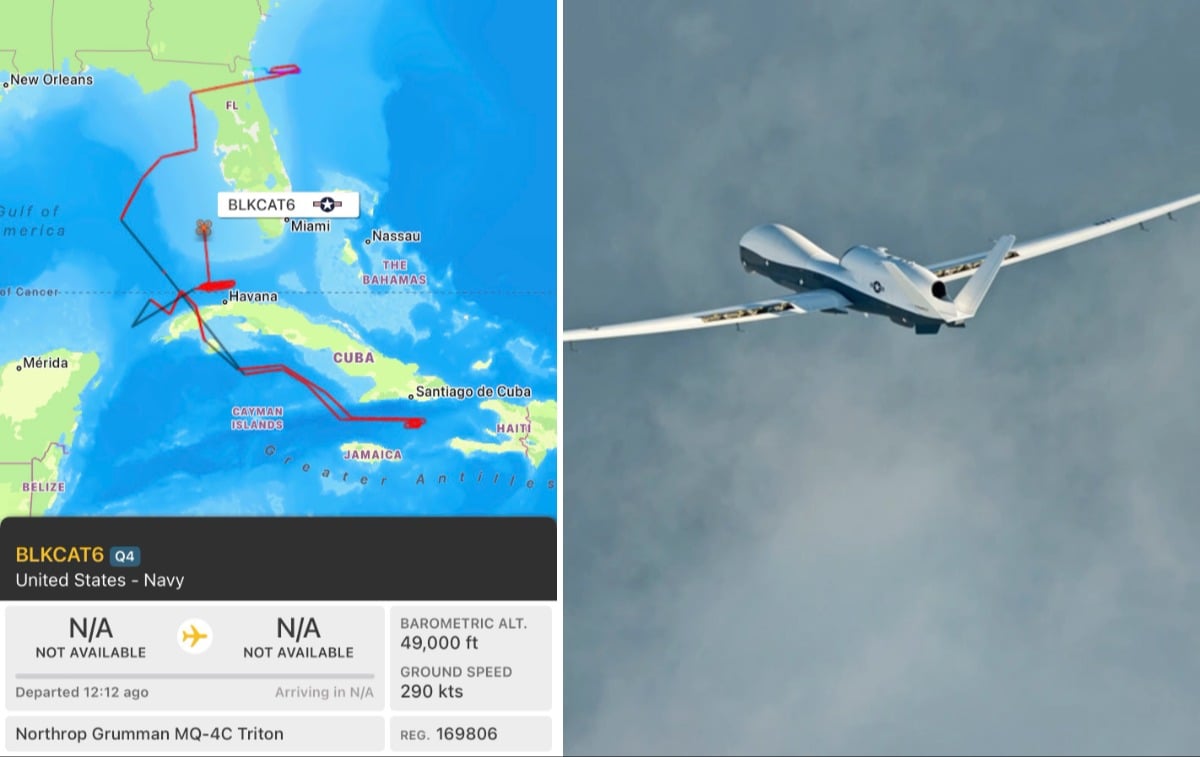
Key PointsA U.S. Navy MQ-4C Triton drone flew a more than 12 hour reconnaissance mission off the coast of Cuba near Havana and Guantanamo Bay.The BLKCAT6 aircraft operated at 49000 feet and returned to Naval Air Station Jacksonville after repeated surveillance passes.A U.S. Navy MQ-4C Triton surveillance drone carried out a more than 12-hour reconnaissance flight off the coast of Cuba, flying repeated patterns over the Gulf of America and the northern Caribbean, based on flight tracking data and open-source reporting.The aircraft, using the callsign BLKCAT6, operated at high altitude and made multiple passes near key areas, including Havana and the region around Guantanamo Bay. The mission ended with the drone returning to Naval Air Station Jacksonville in Florida.Tracking data shows the Triton maintained an altitude of about 49,000 feet and a ground speed near 290 knots throughout the flight. Its route included several loops and back-and-forth tracks, pointing to sustained monitoring rather than a simple transit. - ADVERTISEMENT - CONTINUE READING BELOW -Discover morevehiclesVehiclevehicle The MQ-4C Triton is a high-altitude, long-endurance unmanned aircraft built by Northrop Grumman for maritime surveillance. It is designed to stay airborne for extended periods, scanning large areas of ocean and coastline using onboard sensors.That endurance allows the aircraft to keep watch over the same area for hours at a time. Instead of brief overflights, it can build a continuous picture of activity, tracking movement on the surface and along the coast.In this case, the drone’s flight path shows a clear focus on waters near Cuba, with particular attention to areas close to Havana and Guantanamo Bay. The repeated passes suggest the aircraft was assigned to maintain coverage over those locations for an extended period.The timing of the flight comes as attention on U.S. policy toward Cuba has increased. USA Today reported that military planning for a possible Pentagon-led operation involving Cuba is being developed, citing two sources familiar with the matter.In response, the Pentagon said it plans for a range of contingencies and remains prepared to carry out the president’s orders if directed. The statement did not provide details about specific plans.Flights like the one carried out by the Triton can support that kind of planning by providing up-to-date information on activity in and around the region. Persistent surveillance helps build a clearer understanding of patterns over time, rather than relying on isolated snapshots.The Triton’s ability to operate at high altitude and stay on station for long periods makes it a key platform for this role. By remaining above the area of interest for hours, it can gather data without the need for frequent relaunch or crew rotation.While the U.S. Navy has not issued a public statement about this specific flight, the available tracking data and reporting show a prolonged reconnaissance mission focused on waters s
BROWSER2026年4月17日
美国海军MQ-4C无人机在古巴附近执行12小时监视任务
US Navy uses MQ-4C drone for 12 hour surveillance mission near Cuba
防务博客装备快讯和战场技术密集,适合抓热点装备与台海军情