关键点
- 美国海军一架MQ-4C“人鱼海神”无人机在古巴哈瓦那和关塔那摩湾附近执行了超过12小时的侦察任务。
- 呼号为“BLKCAT6”的飞机在49,000英尺高度运行,在多次重复监控巡航后返回杰克逊维尔海军航空站。
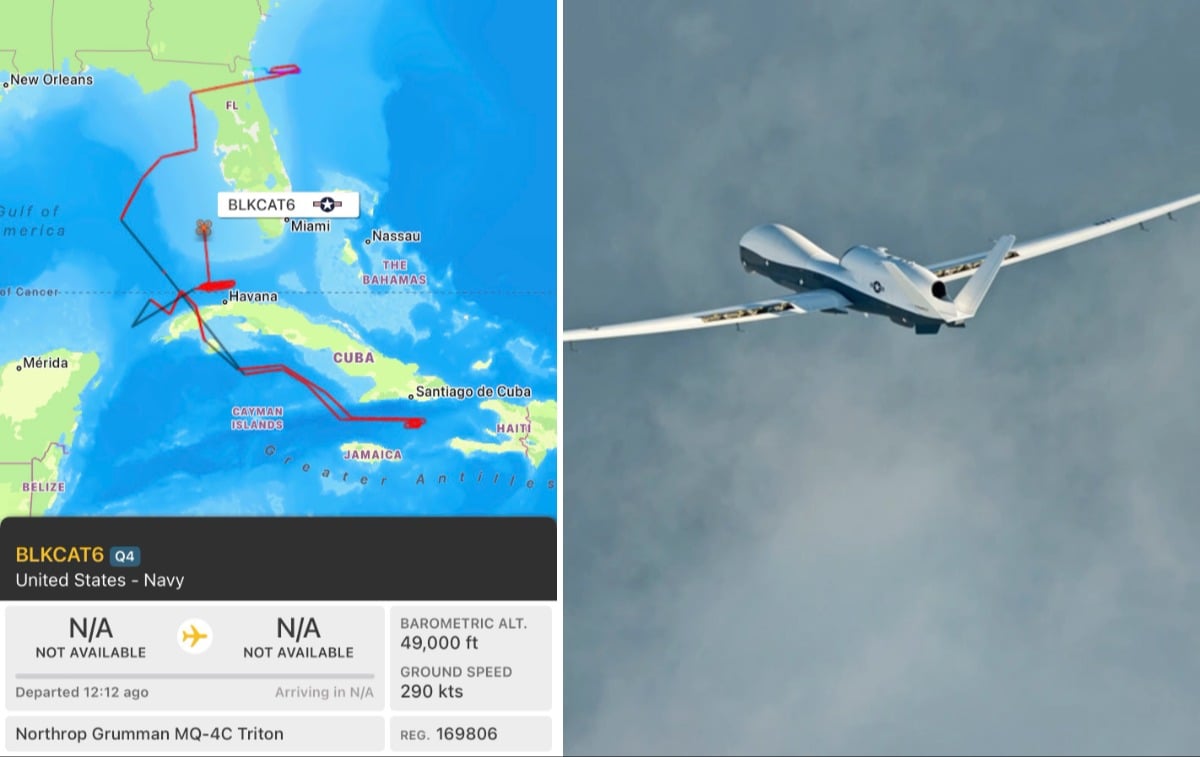
根据飞行追踪数据和开源报告,美国海军一架MQ-4C“人鱼海神”监视无人机在古巴海岸附近执行了超过12小时的侦察飞行,在墨西哥湾和北加勒比海上空进行重复模式飞行。
这架呼号为“BLKCAT6”的无人机在高空运行,并多次经过关键区域,包括哈瓦那和关塔那摩湾周边地区。任务结束后,无人机返回了佛罗里达州的杰克逊维尔海军航空站。
追踪数据显示,“人鱼海神”在整个飞行过程中保持了约49,000英尺的高度,地面速度接近290节。其路线包括多个环形和往返轨道,这表明是持续监控而非简单的过境。MQ-4C是由诺斯罗普·格鲁曼公司为海上监视制造的高空长航时无人机。它旨在长时间保持在空状态,利用机载传感器扫描大面积海洋和海岸线。
这种耐力允许飞机一次对同一区域进行数小时的观察。它能够建立活动的连续图像,追踪水面和沿海的移动,而不是简短的飞越。在此次任务中,无人机的飞行路径显示出其对古巴附近水域的明显关注,特别是靠近哈瓦那和关塔那摩湾的区域。重复的通过表明该飞机被指派对这些地点进行长时间覆盖。此次飞行的时机正值美方对古巴政策的关注度增加之际。
Key PointsA U.S. Navy MQ-4C Triton drone flew a more than 12 hour reconnaissance mission off the coast of Cuba near Havana and Guantanamo Bay.The BLKCAT6 aircraft operated at 49000 feet and returned to Naval Air Station Jacksonville after repeated surveillance passes.A U.S. Navy MQ-4C Triton surveillance drone carried out a more than 12-hour reconnaissance flight off the coast of Cuba, flying repeated patterns over the Gulf of America and the northern Caribbean, based on flight tracking data and open-source reporting.The aircraft, using the callsign BLKCAT6, operated at high altitude and made multiple passes near key areas, including Havana and the region around Guantanamo Bay. The mission ended with the drone returning to Naval Air Station Jacksonville in Florida.Tracking data shows the Triton maintained an altitude of about 49,000 feet and a ground speed near 290 knots throughout the flight. Its route included several loops and back-and-forth tracks, pointing to sustained monitoring rather than a simple transit. - ADVERTISEMENT - CONTINUE READING BELOW -Discover morevehiclesVehiclevehicle The MQ-4C Triton is a high-altitude, long-endurance unmanned aircraft built by Northrop Grumman for maritime surveillance. It is designed to stay airborne for extended periods, scanning large areas of ocean and coastline using onboard sensors.That endurance allows the aircraft to keep watch over the same area for hours at a time. Instead of brief overflights, it can build a continuous picture of activity, tracking movement on the surface and along the coast.In this case, the drone’s flight path shows a clear focus on waters near Cuba, with particular attention to areas close to Havana and Guantanamo Bay. The repeated passes suggest the aircraft was assigned to maintain coverage over those locations for an extended period.The timing of the flight comes as attention on U.S. policy toward Cuba has increased. USA Today reported that military planning for a possible Pentagon-led operation involving Cuba is being developed, citing two sources familiar with the matter.In response, the Pentagon said it plans for a range of contingencies and remains prepared to carry out the president’s orders if directed. The statement did not provide details about specific plans.Flights like the one carried out by the Triton can support that kind of planning by providing up-to-date information on activity in and around the region. Persistent surveillance helps build a clearer understanding of patterns over time, rather than relying on isolated snapshots.The Triton’s ability to operate at high altitude and stay on station for long periods makes it a key platform for this role. By remaining above the area of interest for hours, it can gather data without the need for frequent relaunch or crew rotation.While the U.S. Navy has not issued a public statement about this specific flight, the available tracking data and reporting show a prolonged reconnaissance mission focused on waters s