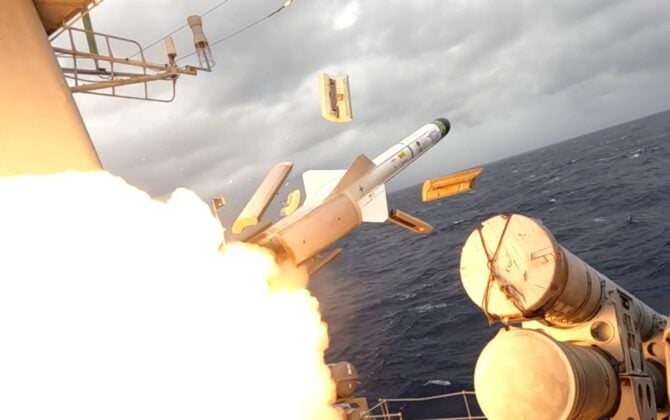
Key PointsEDGE said it is accelerating development and production of the MANSUP and MANSUP-ER anti-ship missiles with the Brazilian Navy.EDGE acquired a 50 percent stake in Brazilian missile manufacturer SIATT in 2023 to support the program.EDGE Group said it is speeding up development and production of the MANSUP and MANSUP-ER anti-ship missiles under its partnership with the Brazilian Navy, pushing forward one of Brazil’s key indigenous naval weapons programs.The Emirati defense company said the work is being carried out in close cooperation with local industry partners and the end users who will operate the missiles. The focus is on the standard MANSUP missile and its longer-range MANSUP-ER variant, both intended for maritime strike missions and coastal defense roles.The program gained momentum after EDGE acquired a 50 percent stake in Brazilian weapons manufacturer SIATT in 2023. SIATT is one of the principal companies behind the MANSUP, also known as the AV-RE40, which was developed alongside Avibras and Omnisys. - ADVERTISEMENT - CONTINUE READING BELOW - The missile has often been compared in role and characteristics to the Exocet MM40, a well-known anti-ship weapon used by navies worldwide. For Brazil, the project is part of a wider effort to strengthen domestic missile production and reduce dependence on foreign suppliers for critical naval strike capabilities.EDGE said both missile versions are built for all-weather use and employ a sea-skimming flight profile. In simple terms, that means the missile flies very low over the water, making it harder for a target ship’s radar to detect and respond in time.The company also highlighted the use of a jamming-resistant active radar seeker. This onboard guidance system allows the missile to locate and track a ship on its own during the final phase of flight, even in an environment where electronic warfare systems are trying to interfere with its sensors.For Brazil, the partnership brings added industrial capacity and outside investment to one of its most visible homegrown missile programs.
BROWSER2026年4月17日
EDGE 集团与巴西海军加速研制反舰导弹
EDGE accelerates MANSUP missile production with Brazilian Navy
防务博客装备快讯和战场技术密集,适合抓热点装备与台海军情