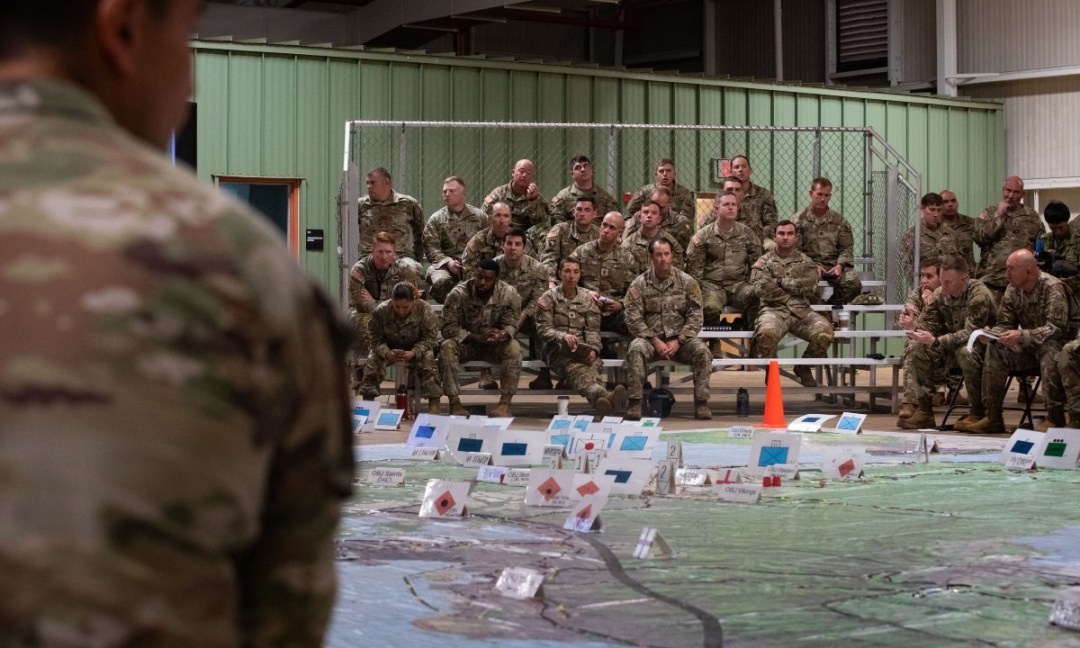
在一场太平洋战区的演习中,一名陆军少校正在更新通用作战图。一个工兵连离开一个机动旅级战斗队,转而加入位于另一个岛屿的另一个旅。随之移动的还有通信包。作战图上的图标在几秒钟内完成了移动,但实际行动并非如此。接收该连的旅现在需要运力、燃料、维修支持、通信集成、防御、接收、集结、后续移动及演习。而失去该连的旅则需要补充战力或修改机动方案。保障架构跨越距离和水域发生了变化。这项任务组织决策看似简单,却重塑了整个作战行动。
詹姆斯·巴托洛米斯少将和格雷格·谢夫勒少校近期在现代战争研究所(MWI)发表的文章捕捉到了陆军重申“以师为中心”方针的逻辑。美国陆军正在重新发现“师”作为作战行动单位的价值。现在,师级单位掌握并同步更多的炮兵、情报、信号、网络、电子战、工兵及保障能力。旅级战斗队则接收为特定战斗量身定制的方案包。独立营发挥作战司令部的功能。支援编队保持足够的机动性,以紧跟机动部队的步伐。这些原则契合陆军预期的未来战场,同时也揭示了高级领导层现在必须解决的摩擦。
这种摩擦存在于指挥与控制、领导力培养以及陆军的机构习惯中。在过去的二十年里,陆军习惯于通过拥有更多内部能力的重型旅级战斗队进行作战。转型后的师要求指挥官和参谋人员以不同的方式思考。一项任务组织决策现在驱动着移动计划、支援关系、保障需求、指挥所设计、通信架构和保护优先级。陆军需要能够及早预见这些需求的领导者,以及能够在规划和执行过程中将这些需求转化为实际行动的参谋人员。
A division major updates a common operational picture during a campaign in the Pacific. An engineer company leaves one mobile brigade combat team and joins another on a different island. A signal package shifts with it. The icon moves in seconds. The operation does not. The gaining brigade now needs lift, fuel, maintenance support, communications integration, protection, reception, staging, onward movement, and rehearsals. The losing brigade now needs replacement capacity or a revised scheme of maneuver. The sustainment architecture changes across distance and water. The task organization decision looked simple. It reshaped the operation.
Major General James Bartholomees and Major Greg Scheffler’s recent Modern War Institute article captures the logic of the Army’s renewed division-centric approach. The Army is rediscovering the division as the warfighting unit of action. Divisions now hold and synchronize more artillery, intelligence, signal, cyber, electronic warfare, engineer, and sustainment capability. Brigade combat teams receive mission-tailored packages built for a specific fight. Division-separate battalions function as warfighting headquarters. Supporting formations stay mobile enough to keep pace with maneuver. Those principles fit the battlefield the Army expects to fight on. They also illuminate friction that senior leaders should address now.
The friction sits in command and control, in leader development, and in the institutional habits of an Army that learned to fight for two decades through large brigade combat teams with more capability living inside the brigade. The transformed division asks commanders and staffs to think in a different way. A task organization decision now drives movement planning, support relationships, sustainment demand, command-post design, communications architecture, and protection priorities. The Army needs leaders who can see those requirements early and staffs who can translate them into action during planning and execution.
The transformed division is a sound operational idea. The Army needs divisions that can integrate capabilities across depth and connect subordinate brigades to the larger campaign. The friction grows from execution. The Army has shifted responsibility upward faster than it has prepared the force to exercise that responsibility. The result appears inside division headquarters, between divisions and brigades, and across the institutions that educate the officers who fill those headquarters.
Where Senior Leaders Should Worry
The first source of friction is the burden on the division staff. The MWI article describes the movement of key capabilities upward from the brigade combat team to division-controlled formations. That change gives division headquarters more authority to build a force package tailored to any specific mission. It also gives the headquarters far more integrating work. A division staff now has to align engineers, signal, intelligence, sustainment, protection, and fir